
Horticultural Hygiene
Even if you’re not trying to sell your house, horticultural hygiene is important. Take it from me. Clean up your yard. You’ll thank me for it.
By John G. Stamos

When springtime officially hit this year, my property was covered in dead leaves from autumn of last year. It’s situated in the middle of an old growth oak forest. So, when I say it was covered in leaves, I mean covered. Blanketed. Buried. The whole thing. House, front yard, driveway. The whole enchilada. Including the property’s oft-referenced garden. Everything. Buried.
And, until very recently, I had no intention of unburying it.
Regular readers of my material here may be familiar with the fact that I’ll be living in British Columbia with my wife Ann on a mostly full-time basis as a Canadian permanent resident. I’ll still be a U.S. citizen, but our primary residence will be in British Columbia. Last fall, when we first got the ball rolling on the process of achieving this locational standing, along with the legal right to enjoy it in unencumbered fashion, we thought it’d be a snap.
Wrong-o.
Navigating the twin processes of the impenetrable Canadian permanent residency application rigamarole and selling my house (along with its aforementioned garden) here in Michiana Shores has been a bitch. As of the date of this writing, however, we’re now making some real headway on both fronts. And although there remains the task of getting this piece of near-lakefront property out of my hands and into those of a legitimate buyer in reasonably expeditious fashion, thanks to a very recent (and very excellent) brokerage representation decision on my part, its accomplishment, I feel, is a certainty.
Particular contingencies – for example, my contracting the nasty H3N2 Subclade K superflu virus late this past fall, and the collapse of a purchase agreement for my house – have arisen as impeding blips on the home sale process continuum that have led to my current state of title retention and, ultimately, to what is more or less my point today: the aforementioned recently rectified situation of hearth, home, and garden entombment by fallen oak leaf layer.
The bottom line is this: When you feel like 104°-fevered crap, and the guy who offers to buy your house (but ultimately doesn’t) also says he’ll take care of raking up the massive layers of leaves blanketing everything on what you’re thinking will soon be his property, you don’t rake the leaves. And that’s exactly what I didn’t do. Rake the leaves. I left them. Until very recently. Until, in fact, less than two weeks ago.
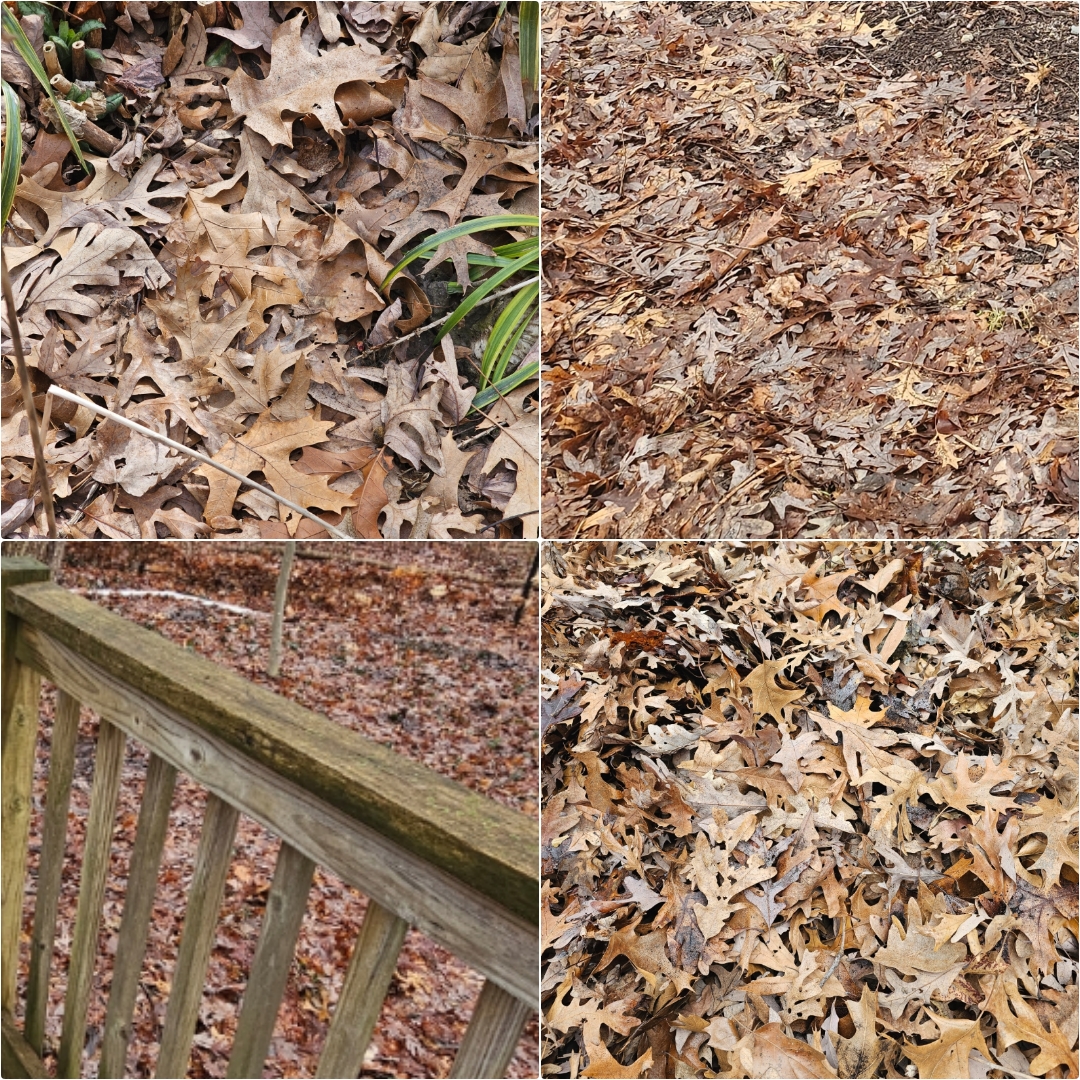
It wouldn’t be unreasonable to conclude that the removal of those burdensome leaf piles – particularly from the part of my property occupied by what’s become known through various digital channels as The RGG Garden – was an appeal to marketability: If one is selling a property that includes a garden that might be considered a selling point, one would probably want to get one’s ass in gear and get rid of any unsightly blanketings of dead leaves obscuring, among other things, the property’s garden. Makes perfect sense.
And this conclusion would certainly be correct. But only to a point…
Here, I’ll tell you three things. The first is the real reason I chose to eliminate the obfuscating, suffocating layers of fallen dead oak leaves from my garden and from elsewhere on my property. The second and third things are the means that I employed of removing those leaves, and why I’m telling RGG readers and subscribers about it.
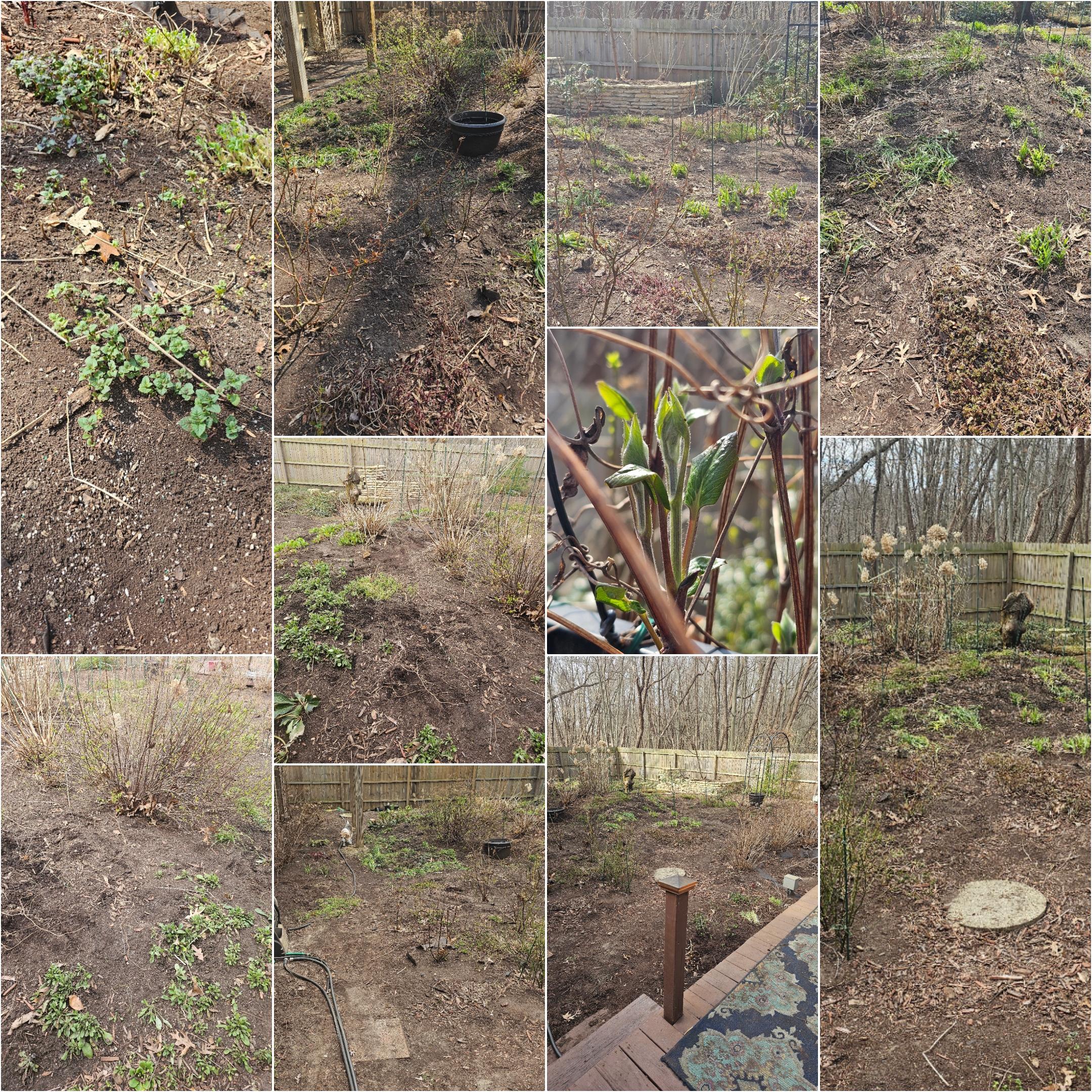
The real reason I got rid of the leaves from my garden was the fact that I love the plants that grow there and the wildlife that lives and visits there. I’ve been tending these plants for over six years. I’ve been living with them, just as I have with the frogs, and toads, and insects, and birds, and deer that live and visit there. Each of them – plant, animal, insect – is a friend. Is family. The thought of leaving the garden buried under suffocating, non-decomposing, indomitable oak leaf blankets was unbearable. This garden was an ecosystem, a community of which I was a part. Call me a sentimental fool. Call me impractical. Call me an idiot. But what drove me to get rid of that riot of smothering leaves was the value I placed on the lives of my plants and the creatures that shared their world. Compared to this, any potential boon to the property’s market value as a result of the leaf removal was inconsequential.
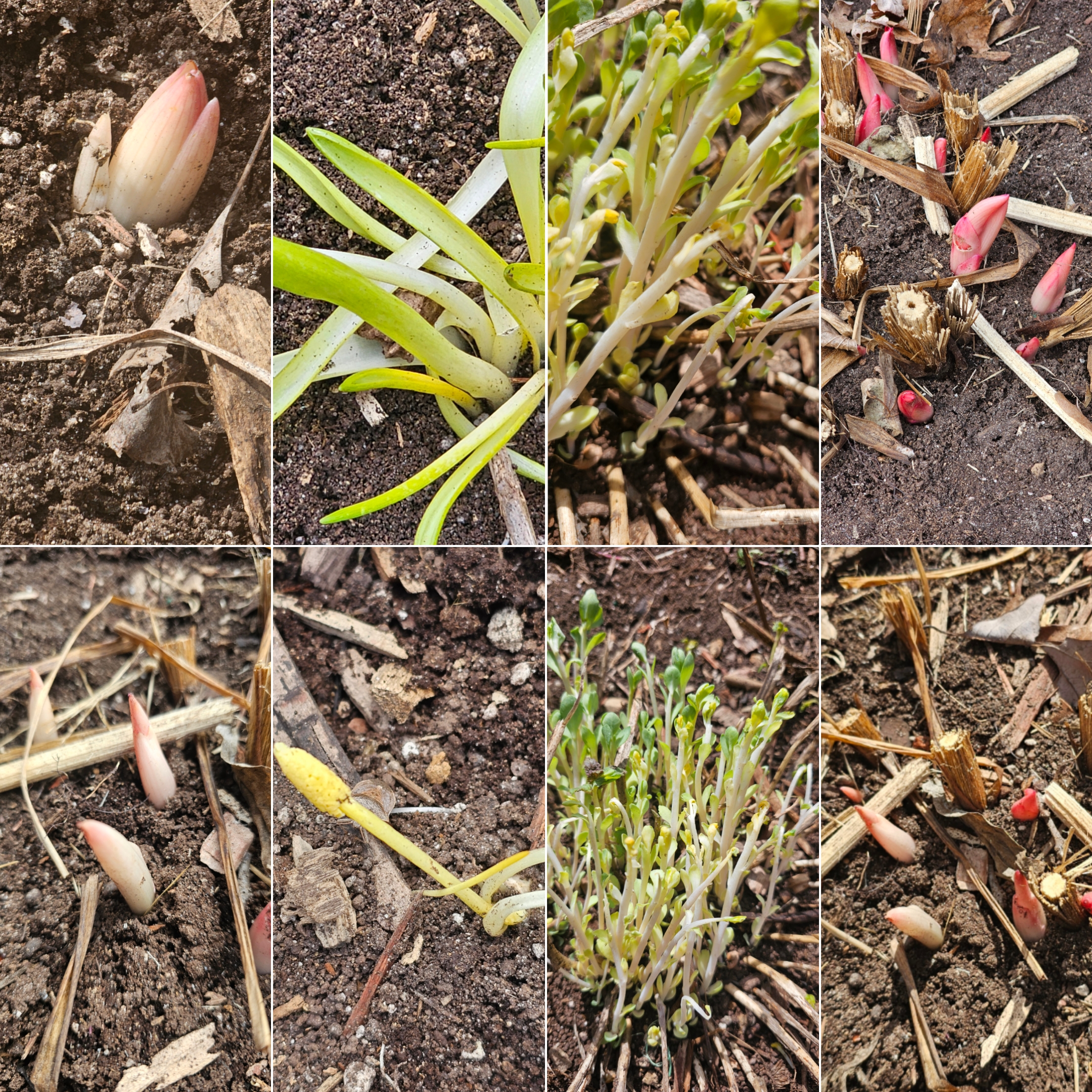
Returning to those smothered, suffocating plants the miracle of reemergence was what counted most to me. Who was I to interfere with the aeons old rhythm that suffused them with rebirth and questing, sunlit articulation? They obeyed an ineffable, timeless imperative issued by an ageless arbiter. And, by clearing the way for their compliance, I was obeying it, too. I’m just a cog in the mechanism, but I’m a happy cog now. As happy, in fact, as I imagine those unencumbered garden plants to be. As happy as the resident and visiting creatures now are.
This is the real reason I got rid of the leaves, and it means more to me than maybe getting a few grand more for the house.
I know. An idiot, right? I don’t care. It was the right way to feel.
It was the right thing to do.
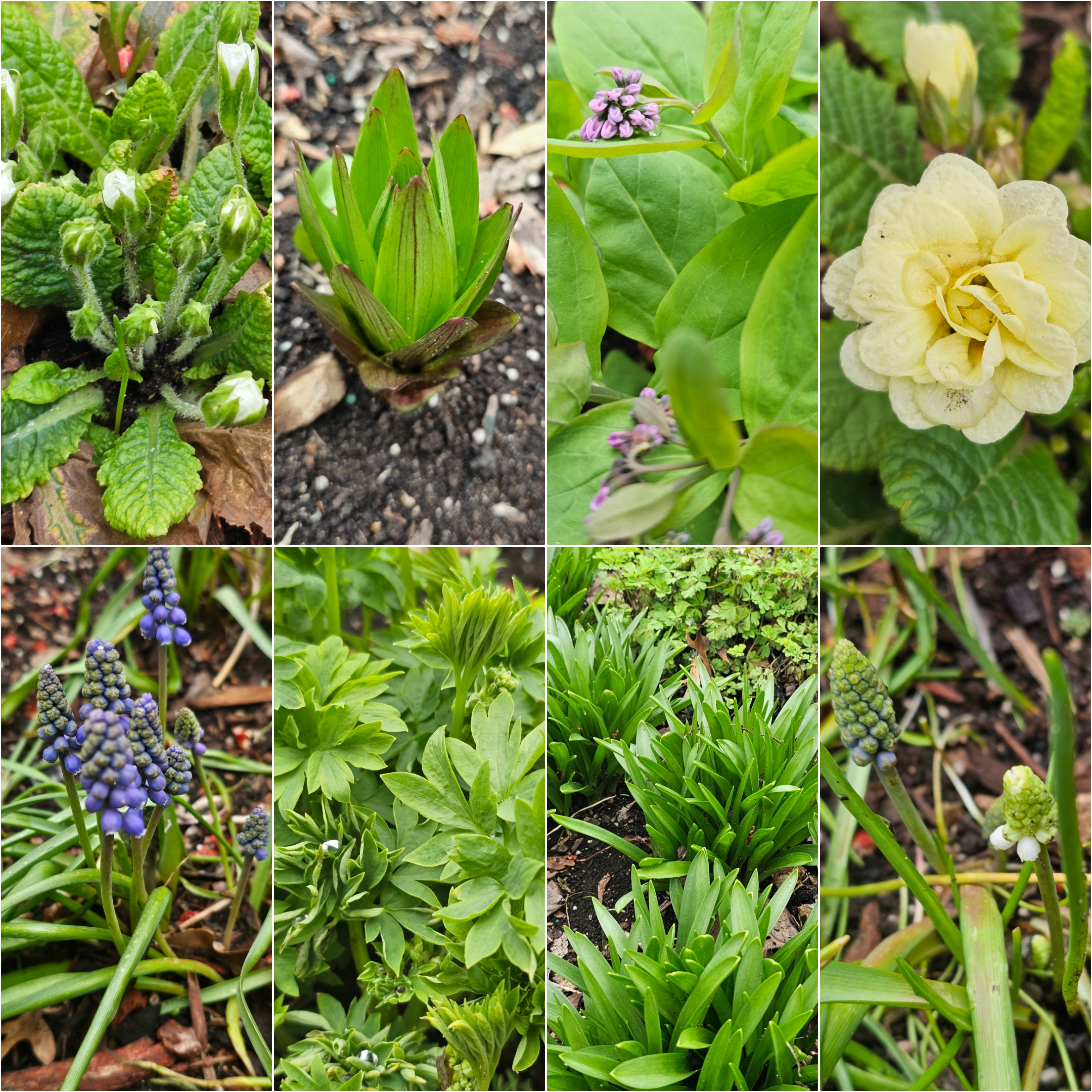

Now, we’re at the part where I tell you how I got rid of the leaves burying my garden, as well as my property at large.
In years past, I removed the leaves from the garden part of the property myself using a combination of different sized rakes and tarps. Since you’ve gotten to this point in the article and you know how important the health and well-being of my garden is to me, you’ve probably also got an idea of what a painstaking, pain-in-the-ass process inserting myself into all those planting beds and surgically removing the leaves from them must have been. And, most importantly, you’ve probably correctly deduced that there was just never anyone I trusted to do this intricate job but my own anal self.
This time around, I actually did, in fact, trust someone else to do the job. Lawn Sharks Property Maintenance LLC, represented by two extremely hardworking, extremely respectful, and extremely careful young guys named Kadin and Cristian, removed the leaves in precisely the same exceedingly cautious, exacting fashion that I’ve always implemented in my own leaf removal endeavors. And they did it incredibly quickly and in cost effective fashion. If you’re reading this and realize that you’re in need of a property maintenance company offering a number of excellent services (including, of course, leaf removal), and your property is located in or around the Harbor Country/Michiana Shores/La Porte County/Porter County areas, I highly recommend giving them a call. You can click here to like them on Facebook, and my photos of the guys themselves and their business card (which includes their contact info and a list of Lawn Sharks LLC’s property maintenance services) are below.
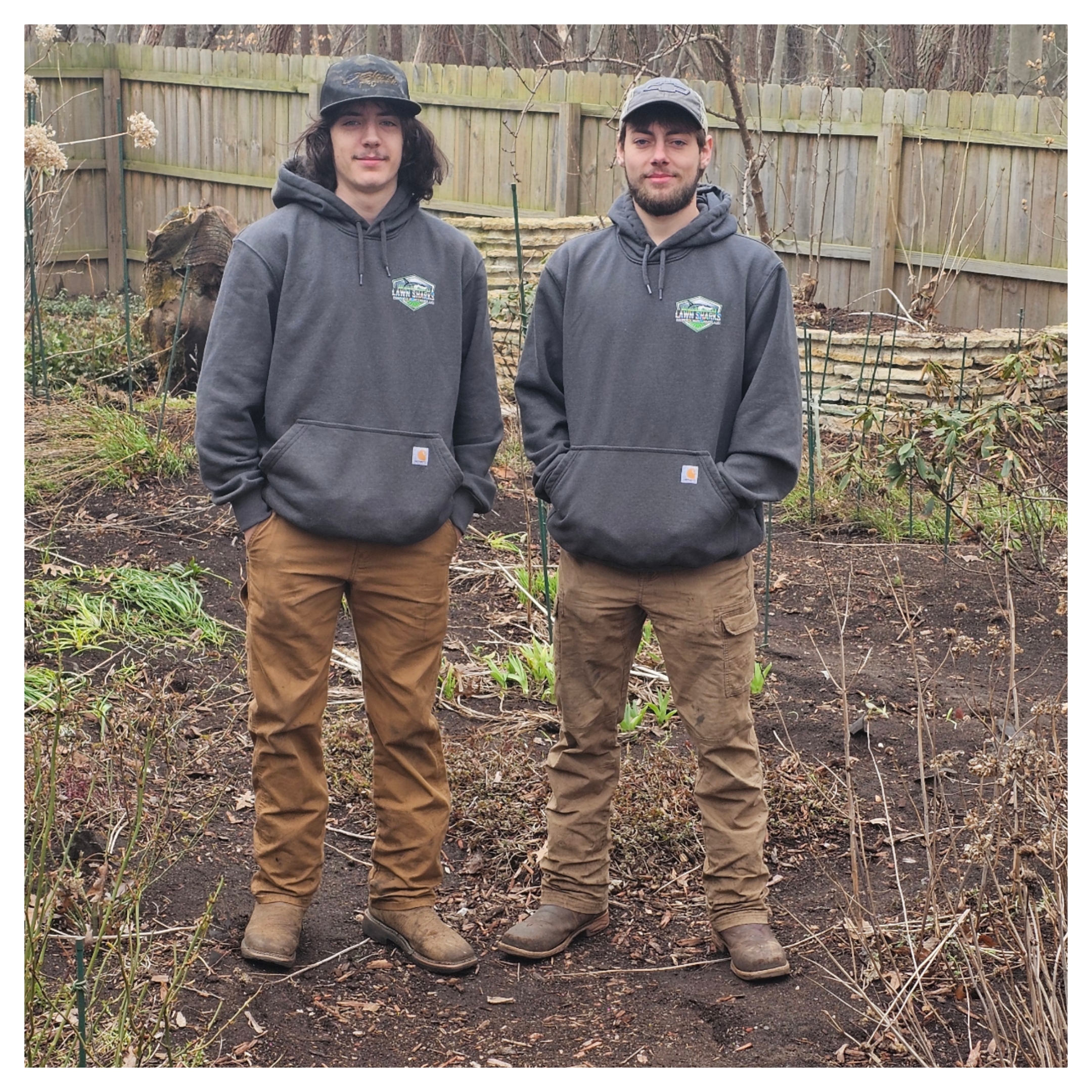

Finally, we’re at the part where I tell you why I’m giving a local La Porte County business a plug in a publication that enjoys a global reach with an international subscriber and readership base. I’m certainly NOT doing it for the money – there’s not a lick of compensation in it for me that’s associated with this shout-out. The reason I’m promoting the efforts of these two hardworking, honest young guys is exactly the same reason I was compelled to free my plants and their corresponding, life-giving ecosystem from their smothering prison of leaves…
Because it’s the right thing to do.
Cheers, and Happy Gardening!
John Stamos is a writer and is co-publisher of The Renaissance Garden Guy. His work has appeared in a number of publications including, most recently, A Man for Some Seasons, Splice Today, and, of course, The Renaissance Garden Guy. He is married to his multitalented sweetheart, the mycologist and writer Ann Simpson-Stamos.


The Renaissance Garden Guy is a participant in the Amazon Associates Program. As an Amazon Associate, The Renaissance Garden Guy earns from qualifying purchases.
Additionally, The Renaissance Garden Guy is a participant in the Bluehost, SeedsNow, and Hosting.com (formerly A2 Hosting) affiliate programs. The Renaissance Garden Guy earns a fee/commission each time a visitor clicks on an ad or banner in this site from one of these companies and makes a subsequent qualifying purchase.
Please click here to view The Renaissance Garden Guy Disclosure page.




But, but, what happened to the leaves? Did they take them away? burn them? bury them? I have one oak tree, one, on my property and the leaf issue is one I constantly battle with. Can’t afford to get anyone to clear them up so have created a patch against the fence for leaves and hoped they’ll just decompose over time – they’re just on bare ground so not covering any plants. You say they never decompose? Arggghhh!
Ah, the Oak Leaf Curse rears its ugly head on the other side of the Globe! They definitely take their time decomposing, Gaby. Oak leaves are loaded with tannins and lignins – chemicals that are best described as leaf-preserving polymers. As far as the removal of my garden’s oak leaves goes, I’m always exceedingly careful to watch for overwintering insects and hibernating animals during the removal process. And really, it’s more of a “relocation” process, as I (as well as the fellows I hired this year to do the job) simply gather them up in tarps and redeposit them in wooded areas of my property that lie beyond the garden’s walls. I actually wrote a pretty interesting article about this here in The RGG back in 2022. It’s called “Autumn Leaves: Rake ’em or Forget ’em?” and it’s got some decent info and pics going for it. Thanks for reading this one, Gaby, and thank you for commenting here. I wish you the best with those leaves, and I wish I had a better decomposition prognosis to offer you. I’m certain, however, that your garden will remain beautifully triumphant despite the oak leaves!
I always enjoyed Spring back in the Midwest. Removing all the dead leaves and what have you. The exposure of little green fingers testing the temperatures, getting ready to make their run for the sun and blooming glory. Here in Phoenix, we gardeners use mighty blowers to blow the tiny leaves and Palo Verde blooms away. (Their blooms are beautiful and bright yellow, but they only last a couple of days. They’re very sticky, and my pups and I bring them inside. They make the house look like it’s got yellow Chicken Pox😉), leaving the stone ready for the next attack.
Phoenix has definitely got a dramatically different climate than the Midwest’s. Your Palo Verde blooms are such glorious yellow treasures. It would be wonderful to have them around through the summer. Thanks gor reading the article, Scott, and for commenting here. Enjoy the spring and those yellow flowers!
Good job, John. When so much is going on it is very difficult to delegate. I too feel like I’m the only person who can do ‘the job’ right. Recently my birthday twin stopped by to bring me some pain relieving salve. My arthritis in my hands does not encourage me to get to my outside chores. Plus, with the weird weather we now live in, I have been hesitant to give my perennial beds their annual haircut. Like haircut today means snow and hail tomorrow. So, my birthday twin offered to help with my garden cleanup. Talk about shame! The salve is remarkable. And I have now cleared the meadow and the cutting garden. Getting down to the level of deadheading is a truly heart-filling job. Hello, Ladybug. Hi, Wasp. Wow, Snapdragons. Looking good.
The way you feel about your garden is very relatable to me. I wish more people would get out and get their hearts and hands in the soil. Thank you for sharing.
Onward and Upward in the Garden!
Cheers,
Lane
Thanks for reading this one, Lane, and thank you for your kind words and for relating your own experiences. It’s definitely heartening as hell to get all that clean-up done. You got yours done, admittedly with some help from your twin and that awesome-sounding arthritis juice, but you still did it yourself (don’t overdo it – you’ve gotta be careful). I can’t take any credit for my own garden’s clean-up this year beyond calling the right guys to do it. Your efforts are admirable, Lane, and your garden and plants thrive beautifully as a result. Thanks once again for having a read, and for your very kind words. I really appreciate it.
It’s always great getting rid of last year’s leaves and watching a garden come to life in the spring. Oak leaves are the worst! Your garden is looking terrific.
Thank you for the kind compliment, Kevin. Oak leaves absolutely are the worst. They’re essentially saturated in preservatives of their own making – lignins and tannins – that keep them from decomposing. If the leaves in my Michiana Shores garden were never removed, many of the plants there would die, suffocating under impenetrable oak leaf “tarps.” I’m glad I got them removed. Thanks once again for the kind words,Kevin.
We are the caretakers of Gardens, Antiques, Art, etc. I agree it was the right thing to do.
Perfectly put, Rick. I’m glad you believe as you do. I couldn’t agree more. Thank you for your kind words.
Phew! Good for you with the leaf removal and getting good help. Now if only I could accomplish the same thing with my hoarder house attic problem!
Haha! I feel your pain, Lisa – my clutter issues are not limited to the outdoor part of this property, and this time I can’t blame Mother Nature for them. Stuff sure does accumulate, doesn’t it? Thanks for reading this one, Lisa, and thank you also for commenting. I really appreciate it!