
"Rise Up Stick, Stand Still Stone": The Rollright Stones and Their Folklore
In “’Rise Up Stick, Stand Still Stone’…”, I delve into the folklore of the Rollright Stones, an enigmatic complex of megaliths in the English Cotswolds.
By Hilary Sparkes

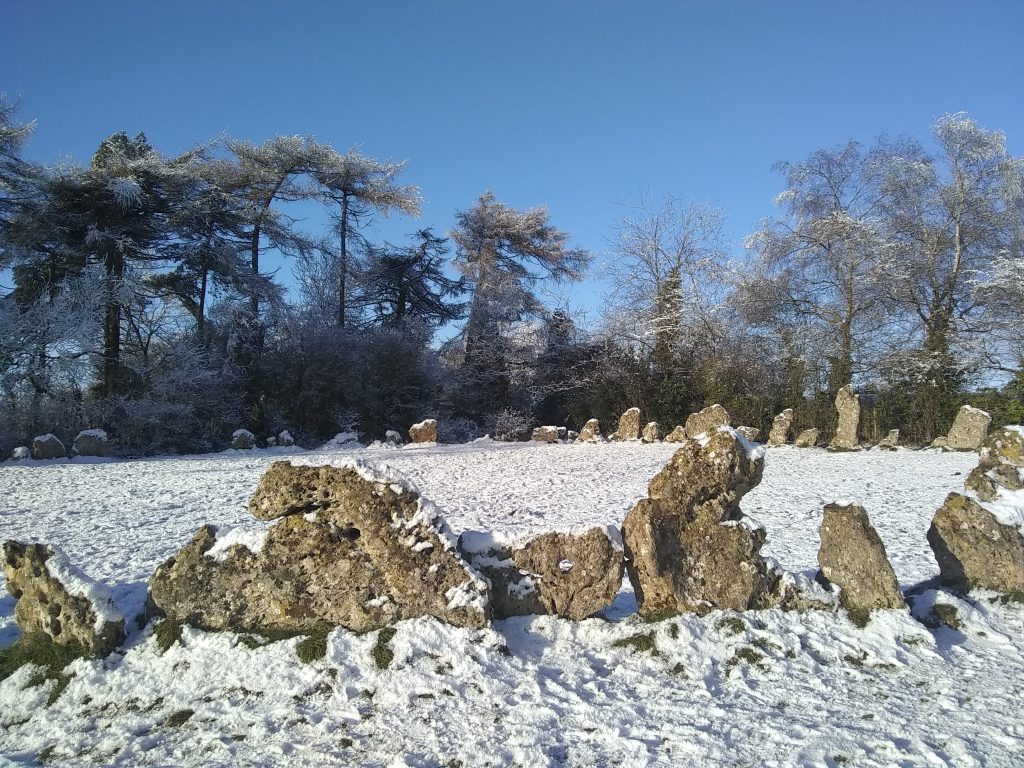
The Rollright Stones, a set of Neolithic megaliths on the border between Oxfordshire and Warwickshire, is one of my favourite prehistoric places, not least because there is a ton of folklore attached to the site. It consists of three distinct structures built from local oolithic limestone: the Kingsmen, a circle of approximately 80 stones; the Whispering Knights, a group of tall stones which are the remains of a dolmen; and, across a road from the circle, a tall standing stone known as the King Stone.
In Neolithic times (c.4000-2500 BCE) the site would have been used for ceremonies, gatherings and funerary purposes. Today it is still used for seasonal rites by modern witches and pagans.
The Naming of the Stones
There is a legend that first appeared in print in Britannia (1607), a survey of Britain and Ireland by English antiquarian, William Camden, which explains how the stones came to be called after a king and his army. The story goes that a king set out to conquer England. When he reached Rollright Hill, he encountered the witch who owned the land. She told him:
“Seven long strides shalt thou take,
If Long Compton thou canst see,
King of England thou shalt be.”
As the king was confident he would be able to see the village of Long Compton from the top of the hill, he replied:
“Stick, stock, stone, As King of England I shall be known”.
But walking seven strides up the hill weren’t enough for the king to get a view of Long Compton so the witch said:
“Rise up, stick, and stand still, stone,
For King of England thou shalt be none;
Thou and thy men hoar stones shall be
And I myself an eldern tree.”
Immediately the king and his men were turned to stone and the witch became an elder tree (Sambucus nigra).
This version of the legend doesn’t mention the Whispering Knights, a group of tall stones which form a dolmen (a type of Neolithic tomb), set some distance from the king and his soldiers. However, a story attached to them states that they were a group of knights who were huddled together plotting against the king at the time they were turned to stone by the witch’s curse. An alternate version has the knights huddled together in prayer at the time of petrification.
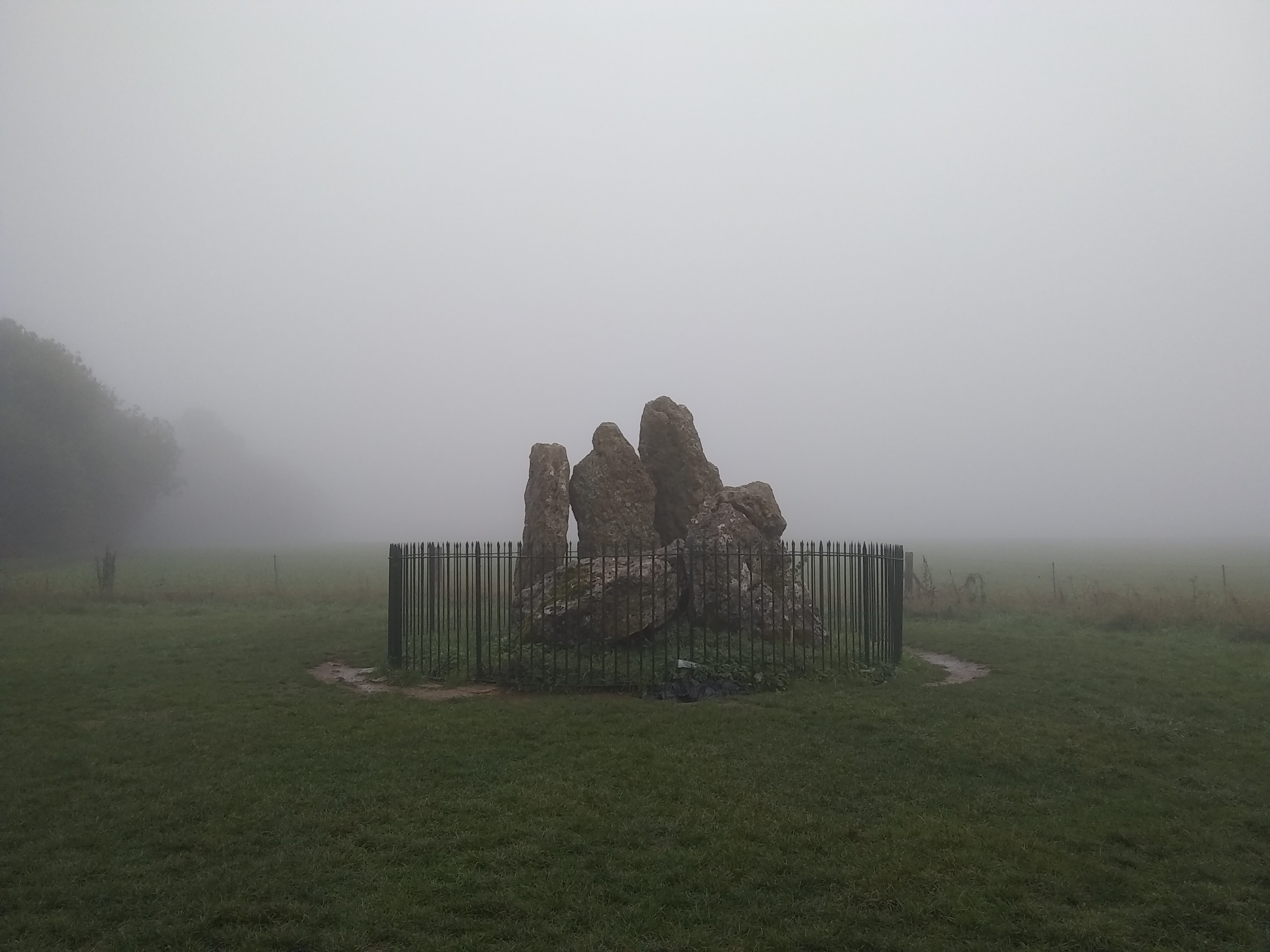
Much as I love this story about the king, his knights and army, the structures were actually constructed at very different points in prehistory. First around 3,800-3,500 came the Whispering Knights dolmen then 1,000 to 1,500 years later the Kingsmen circle was constructed. About 1,000 years after that, the King Stone was erected, possibly as a marker for the nearby Bronze Age (c.2500-800 BCE) cemetery.
But what about the witch? In 2015, a woman’s skeleton was found buried at the site but it has been dated to the 7th century BCE, three millennia after the circle was constructed. This woman may not have been the witch of legend but her grave goods and the prominent location of her grave reveal her to be a person of high status and/or a spiritual leader. She was buried on the high ridge on Rollright Hill not far from the King Stone along with a rare roman patera (a kind of ladle), a large amber bead and an amethyst set in silver.
The Folklore of the Stones
There are records of an elder growing within the Whispering Knights dolmen. When pierced, the elder was believed to shed blood rather than sap. An old tale tells of a nobleman who stabbed the tree with his sword to disprove the belief that the elder tree bled. Blood spurted from the sword’s entry point and the tree screamed. The nobleman went mad, never to recover his sanity (Atkins, pp. 116-117).
Until the 19th century, on Midsummer Eve local people would circle the King Stone while someone made a cut in the tree by the Knights. It was believed that as the tree bled, the king would bow his head (Ibid., p. 116).
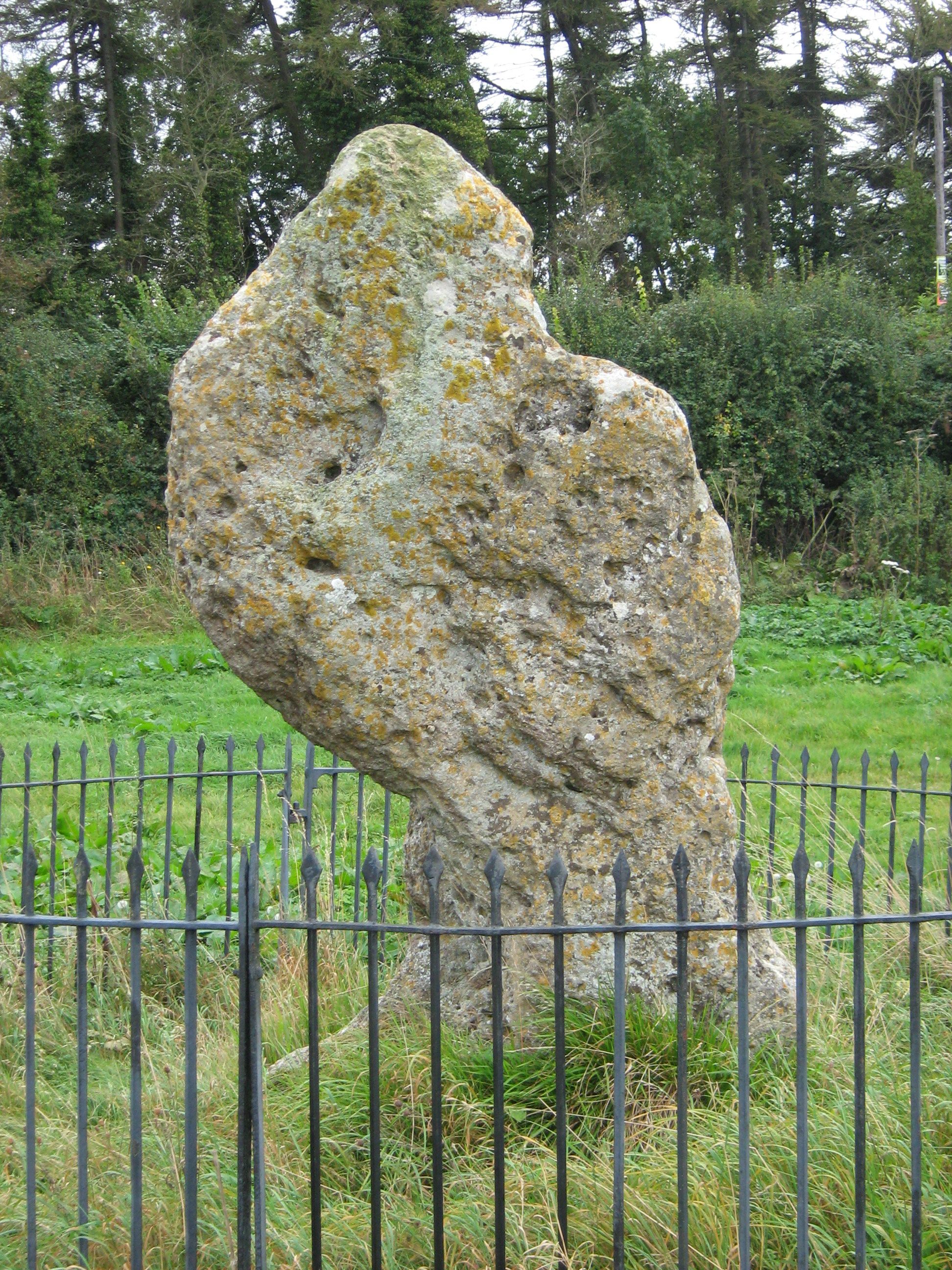
The King Stone was not the only one of the stones reputed to move. In the 1970s, folklore collector C.S. Wharton was told that one night each year all the stones would return to their human form and assemble in a cave to “drink to the confusion of their enemies and the witch” (Wharton, p. 76). Unfortunately, Wharton’s interviewee didn’t mention the cave’s location or which night of the year the gathering was supposed to take place.
The King Stone and the Whispering Knights were also believed to wander down the hill to a spring in Little Rollright Spinney to partake of the water there. Accounts vary as to when this actually took place. Some say it is every night at midnight, others that it is only on saints’ days. Midnight is also the time when the King’s Men resume their human form, join hands and rise up to dance in the air. Any person who witnesses this dance, goes mad (Evans, p. 24).
A well as an ability to move and to return to their human form, the Rollrights were believed to have healing and protective properties. During the First World War, soldiers would take chips from the stones with them to the battlefield for good luck. Prayers offered in the middle of the circle were reputed to aid people in their recovery from illness and possessing a piece of Rollright stone was supposed to keep the Devil at bay. (Wharton, p. 78).
The Rollrights were also said to have divinatory powers, whispering the future to those who asked. In a marriage divination rite, women would run naked around the King’s Men circle on Midsummer’s Eve, in the hope that they might see an image of their future husband.
Another folk belief states that it is impossible to count the number of stones in the King’s Men circle. A baker once devised a method he was certain would help him get an accurate count. He took a set number of loaves with him to the circle and as he walked round, he placed a loaf on the top of each stone. Every time he thought he had completed his count, he found he was one loaf short; that he had overlooked a stone. Like the nobleman who stabbed the elder tree, the baker went mad.
The stones are genuinely difficult to count. Some months ago, I tried my hand at counting and it’s not easy trying to work out if some stones are actually one stone broken in two or are two distinct stones. To avoid the baker’s fate I only tried counting a couple of times, my first attempts resulted in a count of 75, my second in 76 stones. In A Guide to the Stone Circles of Britain, Ireland and Britanny (1995), archaeologist Aubrey Burl puts the number of stones as approximately 80, so I wasn’t far off (Burl, p. 72).
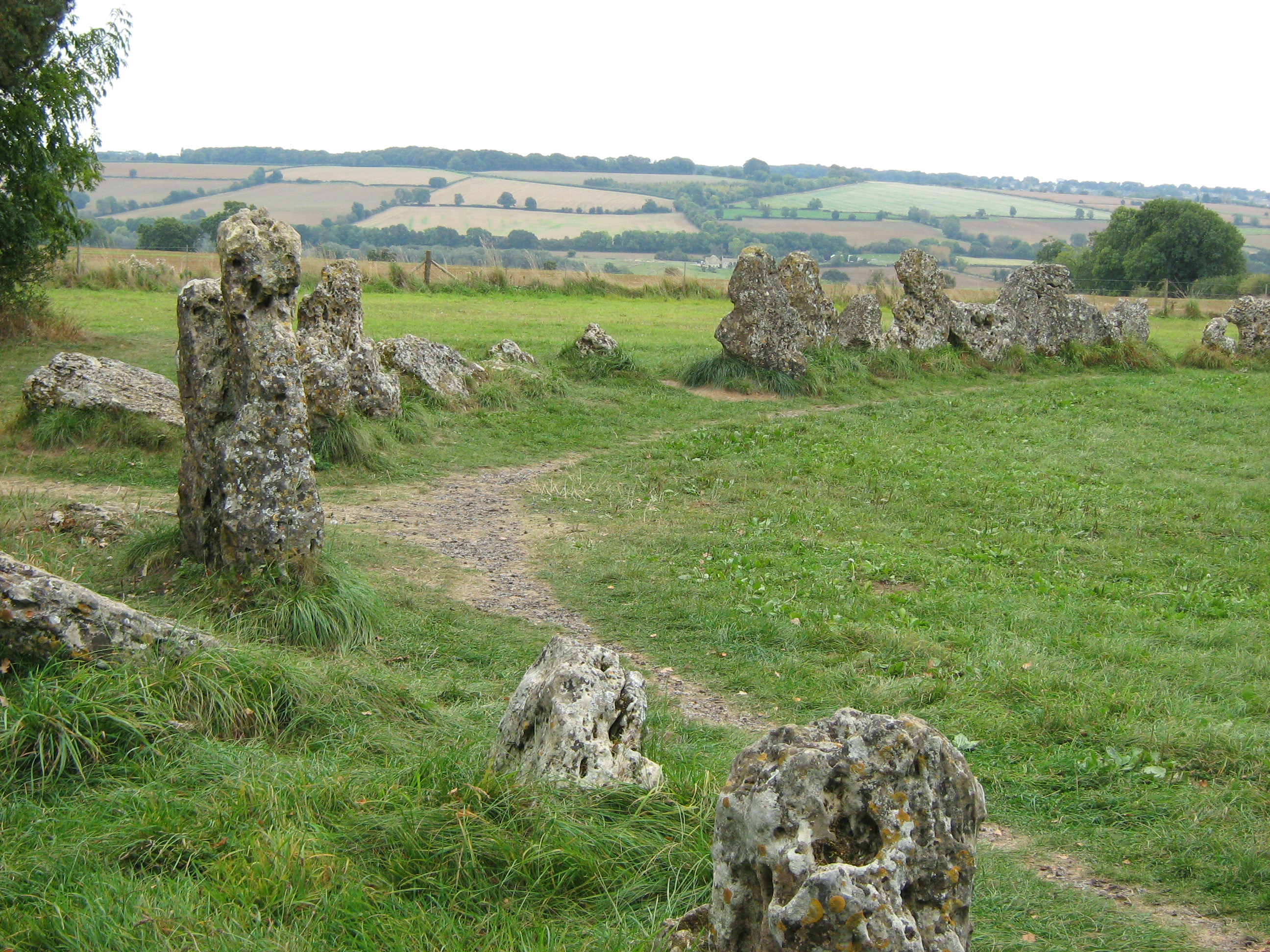
Although people have been able to chip away small pieces of the Rollrights, folklore tells of the travails faced by those foolhardy enough to try to remove a whole stone. In one case a farmer wanted to use one of the stones to mend his bridge. Six large horses struggled to drag the stone down the hill, but it never stayed in place. Every night the stone would move onto the grass beside the bridge. In the end, the farmer decided to return it and harnessed a single horse to the block. The horse drew the stone to the top of the hill with minimal effort.
Another farmer took the cover slab from the Whispering Knights to repair an out-building. As soon as the slab was on his property, the farmer suffered misfortune: his crops failed and his cattle became ill and died. Despairing, the farmer returned the stone. Again, it only took one horse little effort to carry it back up the hill. Once the stone was returned to its rightful place, the farmer’s luck changed for the better (Atkins, p. 115).
It probably comes as no surprise that a site with so much folklore attached to it is associated with the fae. In an article on the folklore of the Rollrights, archaeologist Arthur Evans wrote of the late Will Hughes who had witnessed fairies dancing around the King Stone at night. Hughes had described the fae to a friend as being “little folk like girls”. Hughes’ widow, Betsy, told Evans that there was a hole in the bank by the King Stone where fairies were said to emerge for their nightly dance. As children, Betsy and her friends would use a flat stone to cover over the hole in the evening to keep the fairies in. The following morning, the stone would always have been moved (Evans, p. 22).
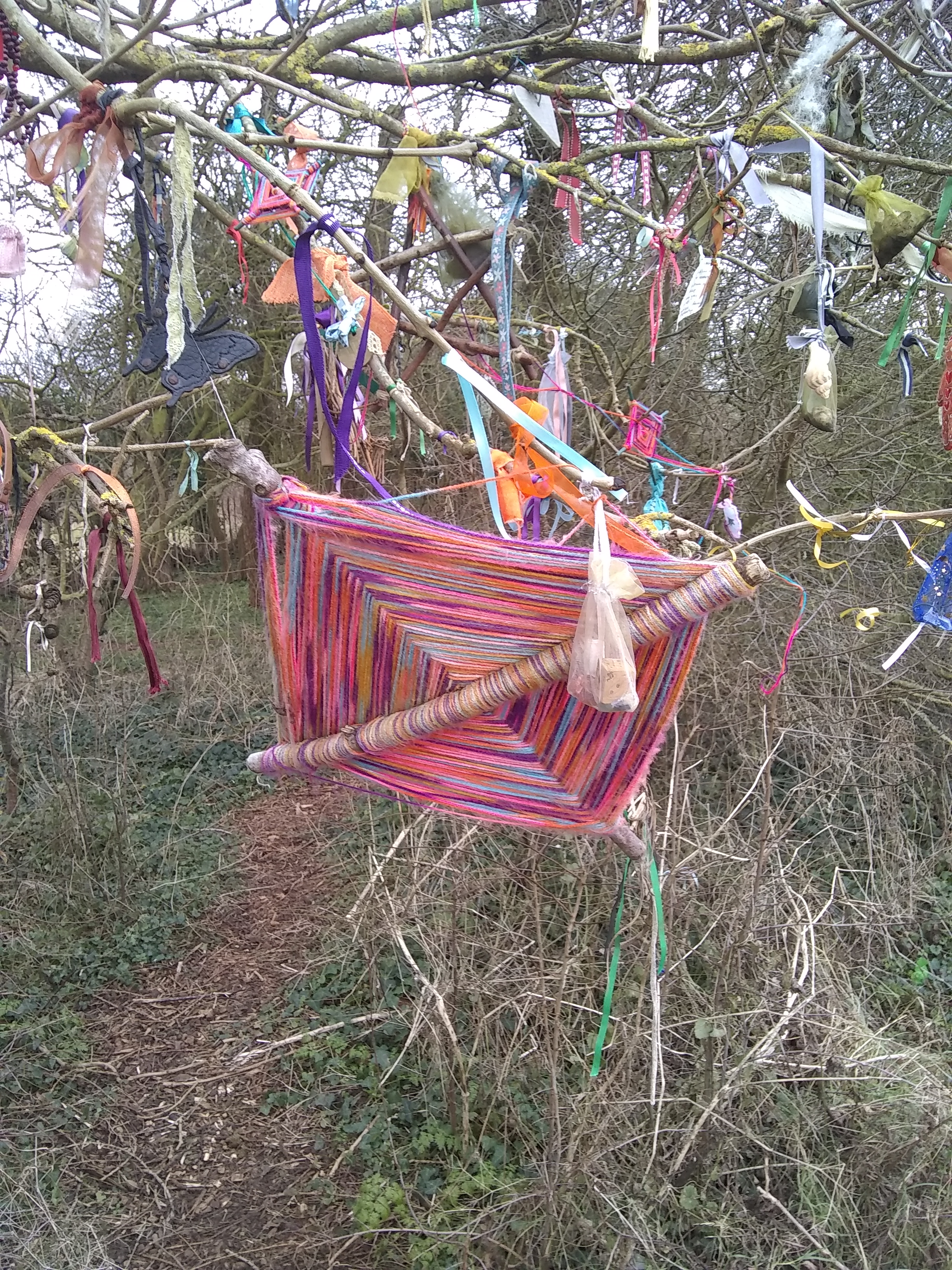
Whether it’s dancing fairies, thwarted kings, wandering stones or trees that bleed, the Rollrights are rich in folklore. From prehistoric ceremonies, Neolithic, Bronze Age and Anglo-Saxon burials to solstice rituals performed by modern pagans, they have also been a place of spiritual significance for thousands of years. Whilst I tried to count the stones and wandered around the King Stone several times in the hope of seeing any potential fairy portals, it is the continuum of spiritual belief that I love most about this enigmatic site.
Sources
Meg Elizabeth Atkins, Haunted Warwickshire (London: Robert Hale, 1981).
Aubrey Burl, A Guide to the Stone Circles of Britain, Ireland and Brittany (New Haven and London: Yale University Press, 1995).
Arthur J. Evans, “The Rollrights and Their Folk-Lore”, Folklore journal, Vol. 6, No. 1 (Mar. 1895).
C.S. Wharton, “The Folklore of South Warwickshire” (unpublished PhD thesis, 1974).
All photographs by Hilary Sparkes.
“‘Rise Up Stick, Stand Still Stone’: The Rollright Stones and Their Folklore” ©2026. Hilary Sparkes and The Renaissance Garden Guy
Hilary Sparkes is a freelance writer and independent scholar with interests in anthropology, folklore and history. She has lived in the county of Warwickshire for most of her life and now posts about its folklore and folk life as The Folklore of Warwickshire on X (@WarksFolklore) and Bluesky (@warksfolklore.bsky.social). She also has a blog, Nature and Supernatural Nature (https://natureandsupernaturalnature.wordpress.com/), based on the work of the American folklorist and anthropologist, Martha Warren Beckwith.


The Renaissance Garden Guy is a participant in the Amazon Associates Program. As an Amazon Associate, The Renaissance Garden Guy earns from qualifying purchases.
Additionally, The Renaissance Garden Guy is a participant in the Bluehost, SeedsNow, and Hosting.com (formerly A2 Hosting) affiliate programs. The Renaissance Garden Guy earns a fee/commission each time a visitor clicks on an ad or banner in this site from one of these companies and makes a subsequent qualifying purchase.
Please click here to view The Renaissance Garden Guy Disclosure page.



This was a fun read! I had the opportunity to visit similar historic sites near Oxfordshire years ago and this piece really brought those places to life!