Western North America is home to many unique flower species, all of which were at first known only to the indigenous habitants of the continent. One of these eventually became known to the rest of the world after an Arctic explorer carried it out of the North: Richardson’s Geranium.
By Ann Simpson-Stamos
Richardson’s Geranium is one of the prettiest native wildflowers found here in the South Cariboo. Common throughout western North America in subalpine and alpine zones, it is a standout with its small, bright flowers growing within the thickly covered forest floors, where it adds itself to the mosaic of colours that hide beneath our dense groves of tall aspen trees.
Richardson’s Geranium (Geranium richardsonii).
Also known as the White Crane’s Bill or White Geranium, the Richardson’s Geranium (Geranium richardsonii) is named for the Scottish surgeon and naturalist Sir John Richardson (1787-1865), who accompanied Sir John Franklin (1786-1847) on two of his earliest overland expeditions into the Arctic regions of what is now known as the Northwest Territories in Canada, where he studied and collected botanical samples of the native plant life found there. Fortunately for Sir John R., he was not a participant in Franklin’s final doomed expedition and instead lived a relatively long life, achieving contemporaneous acclaim and honours for his findings and subsequent works.
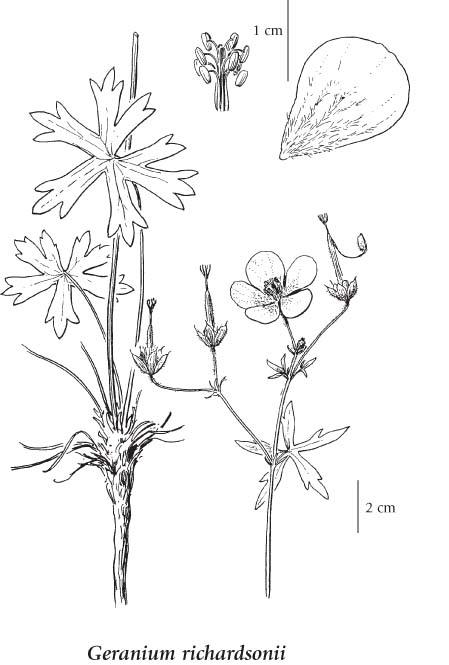
Illustrated details and features of the Richardson’s Geranium (Image source: The Illustrated Flora of British Columbia).
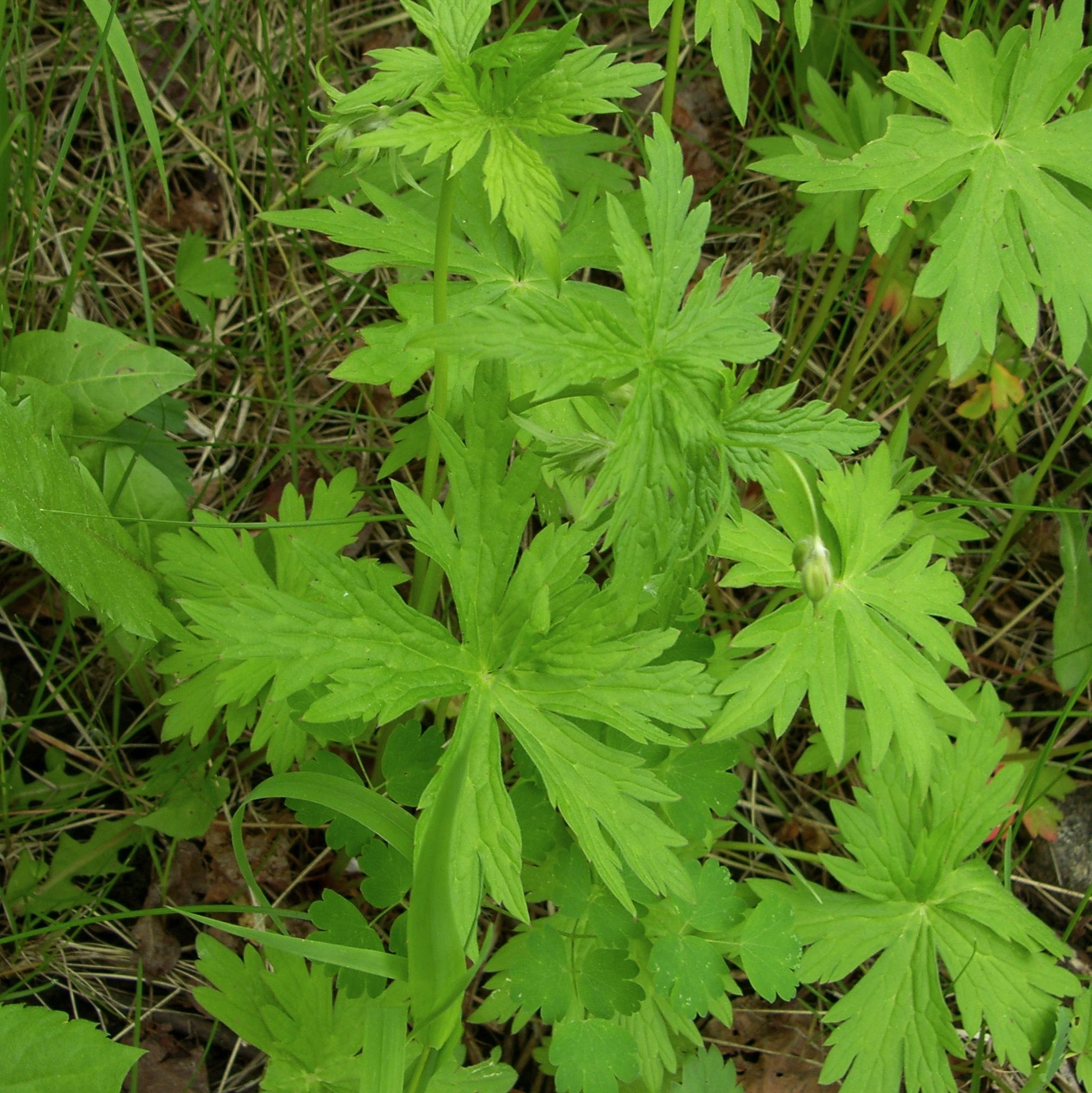
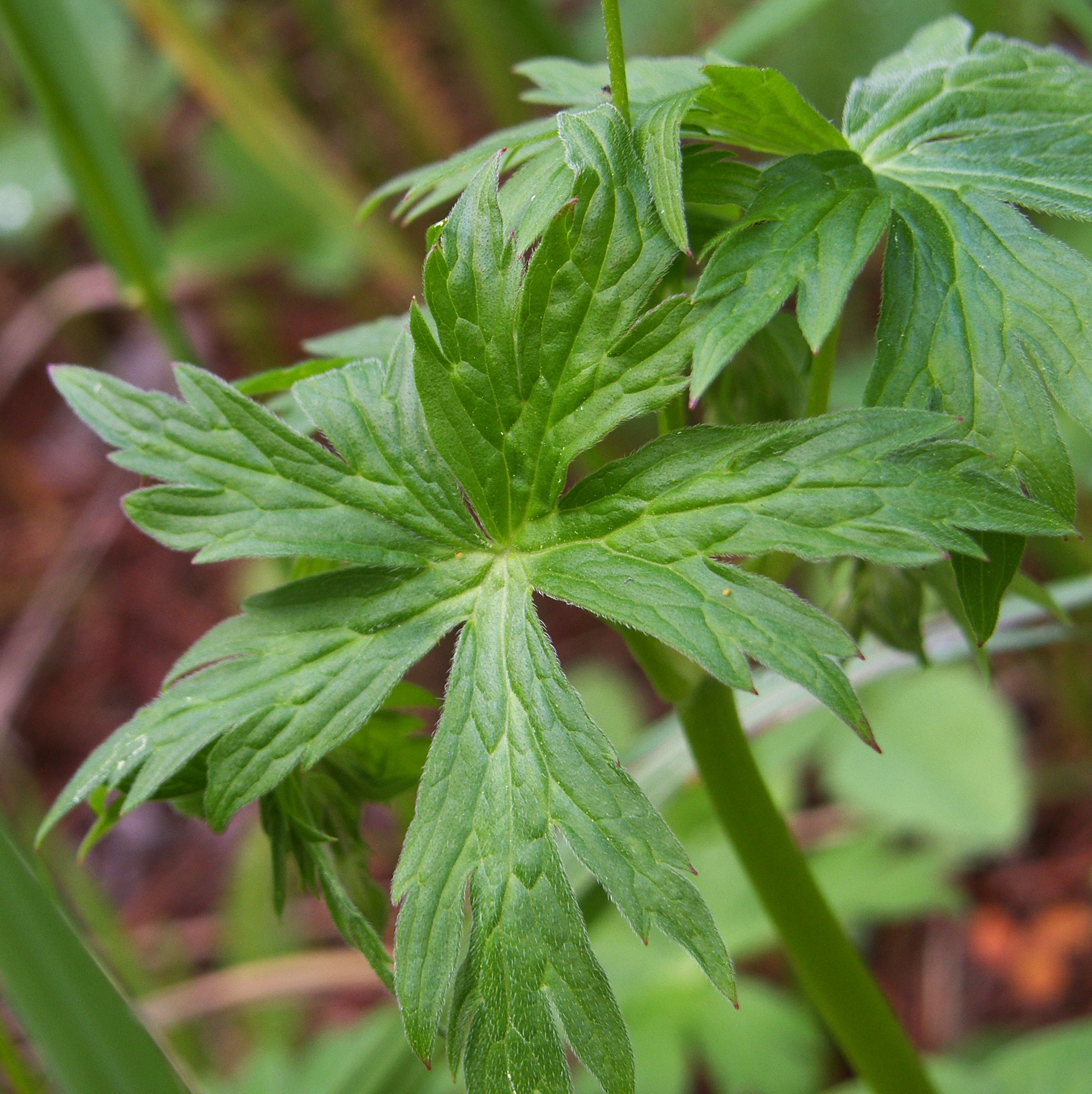
Growing from a thick stem base, the Richardson’s Geranium can vary in height, most often about 20 to 40 cm tall, though it can sometimes reach an overall height of 80 cm. The green basal leaves are long stalked, with a rounded outline, and 6 to 14 cm wide, while stem leaves are paired, stalkless, and divided into 5 to 7 irregularly lobed main segments.
Foliage of the Richardson’s Geranium, showing both the lower basal leaves and the upper stem leaves.
Close-up of the Richardson’s Geranium basal leaves.
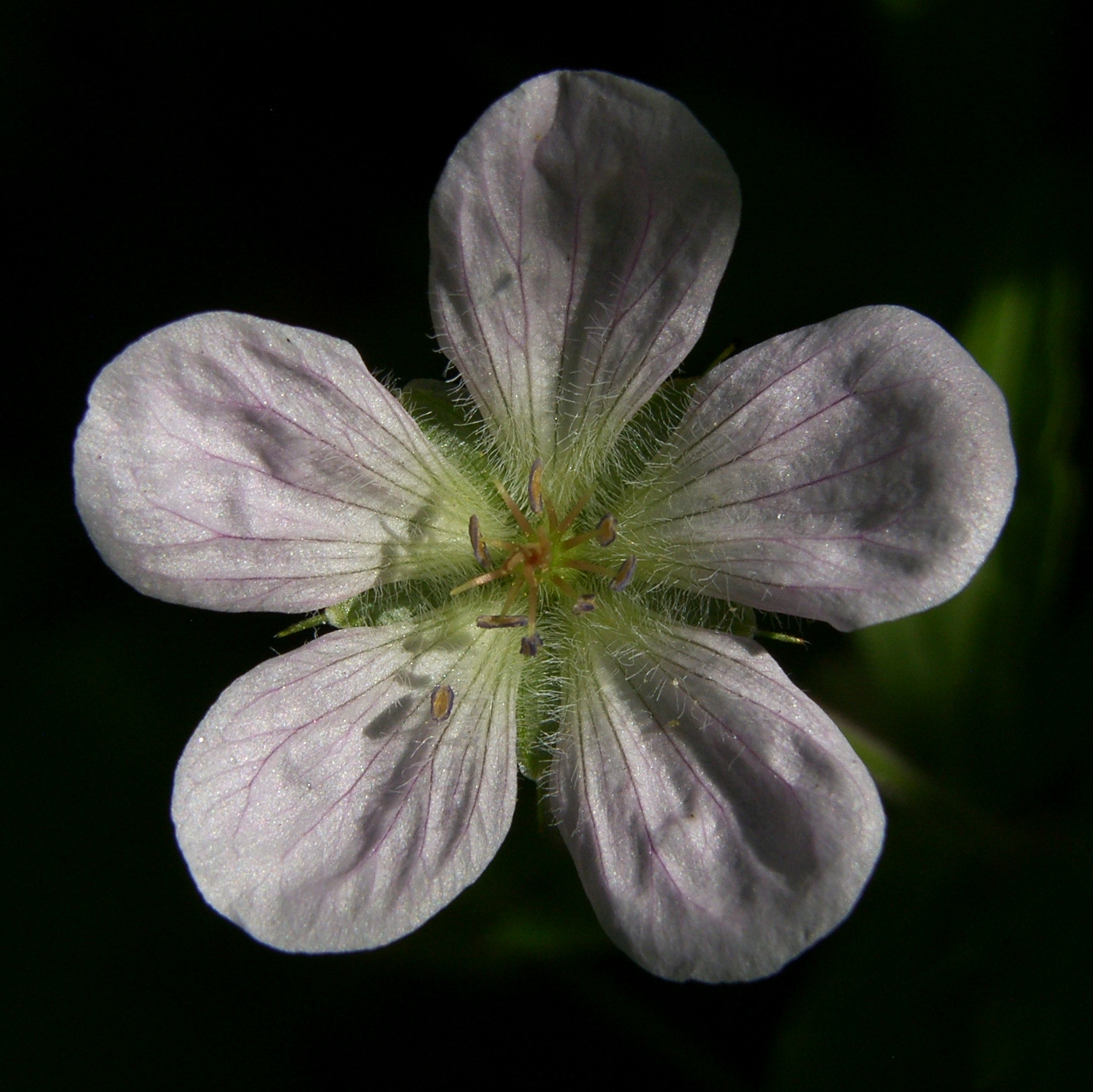
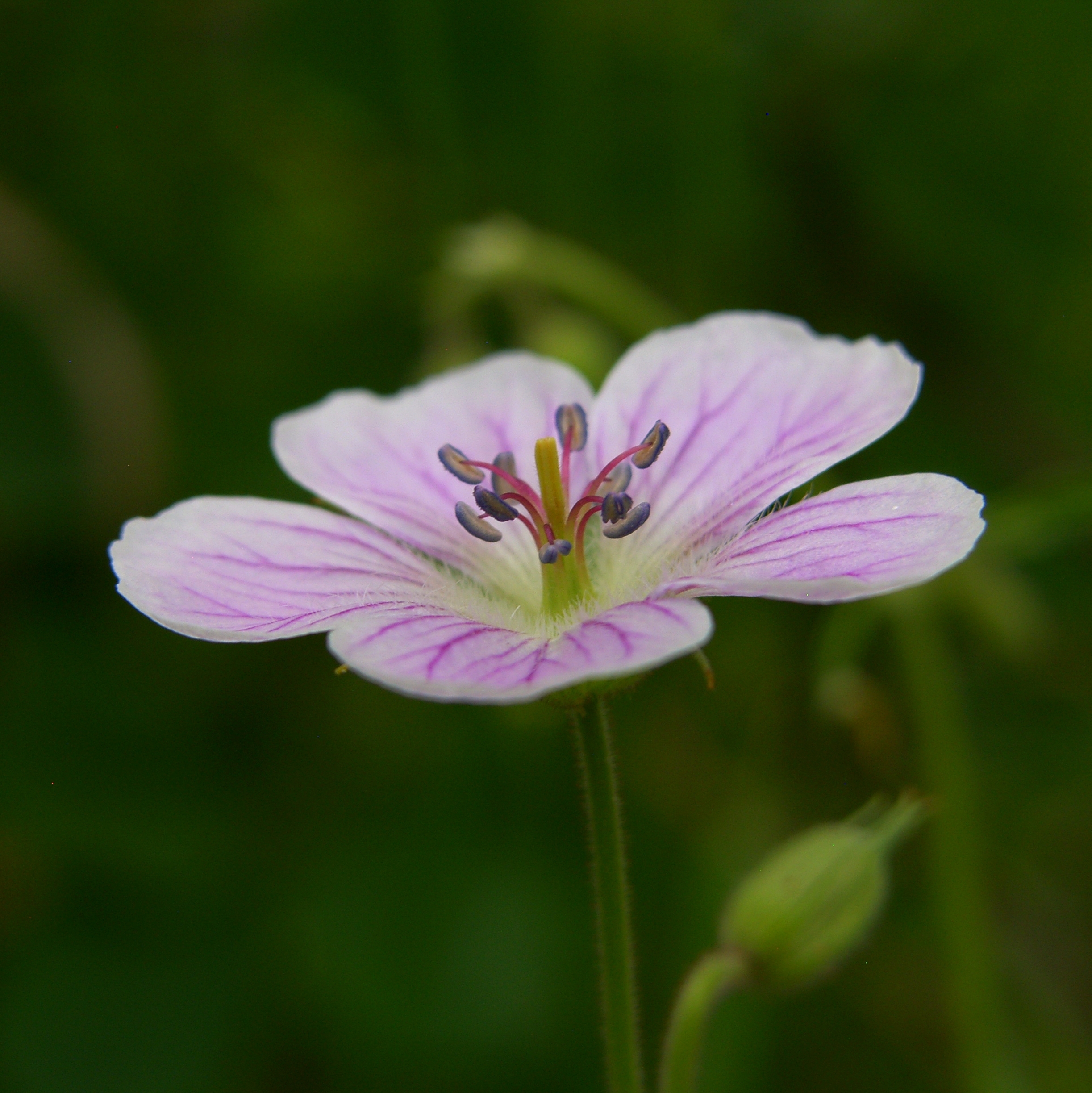
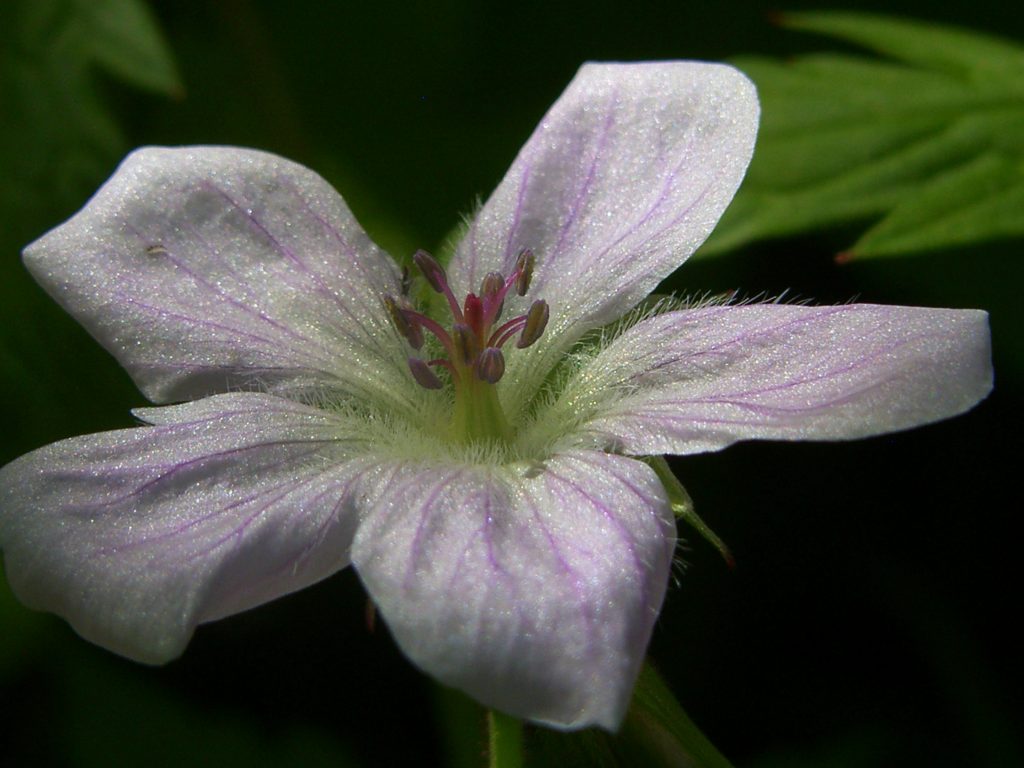
The flowers are typically white (or, frequently quite pinkish), with five petals that are lined with purple veining, and have a soft, hairy appearance towards the inner half where it surrounds a group of ten, tipped stamens.
A closer look at the stamens of the Richardson’s Geranium.
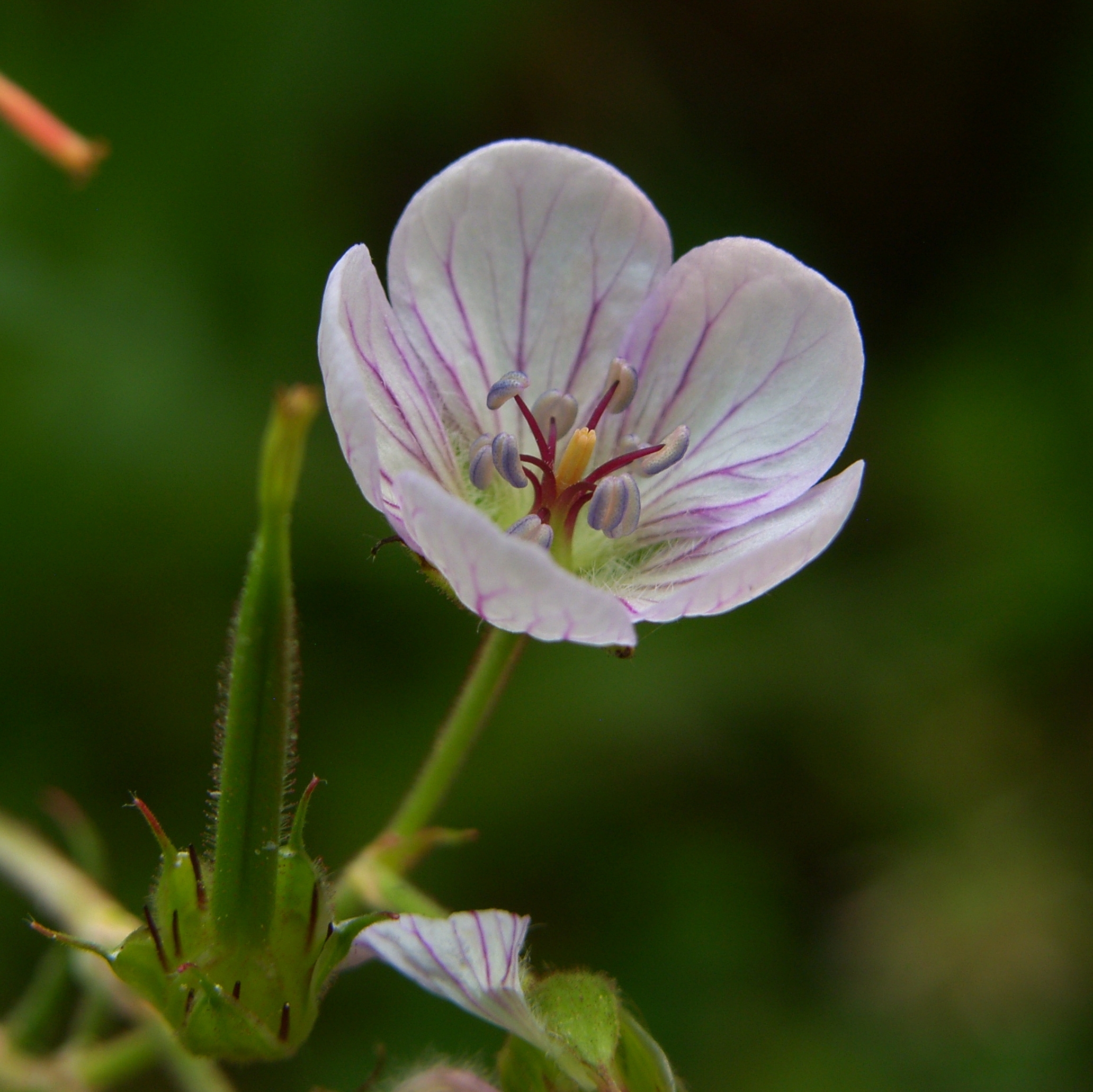
The fruits are five-pointed capsules, and have a long, beak-like appearance which resembles the bill of a crane or stork. The scientific family name Geranium is from the Greek ‘geranos’ which means ‘crane’, and many of the wild geraniums are often commonly referred to as “Crane’s Bill” or “Stork’s Bill” because of this feature.
A new bloom of a Richardson’s Geranium next to the crane’s bill shaped fruit.
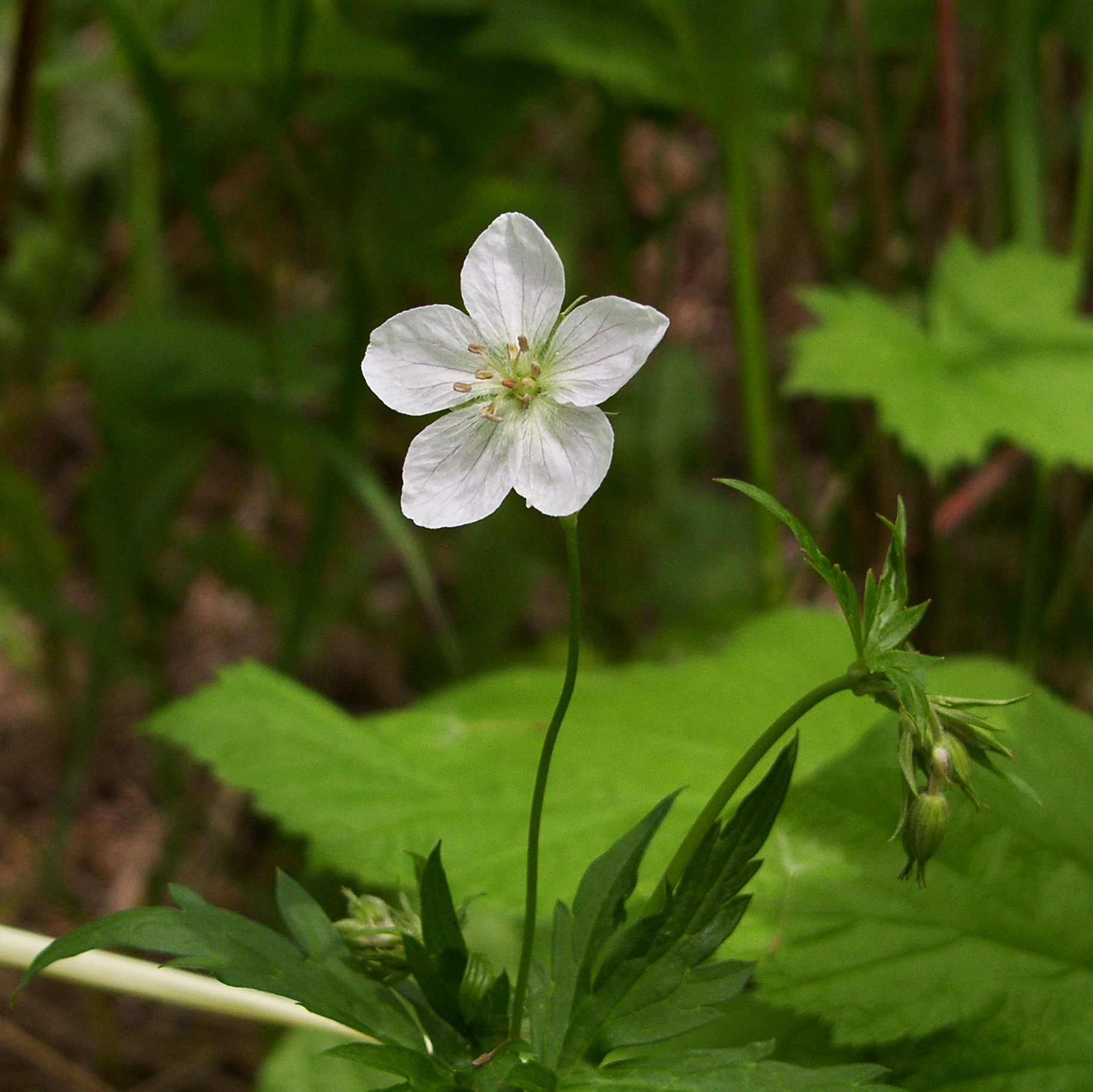
Richardson’s Geranium loves shady, moist habitats, and I often find it lining up along the trails, poking its way up through the very large leaves of the Thimbleberry plants in its quest to reach what little light it requires to thrive.
A single flower of this Richardson’s Geranium is reaching new heights in its quest to rise above the surrounding foliage.
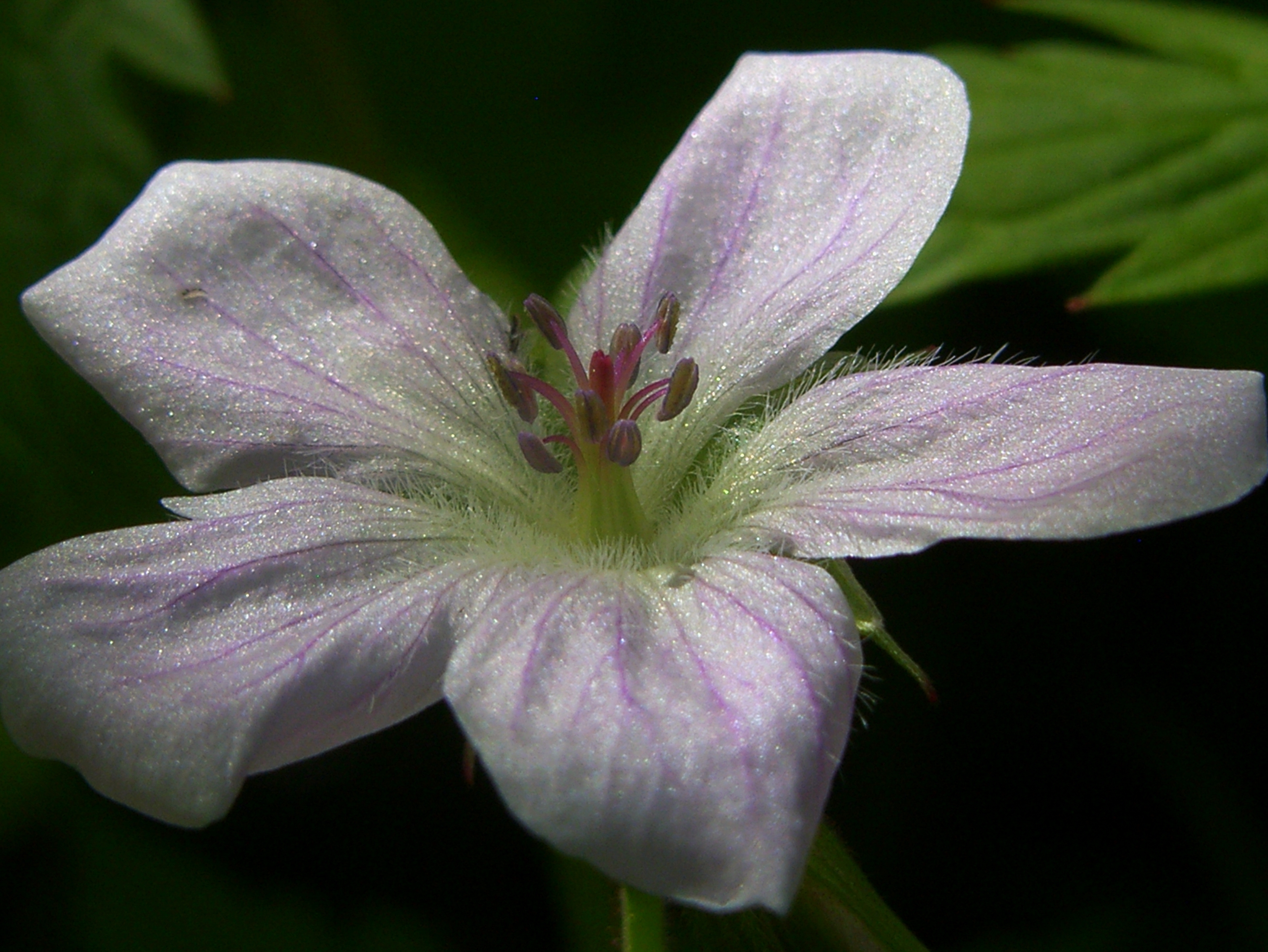
And then, when that light is just right and I lean in closely to photograph one of its blooms, it will literally sparkle beneath my eyes, and it will seem like it is just as glad to see me, as I am to see it.
The glittering features of the Richardson’s Geranium.
I find Richardson’s Geranium bedazzling, and I guarantee that you too will be dazzled by it whenever you see it.
(Publisher’s note: All photos courtesy of the author.)
Ann Simpson-Stamos is a mycologist, writer, and regular contributor to (and co-publisher of) The Renaissance Garden Guy. She resides in Bridge Lake, British Columbia, where she writes and remains in constant pursuit of her mysterious and beautifully surreal quarry. She is married to her RGG co-publisher, John G. Stamos. Click here to follow Ann Simpson-Stamos on X (Twitter), and find her on Bluesky at Ann in Bridge Lake at Bluesky.
The Renaissance Garden Guy is a participant in the Amazon Associates Program. As an Amazon Associate, The Renaissance Garden Guy earns from qualifying purchases.
Additionally, The Renaissance Garden Guy is a participant in the Bluehost, SeedsNow, and Hosting.com (formerly A2 Hosting) affiliate programs. The Renaissance Garden Guy earns a fee/commission each time a visitor clicks on an ad or banner in this site from one of these companies and makes a subsequent qualifying purchase.
10 thoughts on “Out of the North: Richardson’s Geranium”
Lane Cook
I have always loved the name Crane’s Bill. Sparks imagination to think how a plant can have features reminiscent of animals. Thank you for sharing the history of this little beauty.
I agree, Lane! Crane’s Bill is a lovely moniker for this wonderful little wildflower. Thanks so much for reading the piece, and I’m always grateful for your comments, Lane.
What a lovely plant. It’s one that I knew nothing about. The pink flowers must really stand out on the forest floor. I enjoyed reading about it and seeing its photos. Thanks for telling this wonderful plant’s fascinating story.
Thanks so much for your lovely comment, Kevin! This wildflower is one that dominates the shady parts of the property and is a favourite one to observe every year. Very photogenic, and it is always part of my summer photo forays.
What a lovely description of a flower I was not familiar with. I like the fact that you find them growing up from behind larger plants. Shy but determined!
Thank you so much, Lisa! I’m so happy that you found this lovely flower intriguing. And, truly, it is always quite special seeing it emerge from underneath the other plants growing here. A very plucky one, indeed!






I have always loved the name Crane’s Bill. Sparks imagination to think how a plant can have features reminiscent of animals. Thank you for sharing the history of this little beauty.
I agree, Lane! Crane’s Bill is a lovely moniker for this wonderful little wildflower. Thanks so much for reading the piece, and I’m always grateful for your comments, Lane.
Such a pretty plant.
Love the way you described this beauty 🌱🌸
Thanks very much, Roxxy! I’m so glad that you enjoyed reading about this pretty native wildflower.
What a lovely plant. It’s one that I knew nothing about. The pink flowers must really stand out on the forest floor. I enjoyed reading about it and seeing its photos. Thanks for telling this wonderful plant’s fascinating story.
Thanks so much for your lovely comment, Kevin! This wildflower is one that dominates the shady parts of the property and is a favourite one to observe every year. Very photogenic, and it is always part of my summer photo forays.
Thank you, Ann, for your lovely and informative story on this delicate looking flower.
Thanks very much, Rick! I’m so very glad that you enjoyed reading about one of my favourite little wildflowers.
What a lovely description of a flower I was not familiar with. I like the fact that you find them growing up from behind larger plants. Shy but determined!
Thank you so much, Lisa! I’m so happy that you found this lovely flower intriguing. And, truly, it is always quite special seeing it emerge from underneath the other plants growing here. A very plucky one, indeed!