
Summer Cruisin’, American Style.
Nothing holds the anticipation and excitement of summer and reliving a Golden Era of captured memories quite like the classic cars of mid-century America. From roaring engines to sweetheart bench seats, cruising still has the power and bittersweet air of a freedom that once was.
By Jenna Stocker

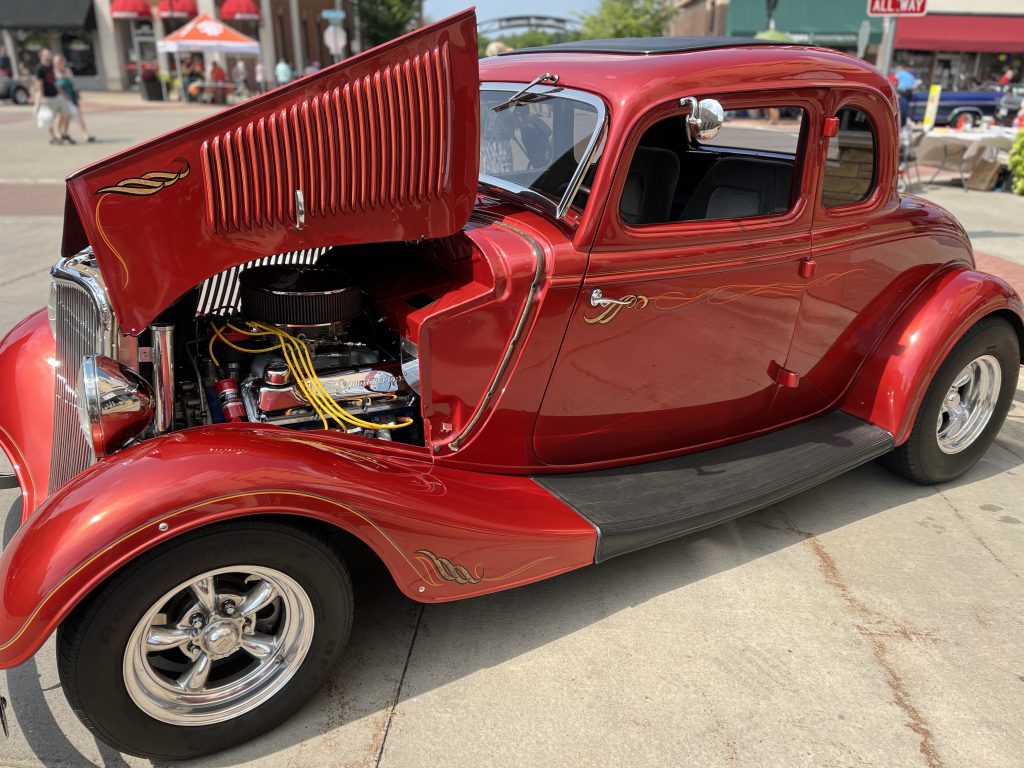
The Classic Car Show in downtown Hastings, Minnesota is a summer tradition, and one every snow-and-sub-zero-bound Minnesotan looks forward to as we put the previous six months, languishing in frozen tundra semi-hibernation, behind us. Every third Sunday from May through September, cars and trucks manufactured before 1985 (a few years after I was born, so I can refer to myself not as old, but “vintage”) converge on the town’s partitioned-off main drag. The cars and trucks gleam with the same pride in their craftsmanship as the owners. Universally glorying in the glory reflecting from their machines, they come from a variety of backgrounds: the retiree who rebuilt his teenage ride — and high school glory, a businessman who has a passion for mechanics and 1960s Chevrolet Corvettes, college sweethearts who still have the 1970 Ford Mustang Boss 302 in screaming Grabber Blue. Even parked on the street, the Boss looked like it was going 137 miles per hour. Being amid these automobiles and their owners is to be reminded of an America that used to be when these cars ruled the road: people shared a common culture, optimism, and fearlessness. America’s unique car culture emphasized the open road and the independence and freedom it brings. America’s mid-century cowboys didn’t ride horses, they rode Ford Mustangs.
The automobiles of the 1940s through the 70s were testaments to the American Century when the American Dream was being realized by families in a post-WWII era. The oversized fins, glossy vinyl interiors, chrome finishes, and V-8 motors were born of American ingenuity, and the Detroit factories and designers that built and assembled these behemoths worked from a place of optimism and unblinkered vision for the future. Families set out to see the country, and motels, highway diners, and tourist traps like Wall Drug were eager to host them.

It’s a moment in history that cannot be replicated by today’s quiet cookie-cutter, dull vehicles. Due to federal regulations and environmental standards, most cars and trucks are indistinguishable from each other, lacking the ostentation or unique characteristics that make classic cars so fun to look at and drive. And with the increasing number of electric vehicles on the road, the distinct roar of powerful internal-combustion engines is also fading.
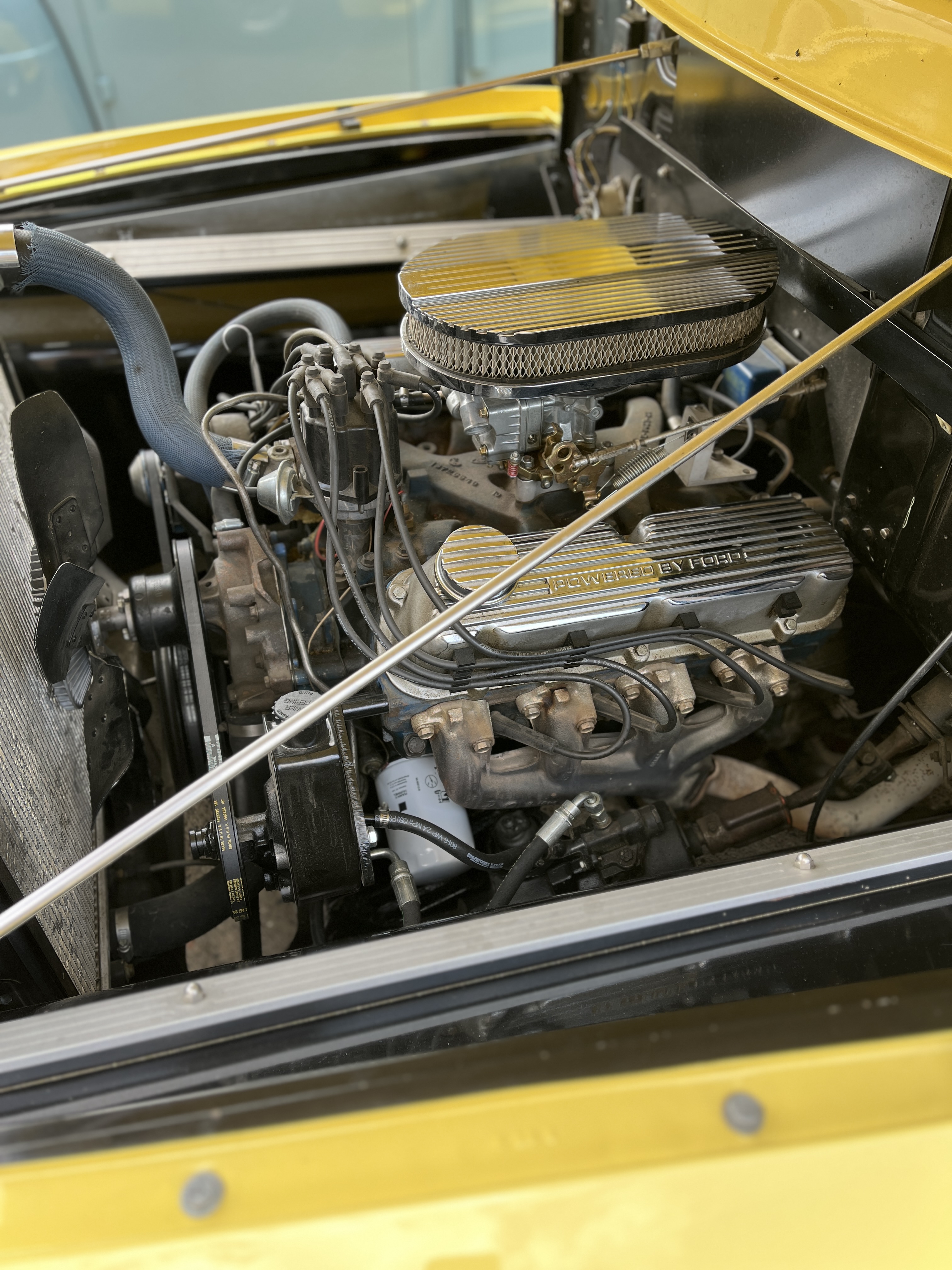
While the look and sound of America’s mid-century legacy automobiles may belong to the past, so too does their more distinguishing tactile characteristics. Like full-service gas stations of the era, manual transmissions are more likely to be found in a museum than on the open road. Stick shifts are facetiously referred to as anti-theft devices. Manual window cranks and headlights are foreign to many people driving today. Still, they ensured an electric failure wouldn’t prohibit a rolled-down window, a mirror adjustment, or being able to move a seat. (What couldn’t a wrench do? Now we need a multimeter to open a car door.) Cigarette lighters were standard. Everything under the hood is accessible and beautiful, everything working in perfect synchronization.
In the upper Midwest, where vintage cars, trucks, and motorcycles spend at least half of the year in storage due to the harsh winters — the natural enemy of the pristinely preserved treasures — seeing one on the road is usually confined to the warm summer months when the threat of salted roads and slush-covered potholes is reduced (but never nonexistent).
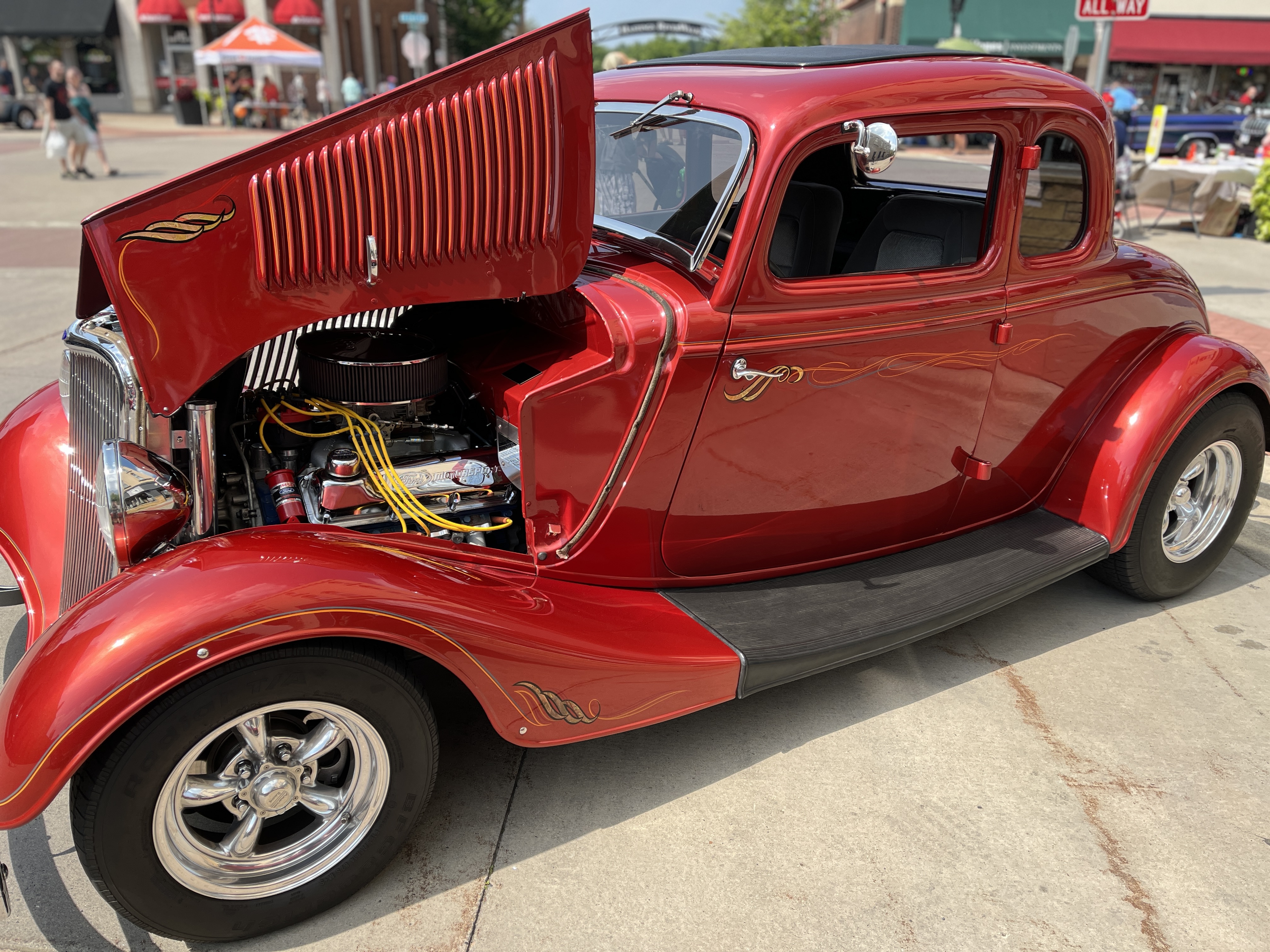
So with the smell of hot dogs and brats roasting on backyard grills permeating the atmosphere and the afternoon baseball game alternating between mellifluousness and elation on garage radios, it’s prime drive time for classic automobiles. Like the scents and sounds of summer, the vision of seven-decades-old American steel smoothing out the roads on white wall tires belongs to those golden days. Last spring, I was fortunate enough to park beside a 1964 Navajo Beige Ford Ranchero on an outing to the grocery store with my son. As the Ranchero cruised away, its fortunate driver and I shared a knowing smile. He was proud of his mint-condition ride, and I was thankful that people are still passionate about preserving this vital slice of American history.
“Summer Cruisin’, American Style.” ©2026. Jenna Stocker and The Renaissance Garden Guy
Jenna Stocker is an editor and writer living in Minnesota with her husband and two small children, dogs, chickens, and fish. She exists between a mid-20th-century dreamscape and the American West, a little bit country and a little bit rock and roll. You can find her on X @JennaLynn88.


The Renaissance Garden Guy is a participant in the Amazon Associates Program. As an Amazon Associate, The Renaissance Garden Guy earns from qualifying purchases.
Additionally, The Renaissance Garden Guy is a participant in the Bluehost, SeedsNow, and Hosting.com (formerly A2 Hosting) affiliate programs. The Renaissance Garden Guy earns a fee/commission each time a visitor clicks on an ad or banner in this site from one of these companies and makes a subsequent qualifying purchase.
Please click here to view The Renaissance Garden Guy Disclosure page.


I really enjoyed reading this🙏
Love the beautiful artistry of the vintage classic cars, the timeless allure…. I relate to the emotional bond between driver and machine. 🙏🩷
Beautifully put, Roxxy. I agree with you. Those amazing machines are rolling works of art! And I think Ms. Stocker perfectly captured and related the sense of that emotional bond you so profoundly feel and so accurately describe in your lovely comments. Thank you so much for reading the piece, Roxxy, and for your excellent thoughts.
Thank you so much! It was a joy to write and to relive such a golden era through these cars!
Dear Ann, Thanks for publishing Ms. Stocker’s excellent piece. A wonderful slice of Americana! (Also, I am living vicariously through the excitement of your new lives together. I am so pleased for both you and John.)
Thanks so much, Rick. We are always honoured to feature Jenna’s excellent writing. Her topics are always so interesting and diverse. (And thank you also for the well wishes!)
Thank you for reading, Rick! Ann and John are so generous with their time and guidance — truly wonderful to work with.
Those classic cars are a reminder of the American Dream. The shapes, styles, and wonderful colors of those incredible cars are more beautiful than any piece of modern sculpture. I am looking forward to warmer weather when these classic cars will hit the road for the summer. I remember going to Wall Drug!
I completely agree, Kevin. The author has captured the essence of that Dream with this evocative piece. Those amazing machines say so much about America with their shapes, their colors, and the rumbling of their engines. Thanks for reading Ms. Stocker’s piece, Kevin, and for leaving your excellent thoughts and remembrances here.
Thank you for sharing your thoughts, Kevin; I absolutely agree. These cars are so much more than just cars! They’re memories, art, and icons!
The American car industry of yore built numerous and varied creations to fulfill our dreams and imaginations.
Thank you for returning these memories to me in your well written article.
So very true, Rick. We can all recall a special fondness for a particular vehicle from our past that meant more than just being able to get us from one place to another. We miss those types of vehicles, and Jenna has definitely tapped into those memories in this excellent piece. Thanks so much for reading and commenting on the feature, Rick.
Thank you again so much, Rick!
Reminds me of the amazing vintage cars that emerged from their garages in summer once the harsh winters with salted roads had passed where I grew up in snowy Upstate New York. Always a thrill to see a great classic car!
Agreed. I could never quite put my finger precisely on what, for me, seeing one of these beauties always evoked. The author has managed to do that very thing with this piece. Thanks for reading it, Lisa, and for commenting here.
That feeling must be universal to us in more … seasonal regions, Lisa. It’s always a sure sign of spring when these hit the road. Thank you for reading!