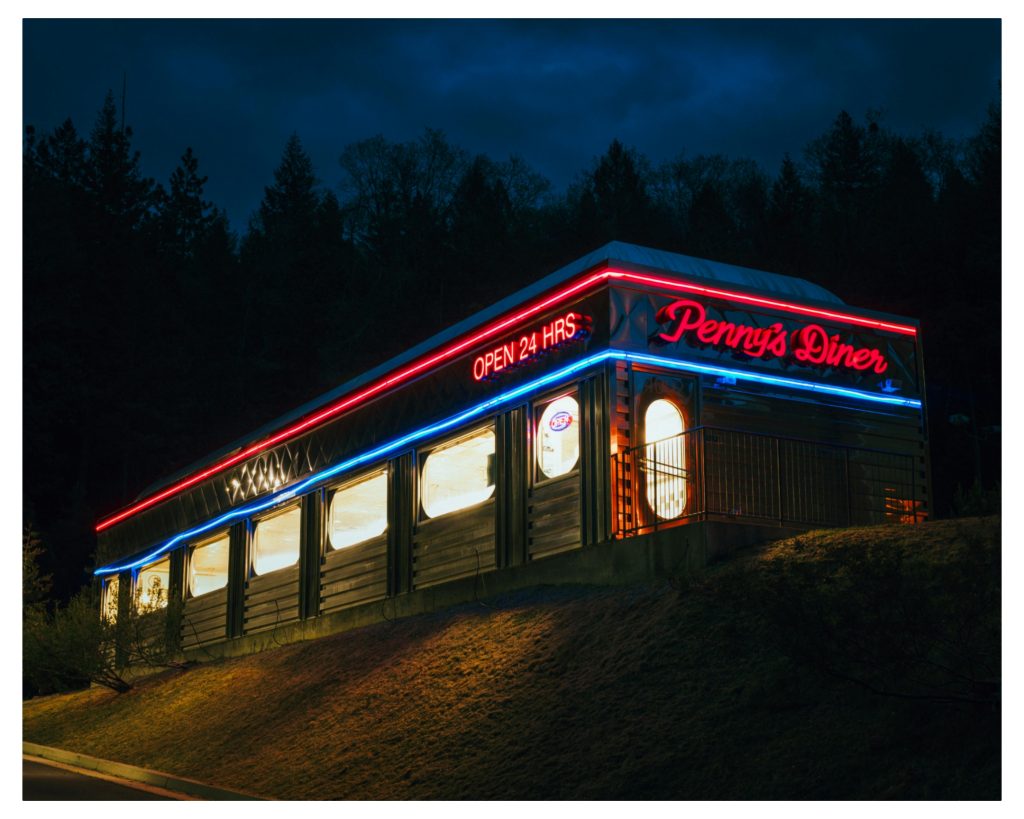

The American Diner
Diners are misunderstood as dull and lowly establishments, pitted unartfully along crumbling highways and forgotten byways. This is a mistake. The American diner is a humble, accessible gathering place where the spirit of this country rests and replenishes a fraying culture stretched in all directions. It links our past with the present, recognizable as much in the wild as on the silver screen.
By Jenna Stocker

Few things in the cultural landscape are instantly recognizable as quintessentially American: Elvis, apple pie, and the diner. In fact, it’s not unusual to find all three housed together in a chrome-trimmed, Formica-topped roadside package. Although these mainstay eating establishments that dot big cities, rural outposts, and the highways in between have changed with the times, they retain an air of familiarity and a taste of home.
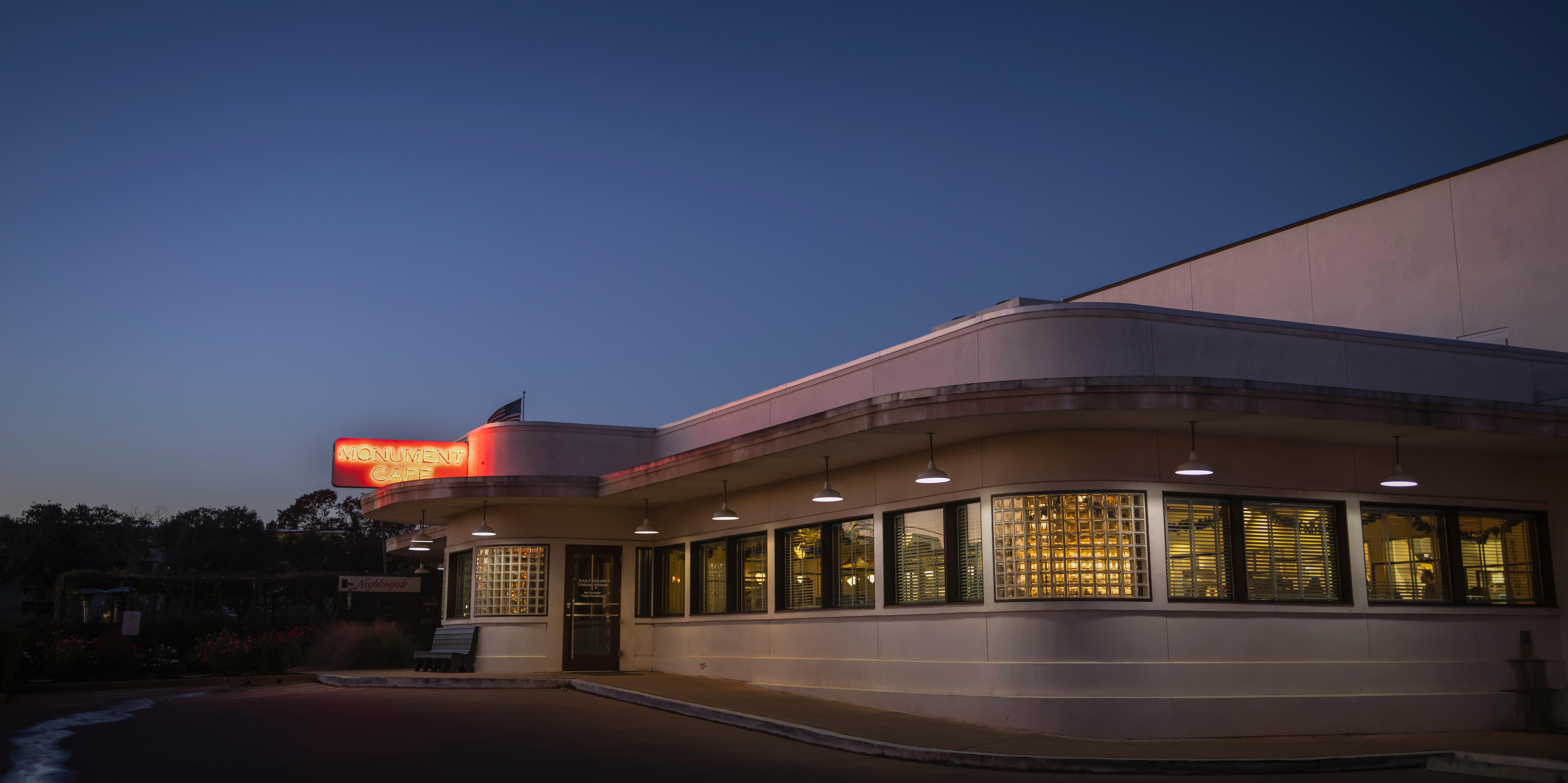
The American diner can be dismissed as an overwrought nostalgia ploy, a throwback to an erstwhile time, or a holdover from a bygone era that outlived its usefulness. But it is overlooked precisely because it is seamlessly woven into the fabric of America, taken for granted because no matter where one finds oneself, there’s always a seat at the counter, and treasured so passionately because it acts as an anchor in a time when the country seems unmoored from its past.
The typical diner, as most Americans know it, harkens back to the 1950s, well over a half-century after Walter Scott refashioned a horse cart into a mobile lunch wagon to feed a burgeoning American working class in 1872. Its basic design underwent few changes, often to reflect the evolving landscape of American society and the customers it served: from industrialization through the 1920s, the Depression era of the ‘30s, and the post-war boom of the 1940s and ‘50s. Settling on the aesthetic of the mid-19th century, however, was pivotal in cementing the diner as an American cultural icon.
The diner pops up everywhere. One of Edward Hopper’s most recognizable paintings, Nighthawks, reflects the noir feel popular in early 1940s film. Later, Norman Rockwell would use the diner as the backdrop for many of his works featured in the Saturday Evening Post. Lee, Massachusetts’ own Joe’s Diner was the inspiration for (and frequented by) Rockwell’s 1958 Post cover The Runaway, featuring a Massachusetts state trooper and young boy with a hobo bindle at his feet sitting side-by-side at a diner counter — a heartfelt depiction of the bond between law enforcement and the community one would be hard-pressed to see, let alone celebrate today. Rockwell’s timeless appeal was in depicting common scenes of everyday life in America, frequently taking place in a diner.
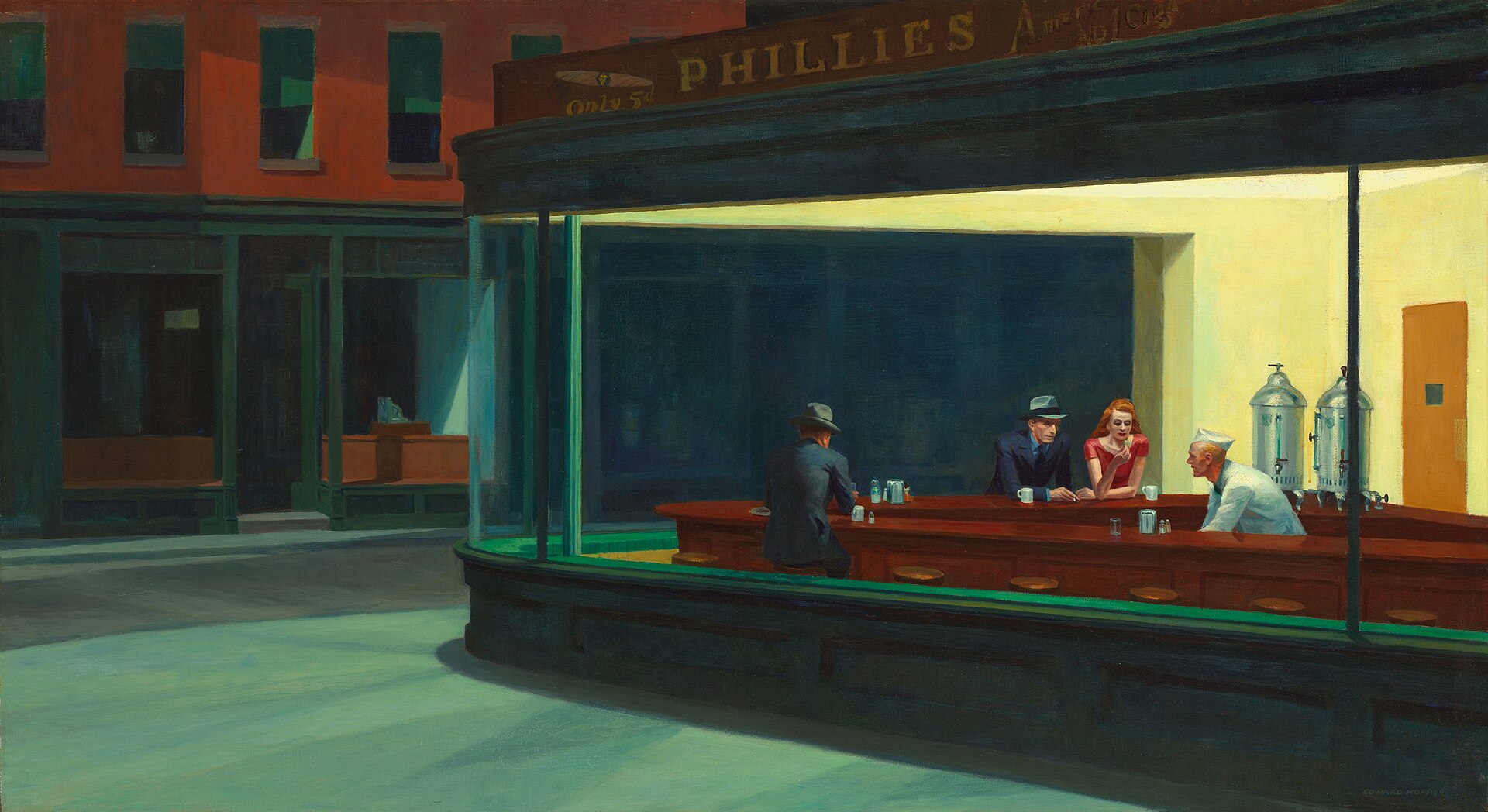
Nighthawks. Edward Hopper. Oil on canvas. 1942.
On both the big and small screens, diners provide the essential backdrop to depict the ordinary realism of everyday life — a clean canvas upon which to tell a story. So, we have 1982’s Diner, Quentin Tarantino’s Pulp Fiction, 90’s cult-classic Swingers, and the mystery-drama television series Twin Peaks, to name a few. The diner accomplishes this through its relatability and familiarity. Nearly everyone has been the lonely heart nursing a breakup with a milkshake, turned off the highway for a bottomless cup of coffee during a road trip, or indulged in budding love and a slice of cherry pie nestled in the corner booth where time seemed to stand still. It’s a good thing many diners stay open late, if not 24 hours. We can imagine the story taking place around us because we have sat on similar vinyl-wrapped stools and exchanged smiles with familiar apron-clad waitresses.
Our own lives often play out in diners, whether as regulars or on a first date. I was a waitress in a 1950s-style diner as a young woman. It only took me a few shifts to learn who the regulars were, what comprised the Blue Plate Special, and the art of small talk. It’s also where I met my husband, arguably my best customer. But in my time as a waitress and customer, there weren’t heated cultural arguments, and no one was turned away for their political views. We never had a sign that read, “All Are Welcome Here” because it was implied. We had an American flag, and that was enough.
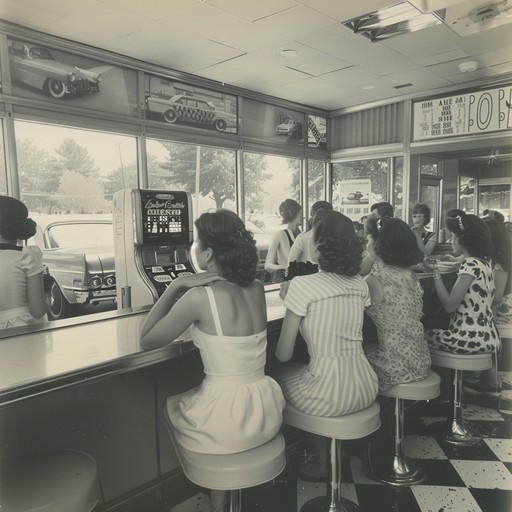
The diner is a stalwart reminder of what defines America: hard work, democratizer of men, and a humbleness that garners criticism from the cosmopolitan set. It is a gathering place for blue-collar workers and middle-class families alike. A place where you’re just as likely to sidle up to the counter elbow-to-elbow with a cross-country truck driver as a New Jersey businessman commuting to New York City. The late David Lynch, co-creator of Twin Peaks, said, “There’s a safety in thinking in a diner. You can have your coffee or your milk shake, and you can go off into strange dark areas, and always come back to the safety of the diner.”
And for an extra helping of comfort, a slice of pie à la mode.
“The American Diner” ©2026. Jenna Stocker and The Renaissance Garden Guy
Jenna Stocker is an editor and writer living in Minnesota with her husband and two small children, dogs, chickens, and fish. She exists between a mid-20th-century dreamscape and the American West, a little bit country and a little bit rock and roll. You can find her on X @JennaLynn88.


The Renaissance Garden Guy is a participant in the Amazon Associates Program. As an Amazon Associate, The Renaissance Garden Guy earns from qualifying purchases.
Additionally, The Renaissance Garden Guy is a participant in the Bluehost, SeedsNow, and Hosting.com (formerly A2 Hosting) affiliate programs. The Renaissance Garden Guy earns a fee/commission each time a visitor clicks on an ad or banner in this site from one of these companies and makes a subsequent qualifying purchase.
Please click here to view The Renaissance Garden Guy Disclosure page.


I really enjoyed this wonderful essay. It brought back memories from my childhood when I would visit my mother while she was waitressing at the Peter Pan and the Golden Gate in Vancouver, BC. These were venerable establishments that could have easily served as an inspiration for Edward Hopper’s masterpiece. Thank you again for the reminder of those magical times.
What great memories we carry with us! Thank you, Eleanor, for sharing yours here. I’m glad it connected with you. Magic comes in so many forms, we just have to look for it!
Thank you for reading and taking the time to comment!
Thank you for this awesome article – much appreciated.
It brings back happy memories.
Blessings
I’m so glad you enjoyed it, Ann! Thank you for reading it. Have a lovely day!
I really enjoyed your essay. I have visited many diners through the years, but one in particular really stands out in my memory – a small one I visited with my uncle many, many years ago. It was on an old country road in the middle of nowhere, and it had no windows or sign. My uncle knew it was open because a single bare light bulb near the door was on. Needless to say, I was concerned by its desolate exterior appearance, but when we opened the door I could immediately smell home cooking, which was heavenly. And the pie? It was, of course, homemade too, and just as heavenly. I was never able to find that little diner again, but I will always remember it. My memories of this magical little place, and of my experience there, are proof positive of your analysis of the humble diner’s importance in our national landscape and in our collective cultural psyche. Wonderful piece!
I’m so glad you have this wonderful memory, Kevin. I’m convinced it usually isn’t the big trips or fancy vacations that have a deep impact on our lives, but rather these small, everyday occurrences and unassuming events that really stick with us, and I think your recollection reflects that. Thank you so much for sharing this and for reading my essay. I’m happy it connected with you!
I found comfort food in the form of this essay about diners! A pleasure to read!
Thank you so much, Lisa. It’s a topic I love and has brought me love, having met my husband as a waitress in one!
Dear Jenna,
I am so pleased to find your lovely essay published here. Diners are quintessential symbols of the best that American culture has had to offer from the last century through today. Wonderful piece.
This is so kind of you to say, Rick. Thank you! It’s interesting that these seemingly plain places contribute so much richness to our lives. I’m glad you connected with it.