What's in a (Common) Name?

What's in a (Common) Name?

Finding a mushroom is easy, knowing what it’s called can be hard. But it doesn’t always have to be that way. Sometimes, finding the right name is as easy as applying the old adage, “What’s in a name?” – or perhaps just “What’s in a (common) name?”

By Ann Simpson-Stamos

Whenever I’m out looking for fungi and come across a new find, I immediately want to know its name. Of course, this will entail learning more about the specimen in order to determine the correct taxonomy and the scientific name that has been assigned to it.

But, what about the common name? Every mushroom that is currently known to mycologists will have a scientific name, but not every mushroom will have a common name assigned to it.  And if it does, what do these common names mean, and where do they come from? How useful are common names?

Unlike the taxonomic name of a mushroom, a common name often has its roots within the non-scientific community, and it is usually a name that has found consensus and acceptance amongst foragers and mushroom enthusiasts. These names often reflect the features, properties, or habitat of a mushroom, or sometimes even its culinary properties if it is a highly sought after edible.

Many of these names have been in place for a long time and are just handed down to us over the years, while others are fluid and have more than one common name in use that can sometimes be rooted in regionalism, and in that case, the common name could depend on where you live.

And, quite frequently, a really good common name can make it possible to know what kind of mushroom you’ve stumbled across, especially when you get to know these fungi names and can use them to identify the features being referenced.

So, let’s look at a few species that I’ve come to learn about over the years. These are mushrooms that I believe anyone can learn to identify just by getting to know their common names.


What's in a (Common) Name?
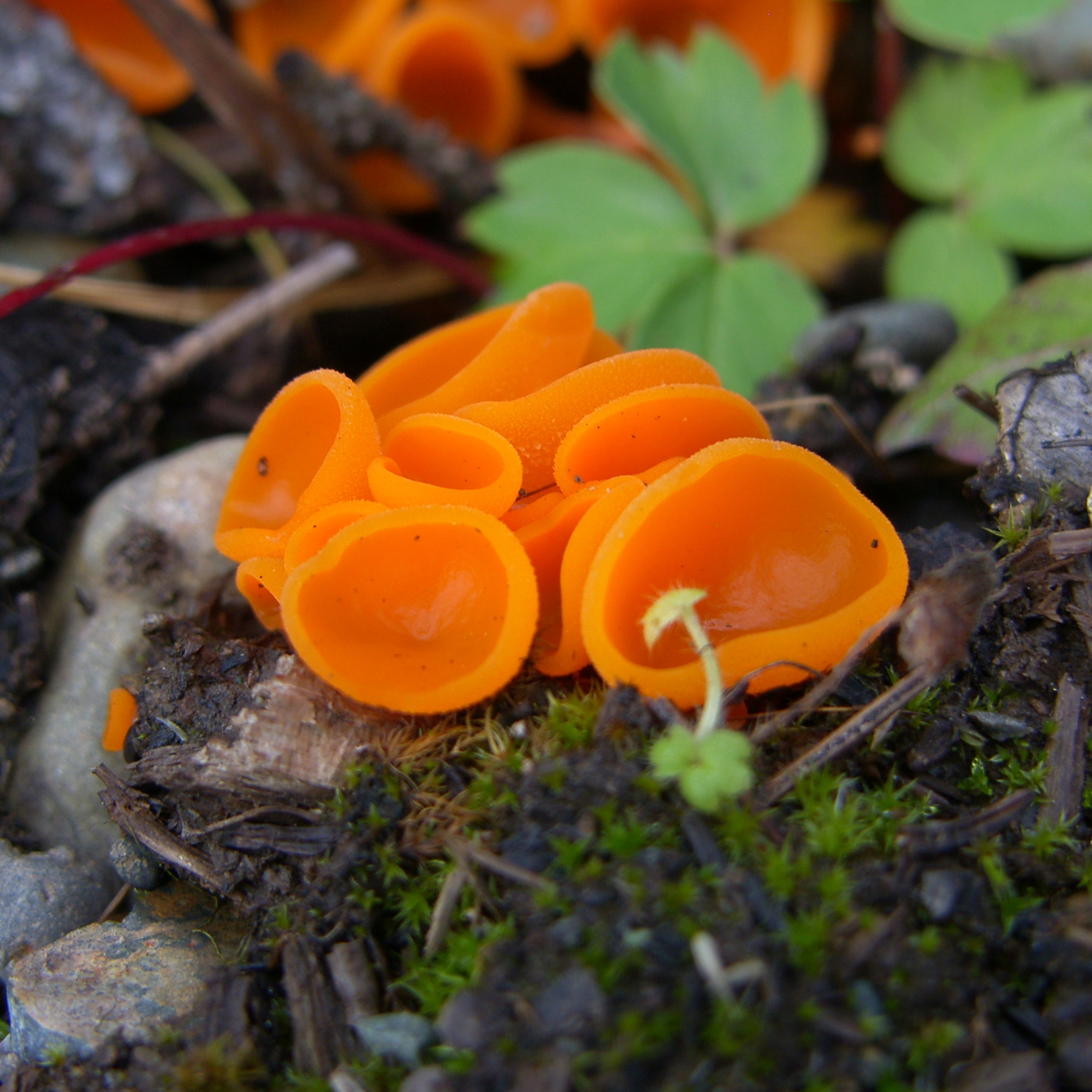
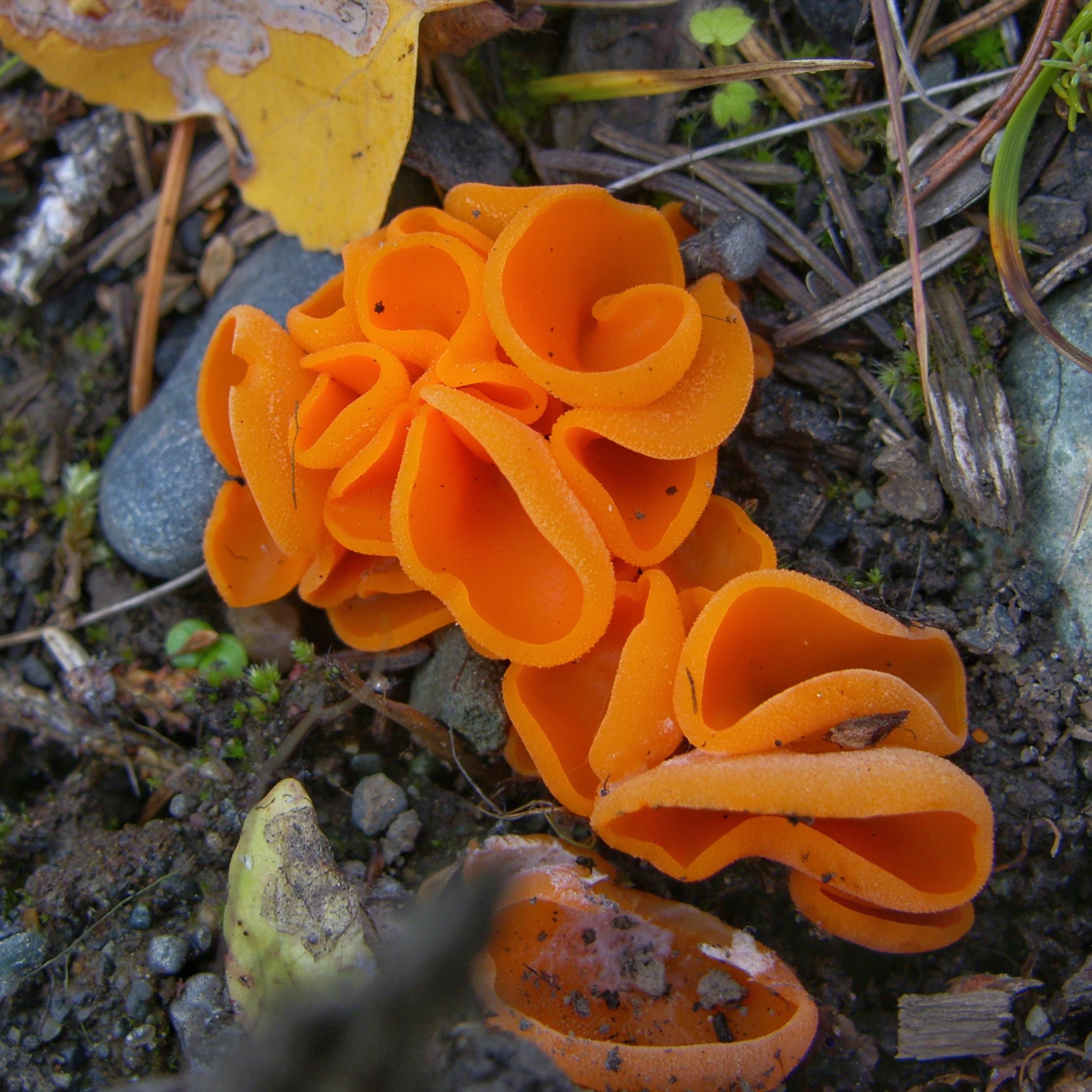
Orange Peel Fungus (Aleuria aurantia).

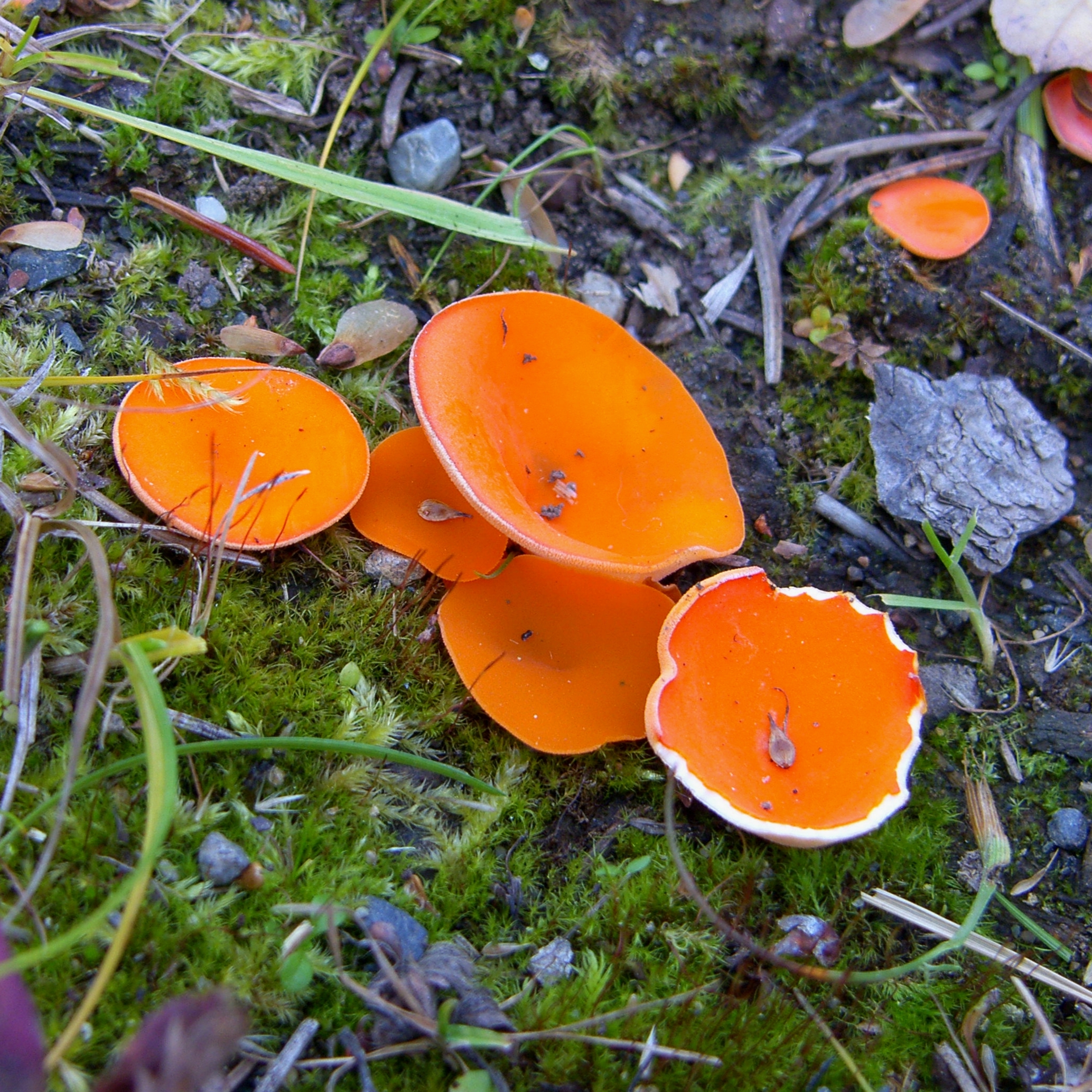
Orange Peel Fungus (Aleuria aurantia) is a small cup-like fungus that you will often find growing on hard packed soils, frequently along trails. When it is mature, it can easily be mistaken for discarded orange peels. Widely distributed, it can be found at various times of the year, though late summer to fall is typical for its appearance.

What's in a (Common) Name?
The young, cup-like features of Orange Peel Fungus.

When young, the fungus is shaped like a small, stem-less cup, with a bright orange interior and a slightly lighter exterior, maturing later into a flattened disc.

What's in a (Common) Name?
Older specimens of Orange Peel fungus can fool you into thinking these really are discarded orange peels.

A similar species is the Spring Orange Peel Fungus (Caloscyphia fulgens), which is also orange, though blue-green staining is usually found around the edges. This mushroom prefers growing on forest duff in coniferous habitats. The Scarlet Cup (Sarcosypha coccinea) and the Scarlet Elf-cup (Sarcosypha austriaca) also have a cup-like to flattened appearance, though the colours range from a bright red to a darker orange-red, and both prefer to grow on wood hosts.

What's in a (Common) Name?
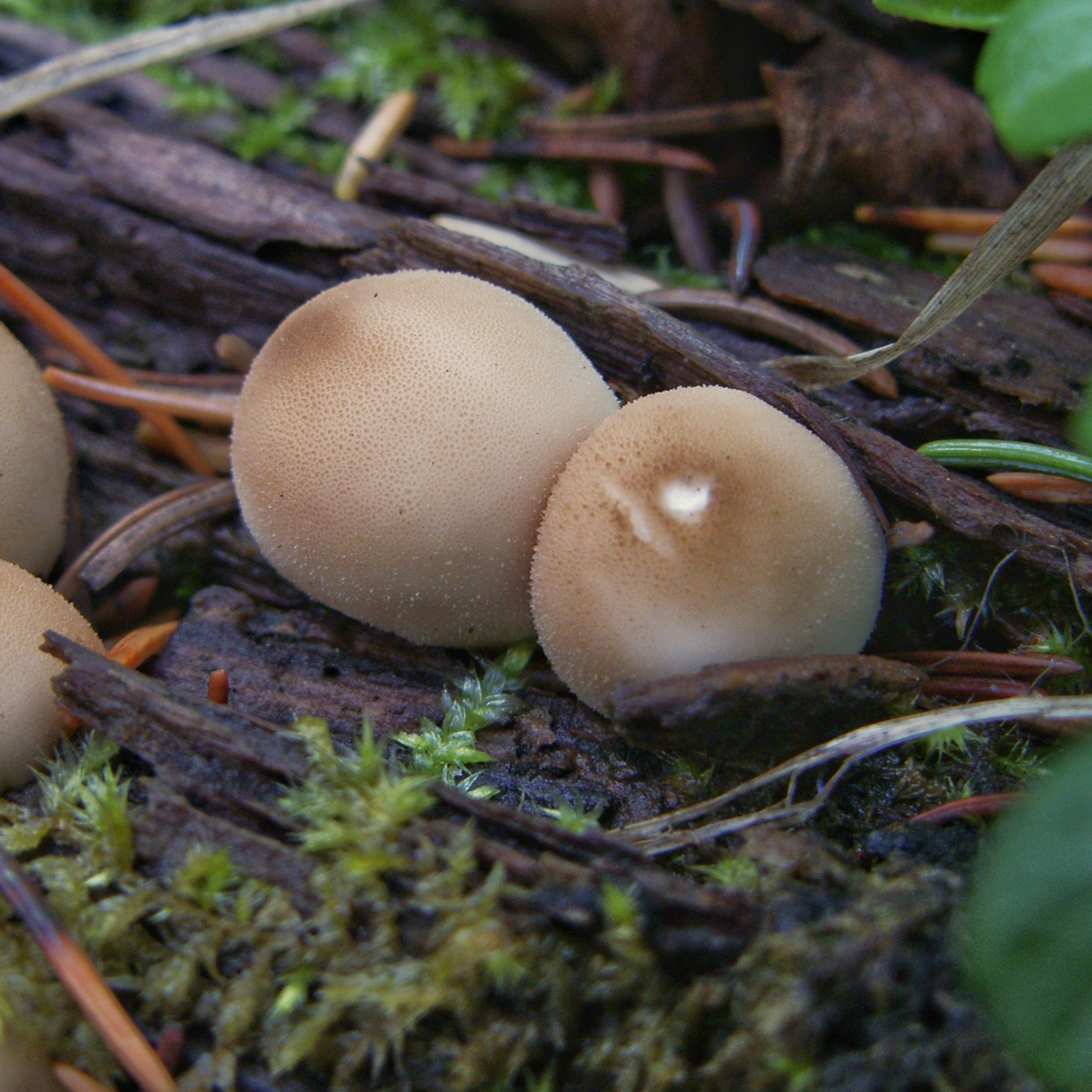
Pear-shaped Puffballs (Apioperdon pyriforme).

Who doesn’t remember finding Puffball mushrooms as a child and stepping on them to create clouds of spores? There’s something about a Puffball that awakens my inner child whenever I find them. There are hundreds of Puffball species around the world, but, surprisingly, only a few grow on wood.

What's in a (Common) Name?
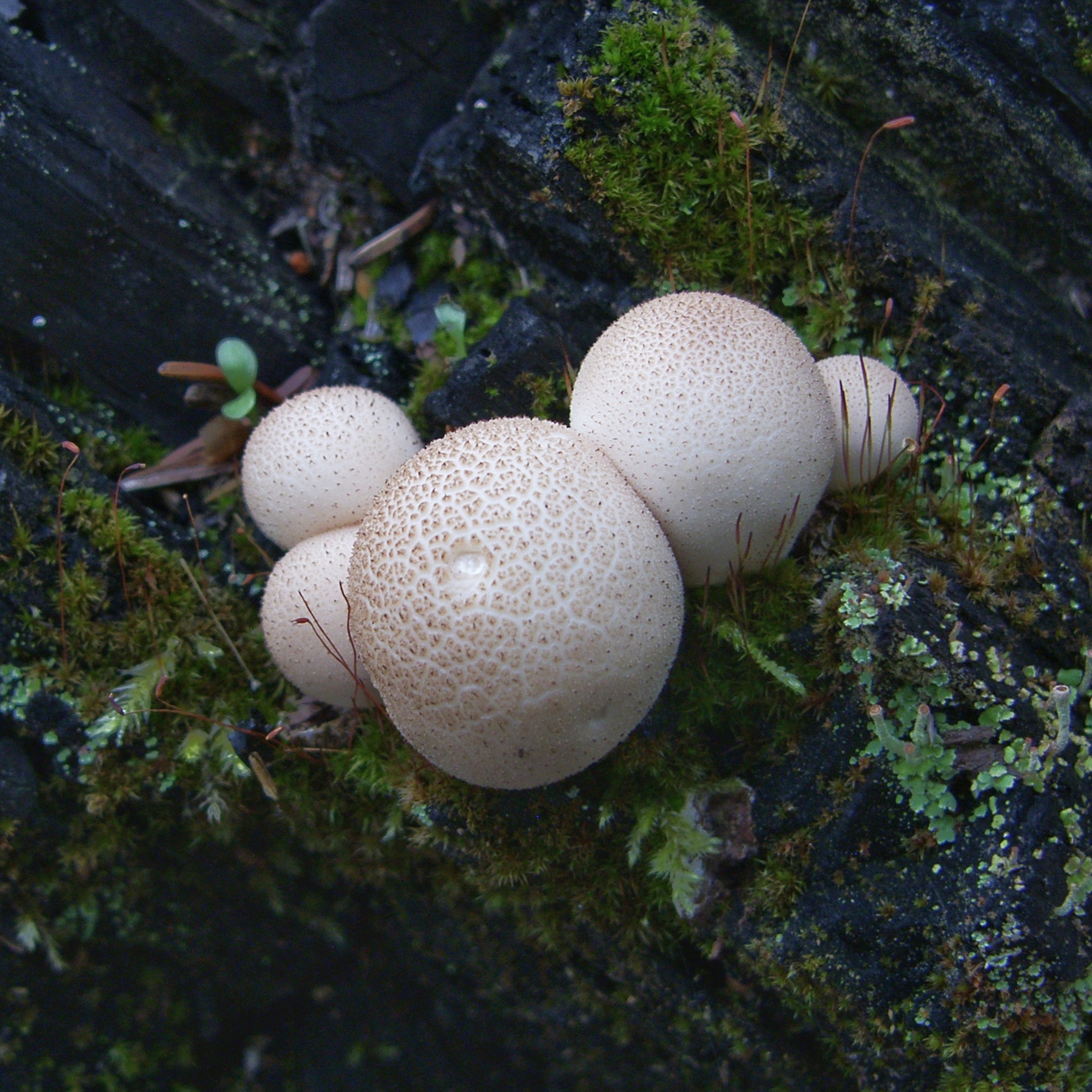
These younger Pear-shaped puffballs are much lighter in colour than older specimens and might confuse one for a tiny cluster of volleyballs.

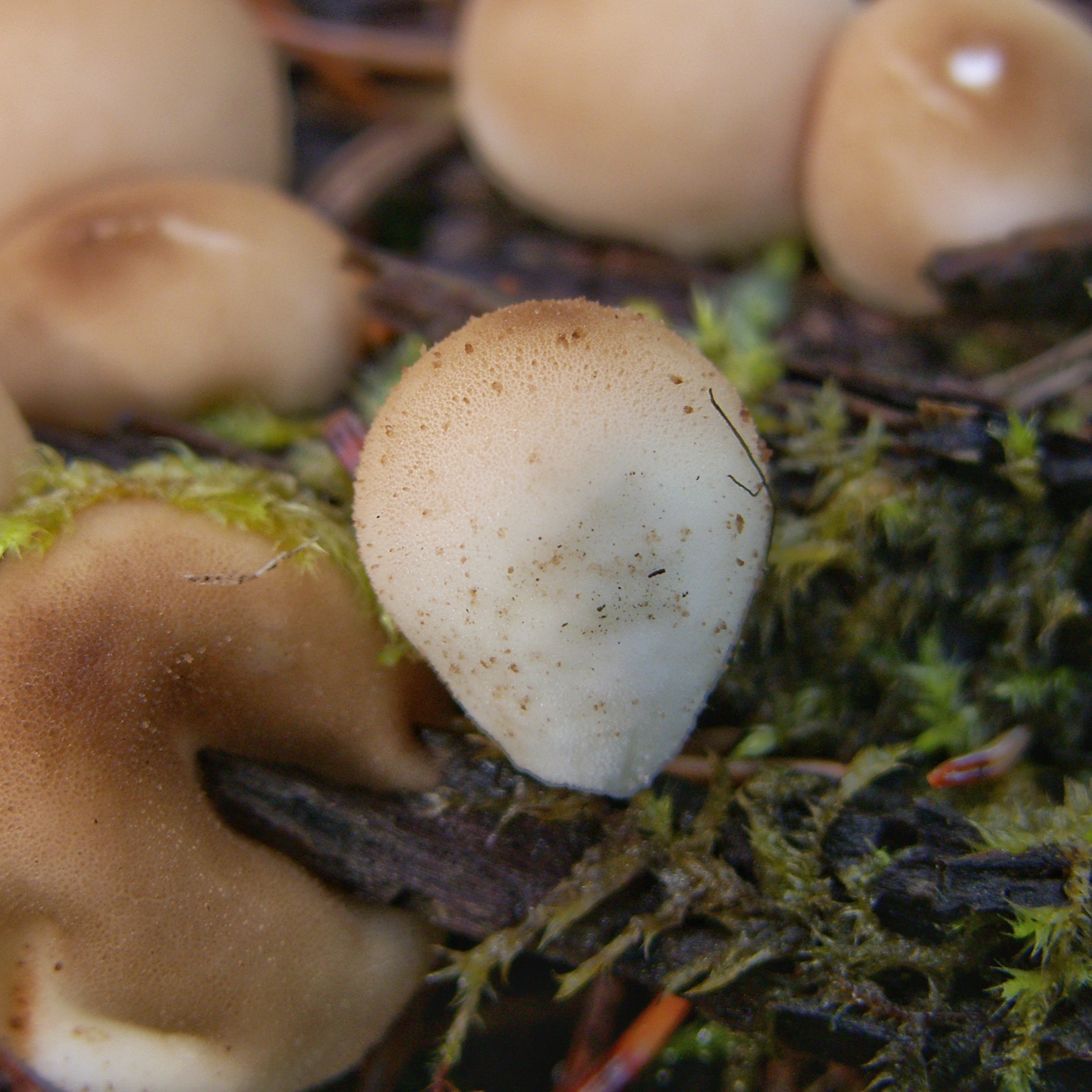
The Pear-Shaped Puffball (Apioperdon pyriforme) is the most common amongst these wood-lovers, and it can be found on both coniferous and hardwood hosts. Like many Puffballs, it’s usually covered in small spines when young that fade as the specimen matures. Its colour can range from a whitish hue to a yellow-brown. Fresh ones begin to appear in late summer and fall, and older ones can often be seen clinging to their hosts well after they have released their spores. And just like the name implies, it resembles an inverted pear upon closer examination.

What's in a (Common) Name?
The inverted pear shape of the aptly named Pear-shaped Puffball.

Most other Puffballs will be found on the ground, and one such species, that also can be similar in appearance to the Pear-Shaped Puffball, is the Common Puffball (Lycoperdon perlatum), though it has a more clearly defined stem, and might often resemble a golf ball sitting atop a tee, especially when young.

What's in a (Common) Name?
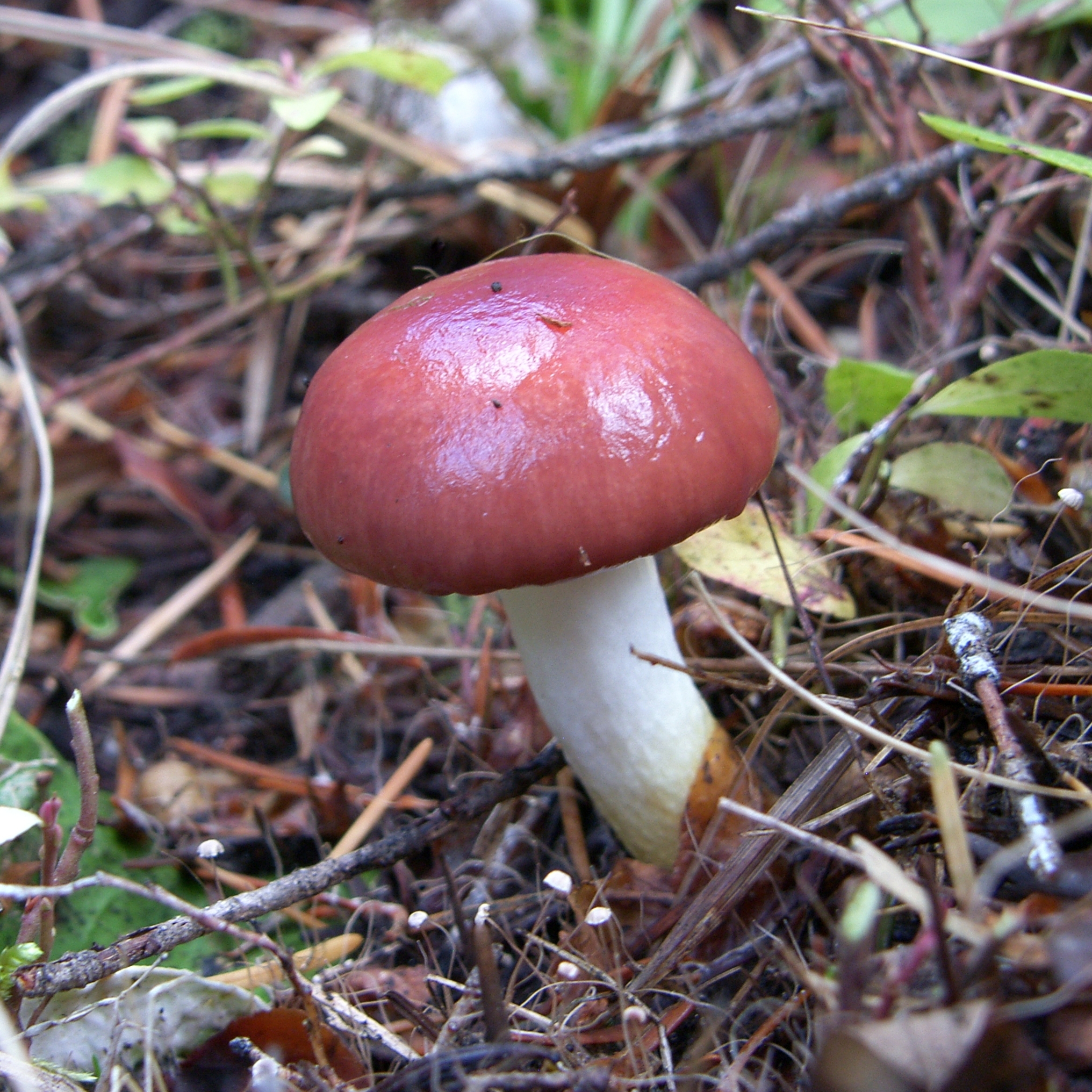
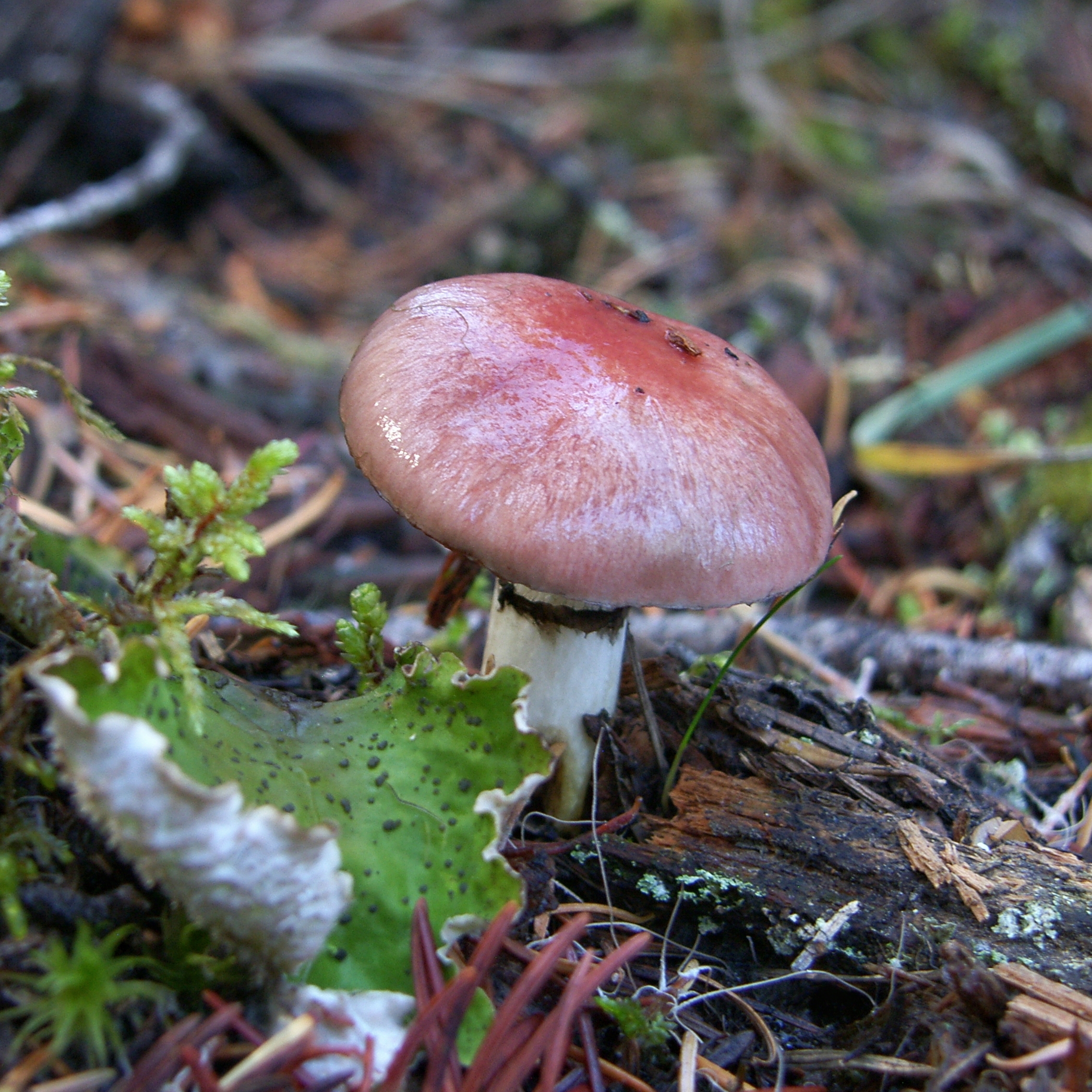
Rosy Slime Spike (Gomphidius subroseus).

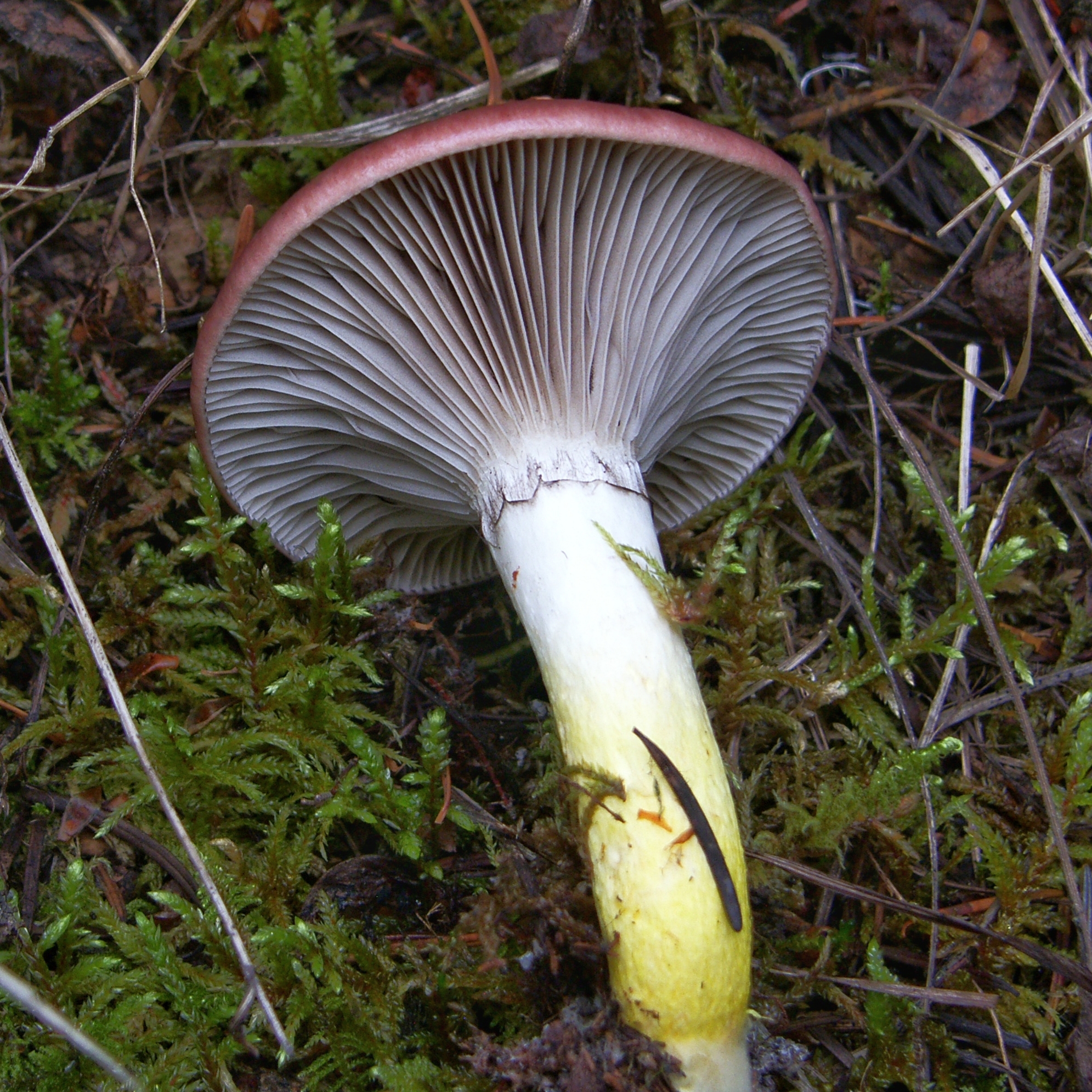
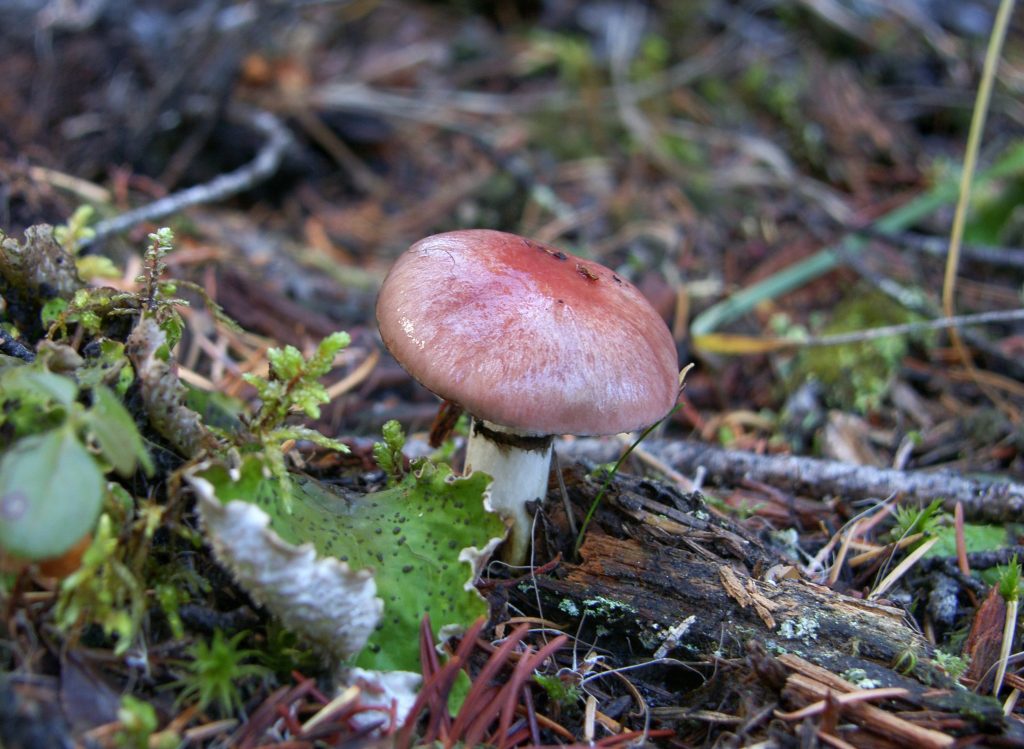
An easily identifiable autumn favourite of mine is the Rosy Slime Spike (Gomphidius subroseus), found throughout conifer forests in western North America (and less frequently in the east). The cap colour is a rosy red, fading to lighter tones as it matures. The stem is peg-like, with a bright yellow colour at the base. It is quite viscid (slimy) to the touch, and this will impart a very lovely sheen to its appearance. The gills become very decurrent (that is, running down the stem) and will appear to be dark grey in colour when mature due to the very dark spores that adhere to its gills.

What's in a (Common) Name?
Underside view of a Rosy Slime Spike showing the yellow stem base and the decurrent gills that are darkly coloured by the spores.
What's in a (Common) Name?
Faded colouring of a Rosy Slime Spike still retaining a viscid sheen to its surface. The dark ring on the stem is created by falling spores that collect where there are slight remnants of an early veil.

There are quite a few species within the Gomphidius genus similar in appearance to this one, though these have features that can often visually differentiate them from a Rosy Slime Spike. The Rosy Spike (Gomphidius roseus) is the closest in appearance, though it is considered the European twin to Gomphidius subroseus, so, its location is the key difference here.  Smith’s Slime Spike (Gomphidius smithii) lacks the yellow stem colouring, although the cap colour can appear to be a very pale rose colour in some specimens.  The Blackening Slime Spike (Gomphidius oregonis) and the Slimy Spike (Gomphidius glutinosus) will both have some yellow on the stems, but the cap colours differ with grey-brown tones in the former, and beige or brown colours in the latter.

Some species of Brittlegills (Russula) may also have rosy or red cap colours, though these are typically not slimy, and the stems are usually quite white and either equal or widening in overall length. Chip Cherries (Leratiomyces ceres) can appear very red or brick-red, and can also be slimy when wet, though the narrower stems will also have brick-red colours present, and the gills are not decurrent.

What's in a (Common) Name?
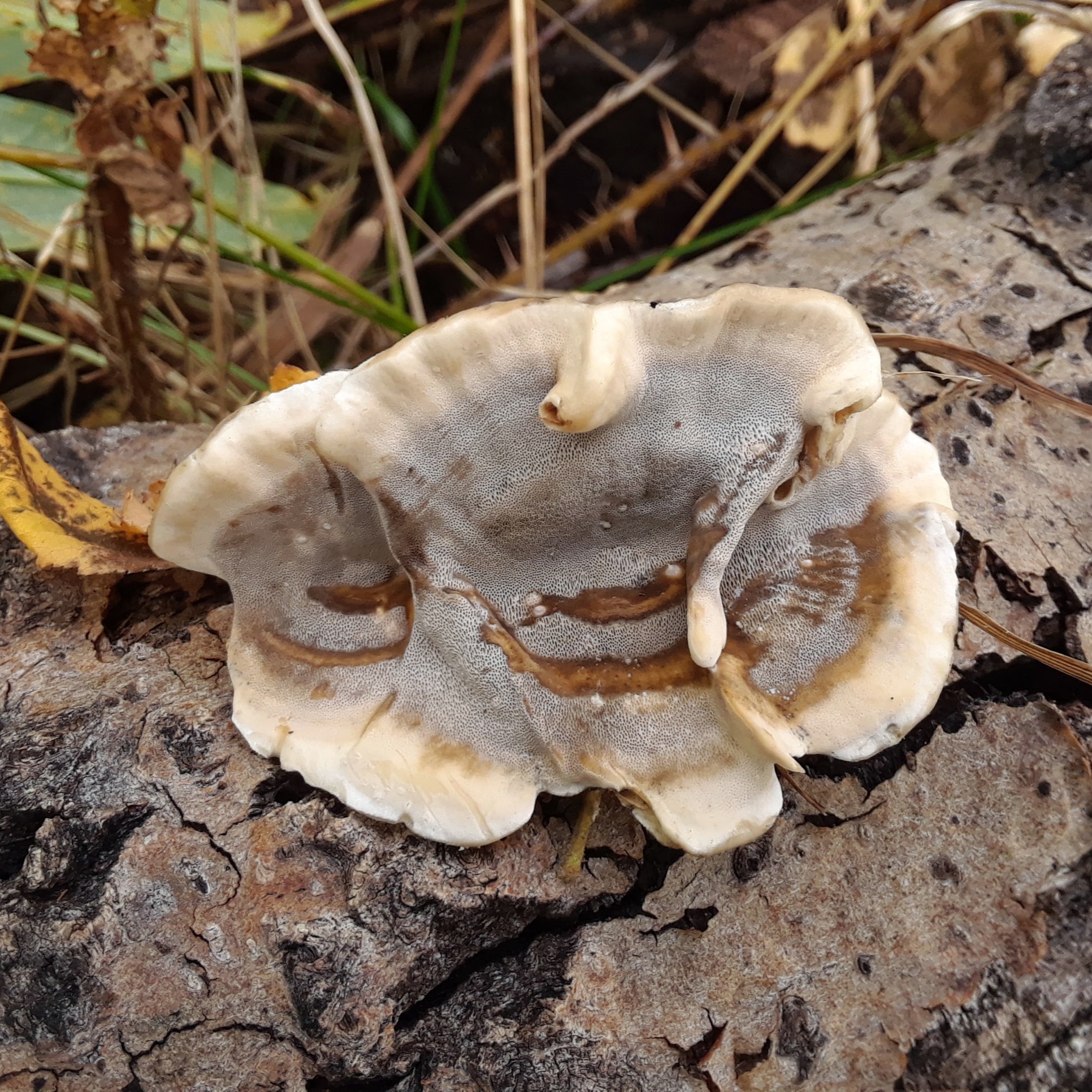
Smoky Polypore (Bjerkandera adusta).

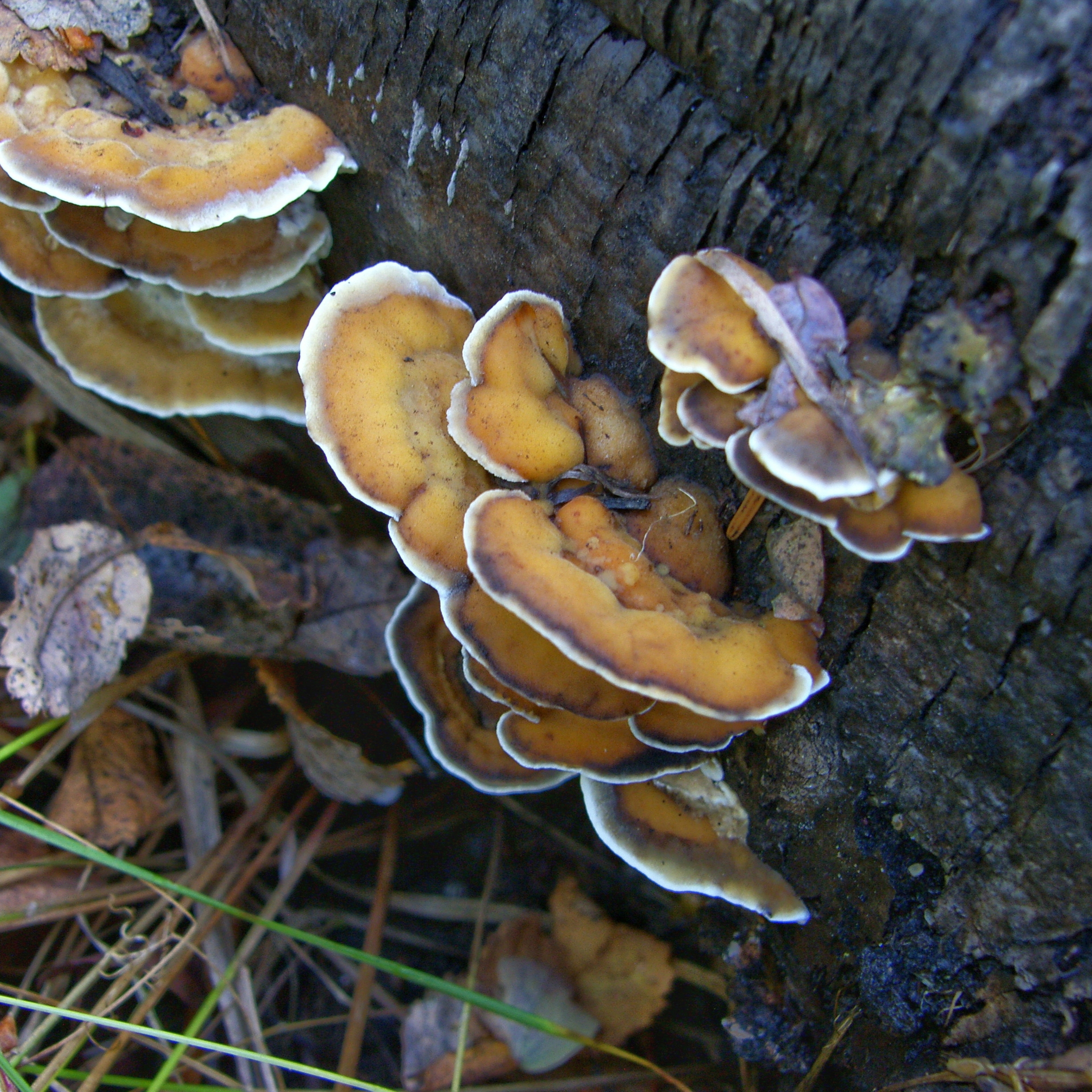
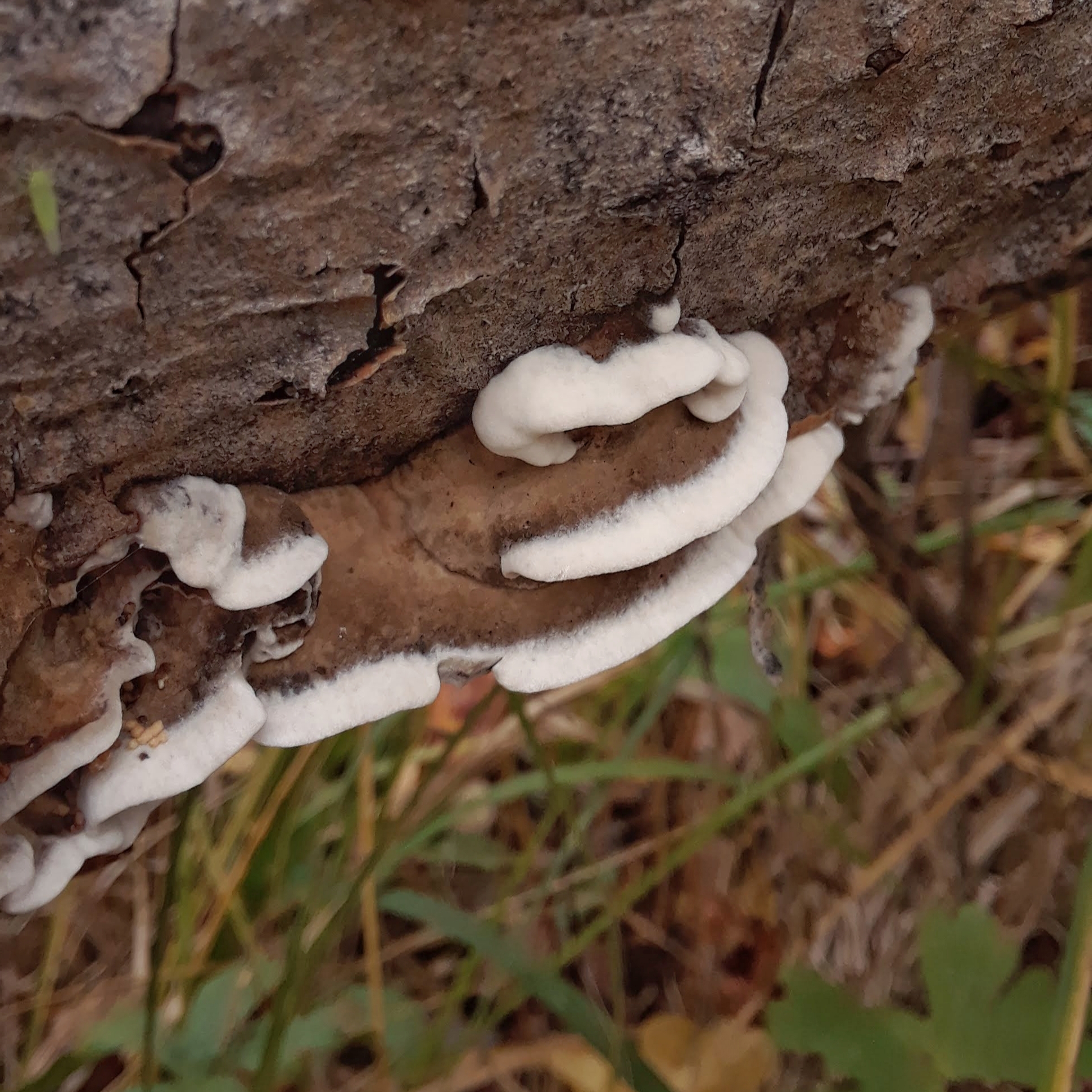
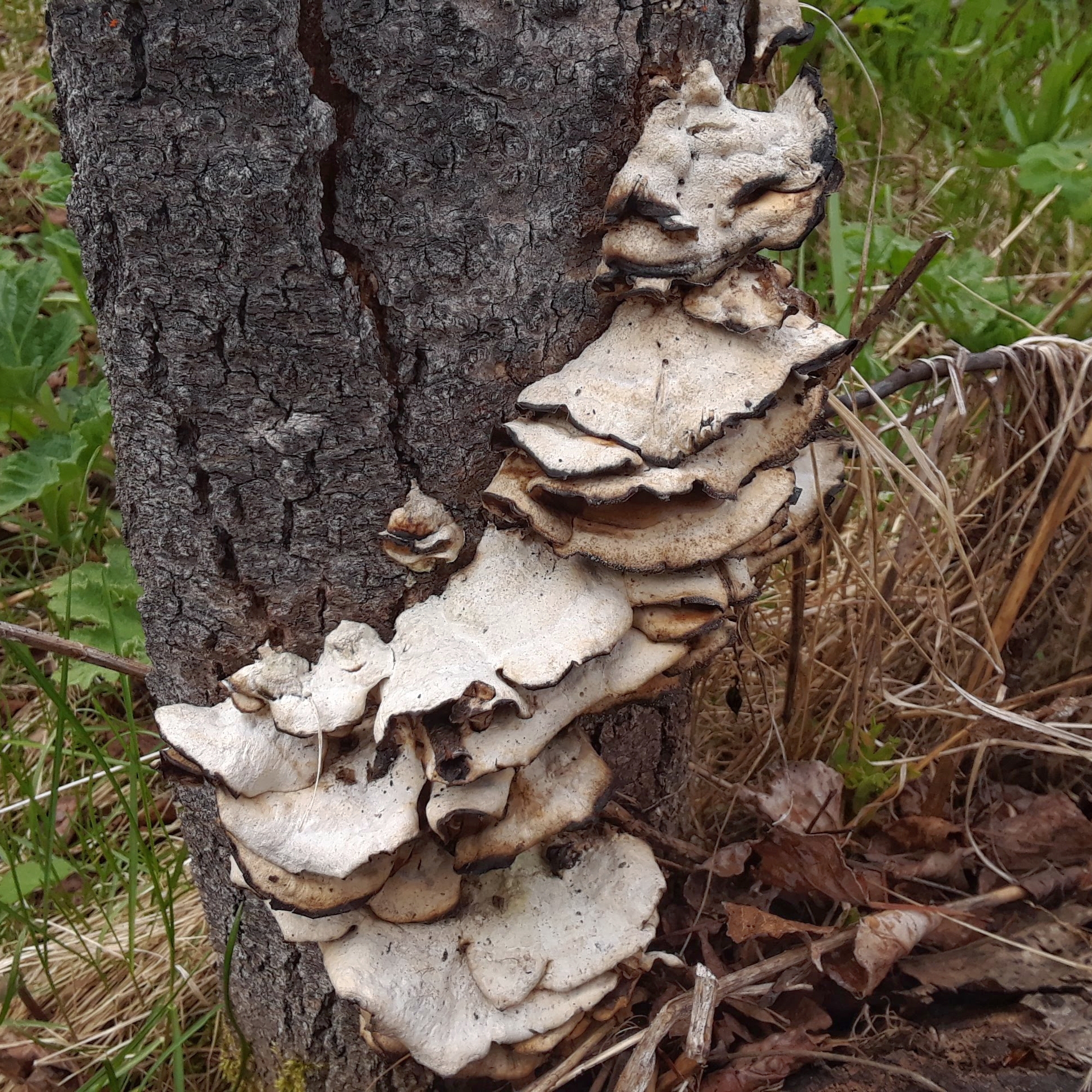
Smoky Polypore (Bjerkandera adusta), sometimes called Smoky Bracket, is a fairly common and widely distributed polypore found growing on hardwoods. New growth sprouts annually, often where the previous year’s brackets still remain. The upper part of these rather thin brackets can be variable in appearance – ranging from quite brown (and are sometimes zoned when young), or very drab and tan when older.

What's in a (Common) Name?
The very young brackets of Smoky Polypore can vary in colour and appearance when they first appear on a hardwood host.
What's in a (Common) Name?
The older brackets of Smoky Polypore will persist for more than a few years and the underside surface will be quite black at this stage.

It can be easily identified by taking a peek underneath one of the brackets. The underside surface is grey and pored, and will bruise brown when injured. The pore surface will eventually become quite dark, even black, if the specimen is old.

What's in a (Common) Name?
The underside surface of Smoky Polypore, when in season, will be a light grey colour and covered in many small, pore-like holes. The brown bruising that occurs after injury is also visible.

A similar species is Big Smoky Bracket (Bjerkandera fumosa). This relative has a more circumboreal range, and its brackets are much thicker in context than those of Bjerkandera adusta. The pores will typically be much lighter in colour, and can often appear to be more of a light tan-grey, rather than a full-on grey.

Another species that is easily mistaken for Smoky Polypore is Brittle Cinder (Kretzschmaria deusta). This unusual fungus is also widely distributed on hardwoods, primarily in the Northern Hemisphere. Unlike the brackets of the two Bjerkandera species above, Brittle Cinder is actually a type of crust fungi, and its growth is shaped like a wavy, undulating mass, with the grey colouring appearing on its outward facing surface. It can be quickly confirmed as not being Bjerkandera adusta (or B. fumosa) by a lack of pores when it is examined closely.

What's in a (Common) Name?
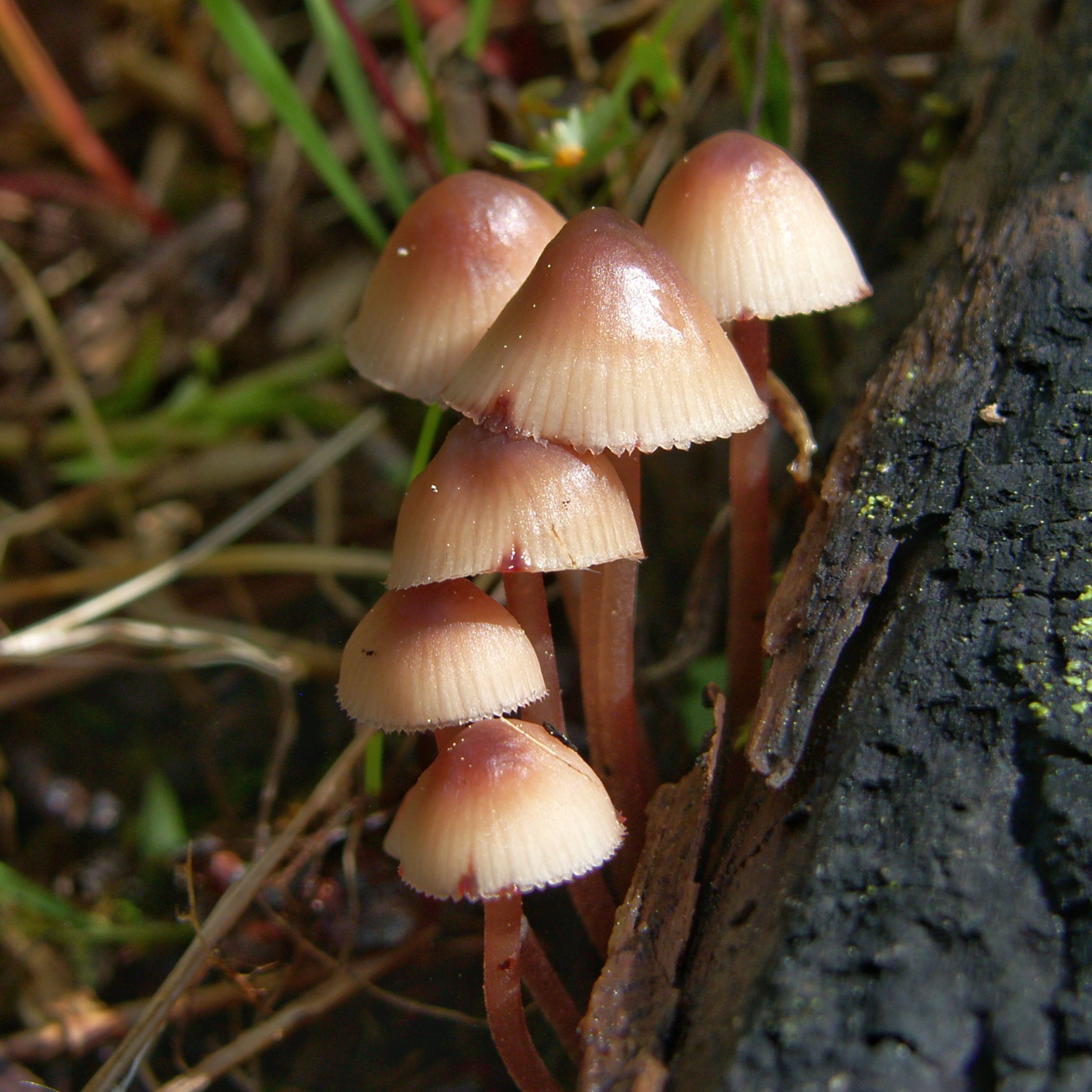
Bleeding Fairy Helmet (Mycena haematopus).

So, you’re out for a hike and you happen to pass by a log, and there you see a small cluster of Bonnet mushrooms. You can’t help stopping to take a closer look, and then, you notice that these mushrooms are covered in a red liquid, and then you ask yourself, “ Did a terrible accident occur here?”

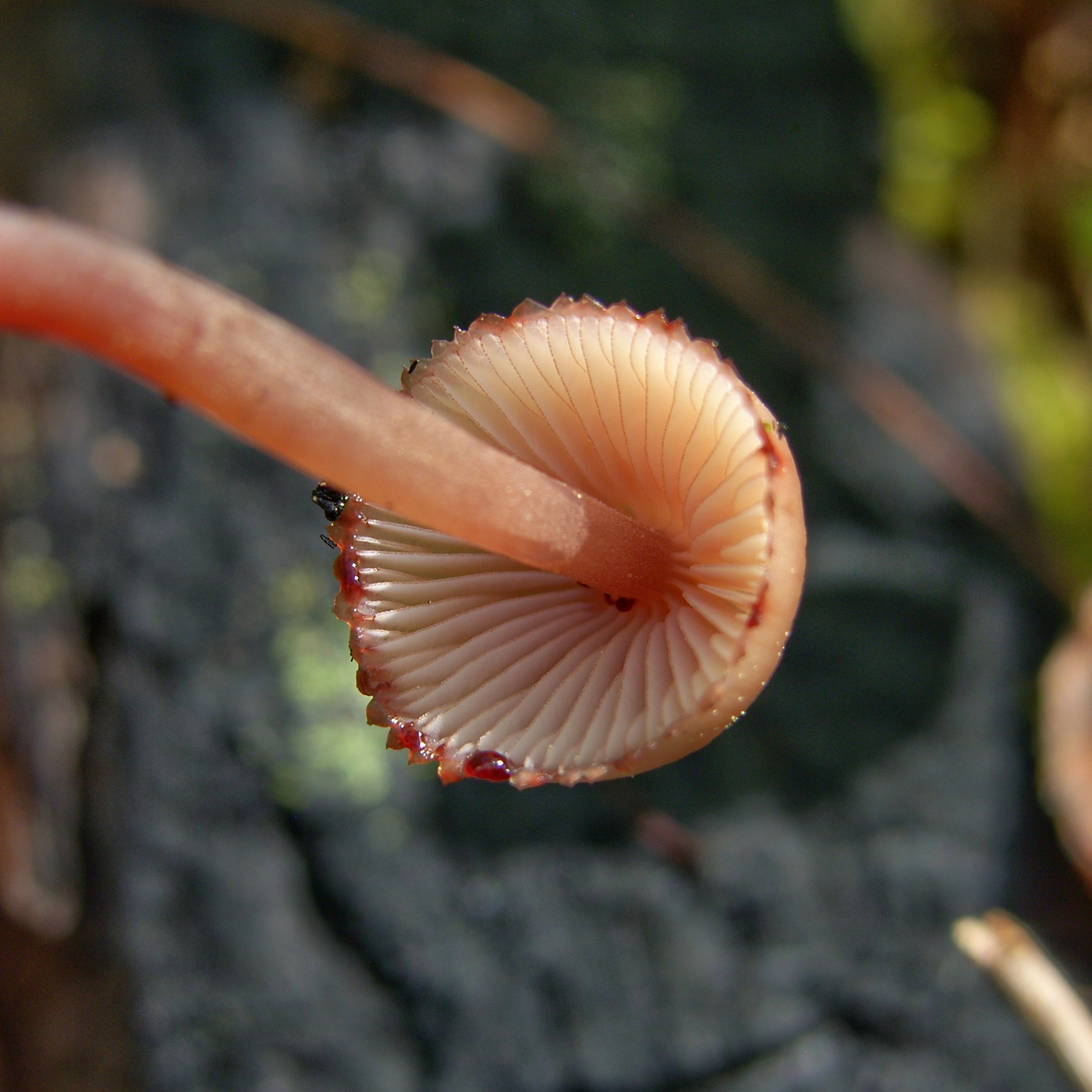
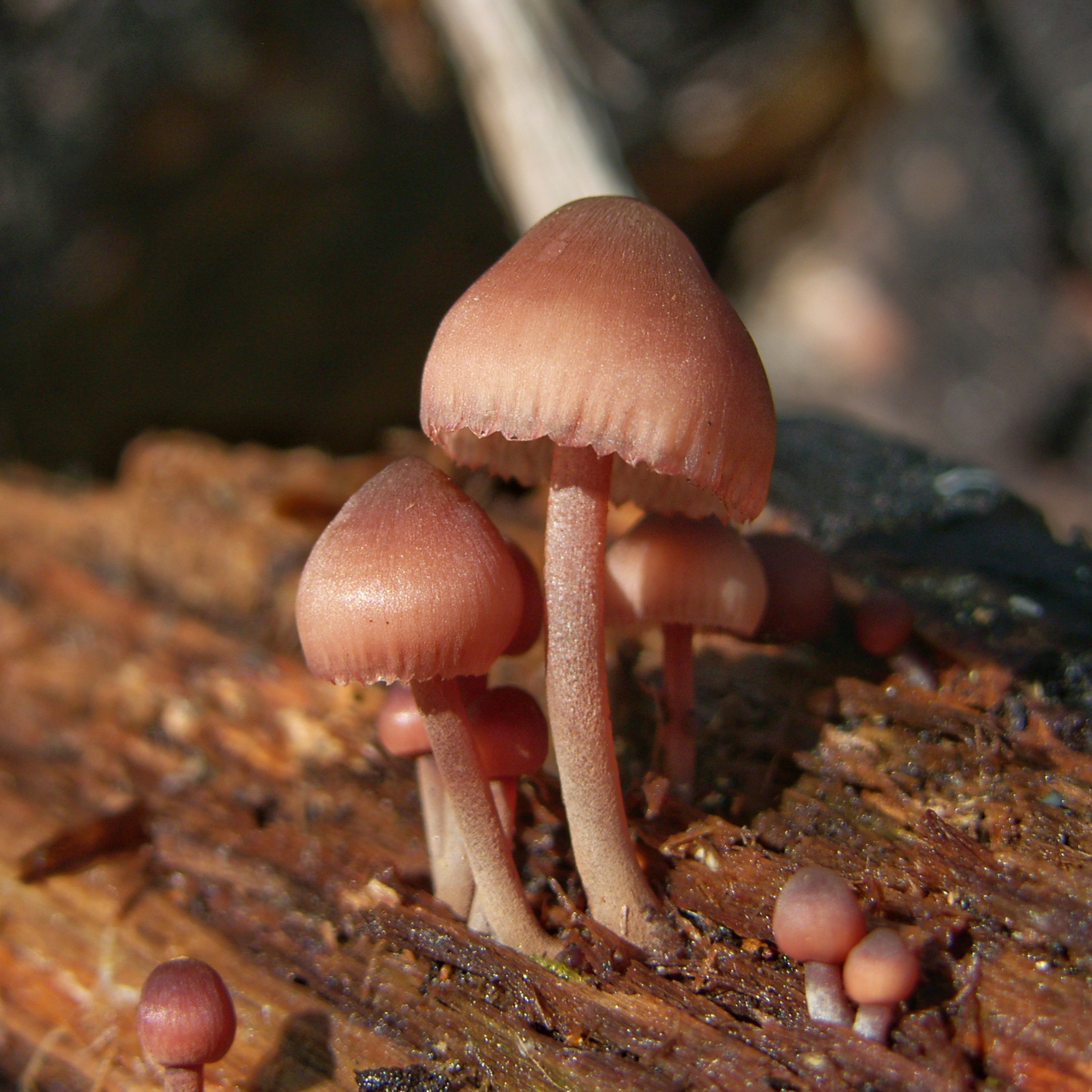
Rest assured that nothing horrible happened, and what you’ve actually stumbled across is the fascinating Bleeding Fairy Helmet (Mycena haematopus).  This small mushroom has a bell-shaped cap (or, at times, somewhat conic) and it is coloured a darkish red-brown that fades with age. The gills are off-white, and the gill edges in some sub-species may be coloured. It is widely distributed and found growing on dead hardwoods.

What's in a (Common) Name?
Underside view of a Bleeding Fairy Helmet showing the gills and a cap that is ringed with the red latex that these mushrooms exude. Note that the edges of the gills are coloured in this specimen which can be a clue as to the particular sub-species this one could actually be.

But the fun part here is seeing the dark red latex that exudes from the stem or cap when it is cut or crushed, or sometimes even spontaneously appears as the mushroom splits with age.

What's in a (Common) Name?
Some Bleeding Fairy Helmets that are looking rather proud to be mushrooms.

Other Bonnets that “bleed” red are the Bleeding Bonnet (Mycena sanguinolenta), which is somewhat less widespread, though this one is found growing on the ground (not on wood), and the California Mycena (Mycena californiensis) which is fairly localized to western parts of California, where it prefers the fallen leaves and acorns of a variety of oak species as a host.

Getting to know the common name of a mushroom, when there is one, can greatly enhance anyone’s enjoyment of exploring the world of fungi. Many of these common names are quite clever and are meant to help us enjoy our explorations into the world of fungi. And the best part? A degree in Latin is not required to participate.


(Publisher’s note: All photos courtesy of the author.)

“What’s in a (Common) Name?” ©2026. Ann Simpson-Stamos and The Renaissance Garden Guy

Ann Simpson-Stamos is a mycologist, writer, and regular contributor to (and co-publisher of) The Renaissance Garden Guy. She resides in Bridge Lake, British Columbia, where she writes and remains in constant pursuit of her mysterious and beautifully surreal quarry. She is married to her RGG co-publisher, John G. Stamos. Click here to follow Ann Simpson-Stamos on X (Twitter), and find her on Bluesky at Ann in Bridge Lake at Bluesky

The Renaissance Garden Guy is a participant in the Amazon Associates Program. As an Amazon Associate, The Renaissance Garden Guy earns from qualifying purchases.

Additionally, The Renaissance Garden Guy is a participant in the Bluehost, SeedsNow, and Hosting.com (formerly A2 Hosting) affiliate programs. The Renaissance Garden Guy earns a fee/commission each time a visitor clicks on an ad or banner in this site from one of these companies and makes a subsequent qualifying purchase.

Please click here to view The Renaissance Garden Guy Disclosure page.

2 thoughts on “What’s in a (Common) Name?”

  1. What a fun read! I was just thinking about puffballs and squishing them when I was a kid! It made my day to know there is something called the Bleeding Fairy Helmet. Thanks for sharing such fascinating information!

    1. Thanks so much, Lisa! I hoped it would be a fun(gi) read, as it was one I had a lot of fun writing. And there are so many other species that I could have included as well – perhaps I will do a sequel in the future!

Leave a Comment

Your email address will not be published. Required fields are marked *

This site uses Akismet to reduce spam. Learn how your comment data is processed.

You cannot copy the content of this page.