Bodacious Bushes and Trees in Hardiness Zone 4A
Here’s Part 3 of my photo-heavy 8-part series about garden plants that grow just as happily in chilly Western Canada as they do here in the comparatively warm Midwest United States. Give this one a read, and grow yourself some bodacious bushes and trees in Hardiness Zone 4A.
By John G. Stamos
Redundancy alert! Since this article is Part 3 of an 8-part series on plants that can be grown in our forthcoming Hardiness Zone 4A garden, and since I’m lazy, I’ve chosen to include the next four paragraphs – exactly as they appear here – as an introduction to all 8 parts of the series. So, if you’ve read the series’ first part (“Climbing Vines in Hardiness Zone 4A”) from its very beginning, you may remember what these next four paragraphs include. So, feel free to blow them off and get right into the article that follows them. Trust me. You won’t hurt my feelings.
J.G.S.
Regular RGG readers and subscribers may know that I’m planning for a move to British Columbia, Canada, where my wife Ann, my pup Holly, and I will make our home. The move itself, and all of its implications, present a number of challenges on a number of different fronts. One of those challenges will be attempting to replicate – or at least approximate – the garden I designed, developed, and currently tend here in Michiana Shores, Indiana, in USDA Hardiness Zone 5B/6A. For the past six years, that garden has dutifully served as a contextual backdrop and unifying theme for this publication. In terms of its make-up, it’s a densely planted amalgam of ornamental perennial trees, bushes, and plants. Some of these trees, bushes, and plants are cultivated, and some are native and wild. Some are deciduous, some are herbaceous, and some are evergreen. All grow beautifully and happily in Zone 5B/6A. Since Ann, Holly, and I love that garden and all the things that grow there, we’d love to try to grow as many of those same things in British Columbia as we possibly can. But the part of British Columbia where we’ll be living is located in USDA Hardiness Zone 4A (where temperatures can plummet to -30° Fahrenheit and lower), so, since a number of the Michiana Shores garden’s denizens are not hardy in zones lower than 5, we’ll need to be selective.
Fortunately, we won’t need to be too selective. And that’s where this feature, which is essentially a pictorial spread peppered with a dash of helpful info, comes in. This article, along with seven others, serves as an 8-part, full-color manual outlining some favorites from our current 5B/6A Michiana Shores garden that will thrive just as beautifully in British Columbia’s more frigid Zone 4A.
In this series of features, you’ll learn which of one particular Midwest Zone 5B/6A garden’s vines and climbers, foliage-intensive perennials, bodacious bushes and trees, early bloomers, power flowerers, lilies and daylilies, spreading and naturalizing groundcovers, and wildflowers and native perennials can make the successful leap to the higher latitudes and lower temperatures of British Columbia’s chilly Zone 4A. For a closer visual inspection of the plants discussed in this article, please be sure to click on their photos below. When you do, you’ll be able to enlarge, minimize, or zoom in or out on them. Pretty handy, no?
Note to readers: Before you set your heart on a particular Zone 4A-capable plant for your own British Columbian garden, I highly recommend a visit to The Invasive Species Council of British Columbia’s excellent website: Click here to plan ahead.

The Renaissance Garden Guy is a participant in the Bluehost affiliate program. The Renaissance Garden Guy earns a fee/commission each time a visitor clicks on a Bluehost ad or banner in this site and makes a subsequent qualifying purchase. For more details, and for a full list of this site’s affiliate partners, please visit The Renaissance Garden Guy Disclosure page.
Direct from the Midwest U.S. to Western Canada: Bodacious Bushes and Trees in Hardiness Zone 4A
What’ll go from east to west and prove itself to grow the best? In Hardiness Zone 4A, that is. Well now, girls and boys, I’m glad you asked. Below are six different flowering bushes and trees that currently bloom and grow in most excellent fashion in our Michiana Shores 5A/6B garden that will be just as happy and healthy in British Columbia’s Zone 4A. Whether evergreen or deciduous, each is just as awesome in cold zones as they are in warm. Here you go…
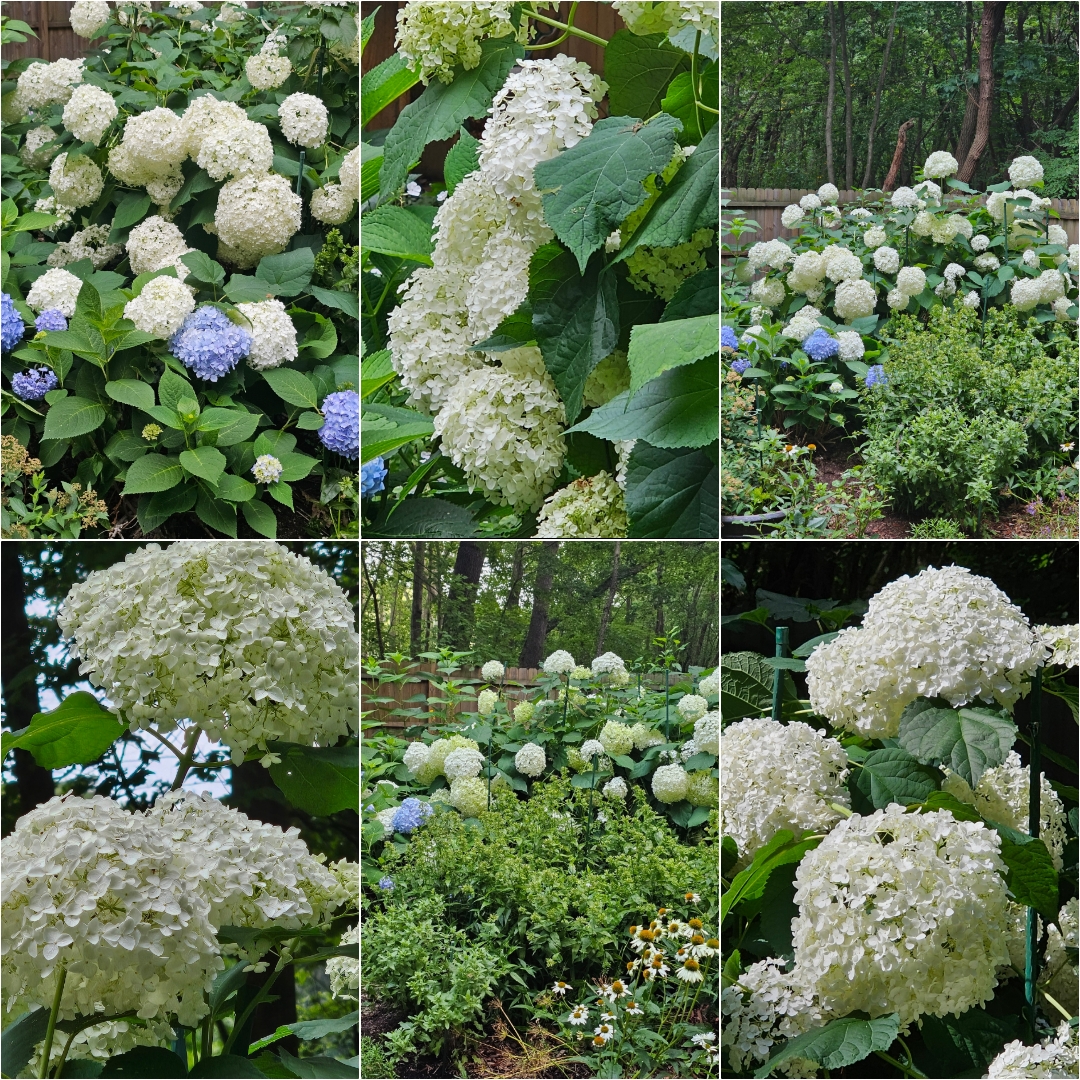
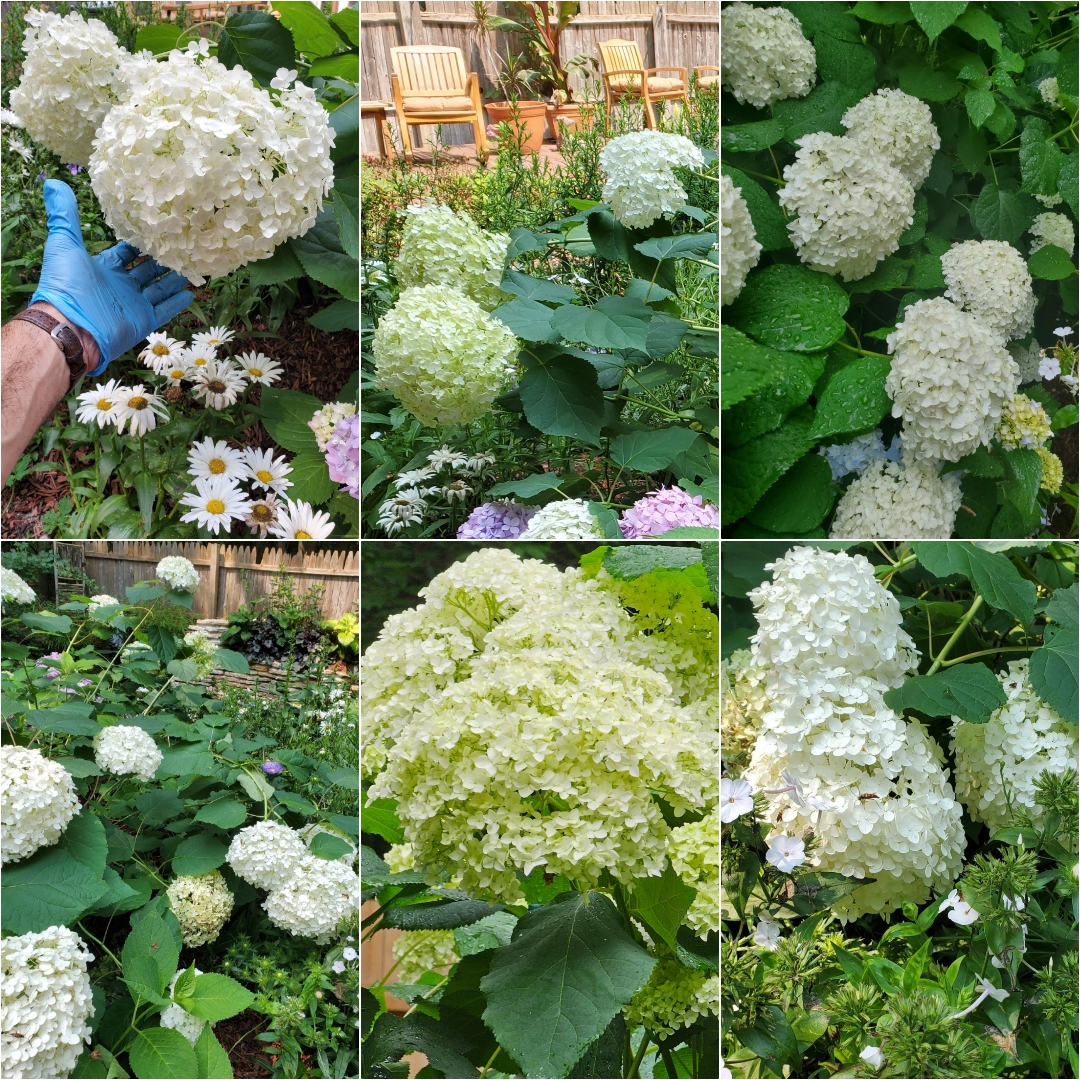
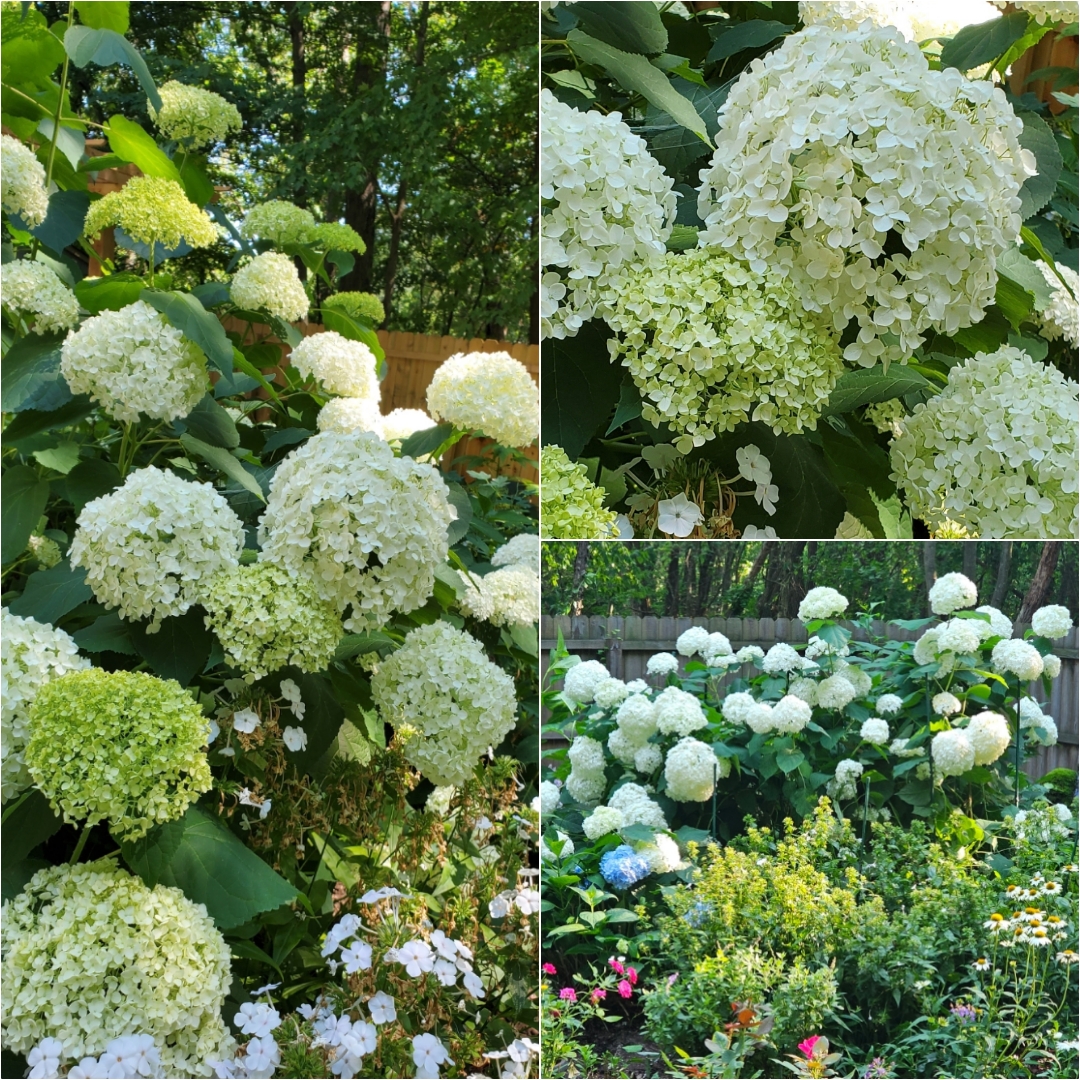
1. Annabelle Smooth Hydrangea (Hydrangea arborescens ‘Annabelle’)
Hydrangea arborescens, also known as the Smooth Hydrangea, Old-fashioned Hydrangea, or Wild Hydrangea, is a long-lived (well over 50 years if happy) deciduous bush (but it can also behave as an herbaceous perennial – they grow very quickly, and they bloom most heavily on new wood, so they can be cut nearly to the ground – but they’ll still generate new, flower-ready growth from old wood, and their existing stems will grow thicker, stronger, and more capable of bearing the weight of the massive flower heads that will form on everything that sprouts upward from those stems if they’re cut to a height of 18″-24″ in late fall or winter). They grow great and flower most prolifically in full to partial sun, but do grow just as well and flower nearly as prodigiously in partial to mostly shady conditions.
The one I grow is known as ‘Annabelle’, and is a wild cultivar that’s been recognized and propagated for use in cultivated gardens since the 1960s, but finds its informal cultivated garden beginnings in the town of Anna, Illinois in 1910. It’s a beauty of an heirloom bush, and it’s a pleasure and an honor to grow it in our Michiana Shores garden. Here’s a little more info:
Hardiness Zones. It’s cold-hardy all the way down to Zone 3A, and can handle high temperatures up to those in Zone 9B. It’s incredibly adaptable and resilient. It’s a natural for our new Hardiness Zone 4A garden.
Size. Individual bushes can grow to over 6′ in both height and diameter. Ours definitely does.
Roots. Its subterranean roots are shallow, fibrous, and rhizomatous. But it also forms adventitious roots on aerial stems at both nodal and internodal points, and when those stems contact the soil, the bush will root there and spread. And it can spread extensively in clumps.

Soil. Unlike many Bigleaf Hydrangeas (Hydrangea macrophylla), for which soil pH dictates bloom color, the Annabelle’s bright white flower color is in no way impacted by soil pH. Like all Hydrangea species, arborescens loves moist, well-draining soil.
Flopping flower stems. It happens. Particularly when those volleyball-sized flower heads get wet. You can mitigate this by 1) letting the main stems strengthen and thicken by cutting the bush back to a height of 18″-24″ inches in late fall or winter (as discussed above), 2) staking the bush, or 3) growing it amidst others of its kind or other, tall, rigidly-stemmed and branched companions.
Bloom time. Our 5B/6A Annabelle flowers in June, and continues for almost 2 months. It blooms again, to a much lesser degree, in fall.
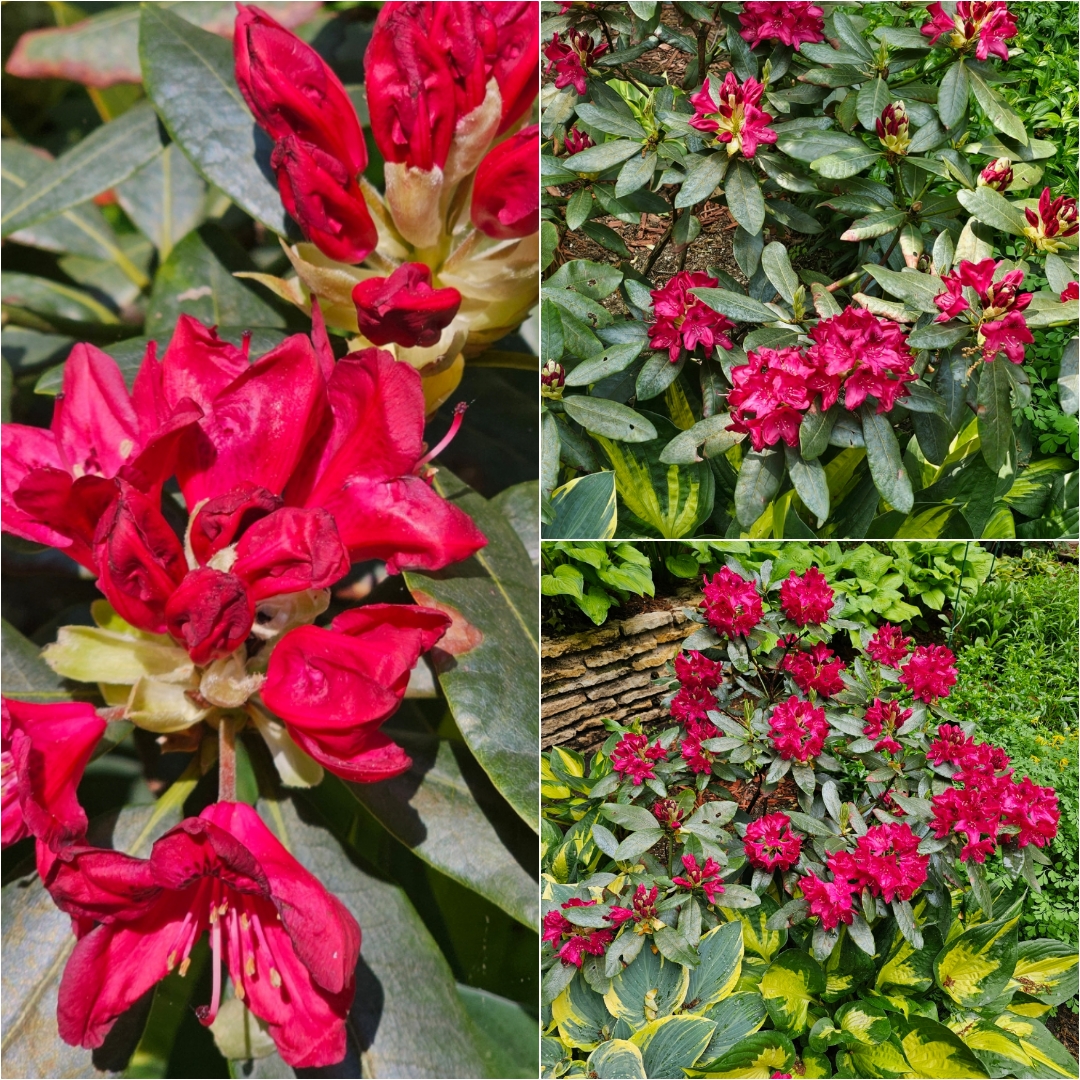
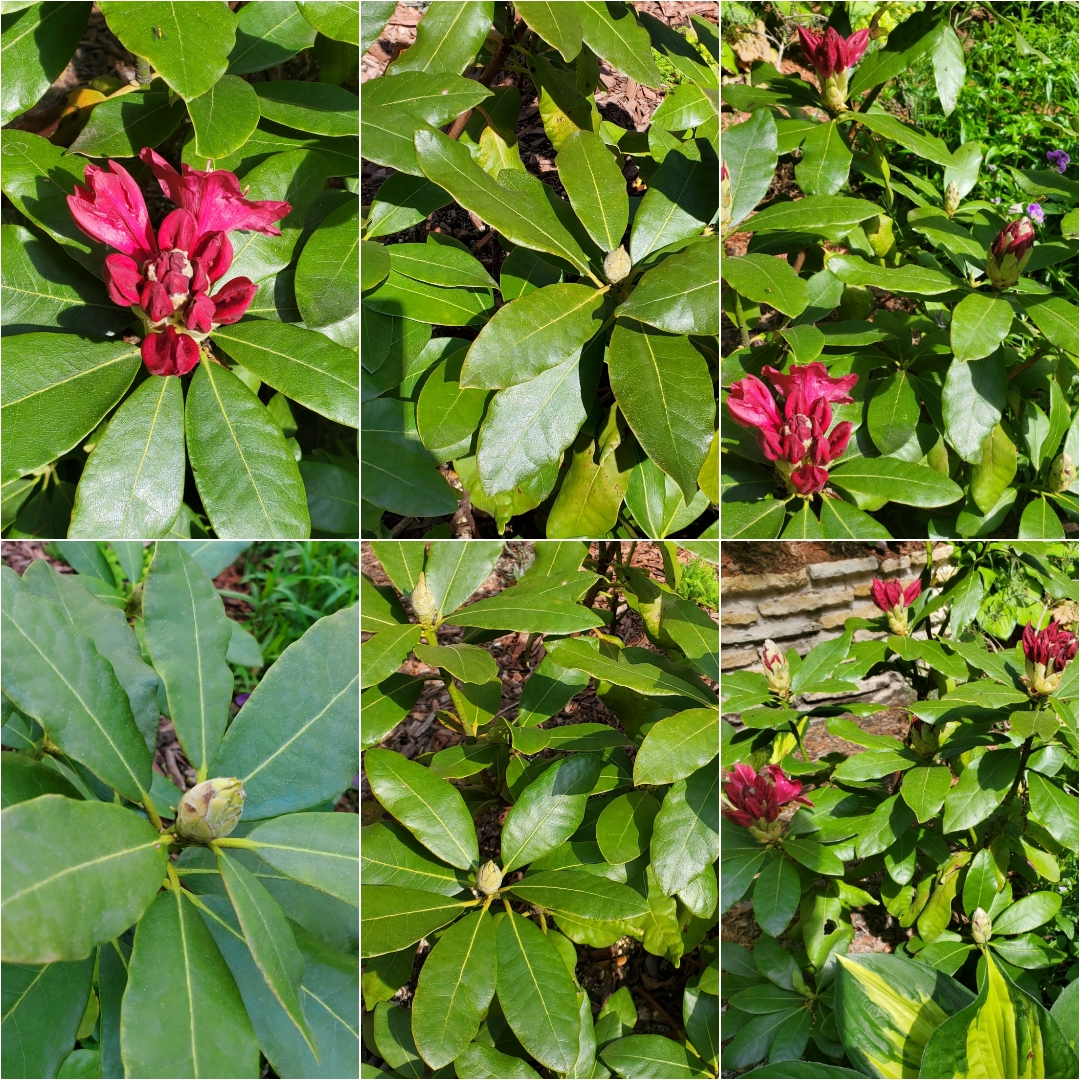
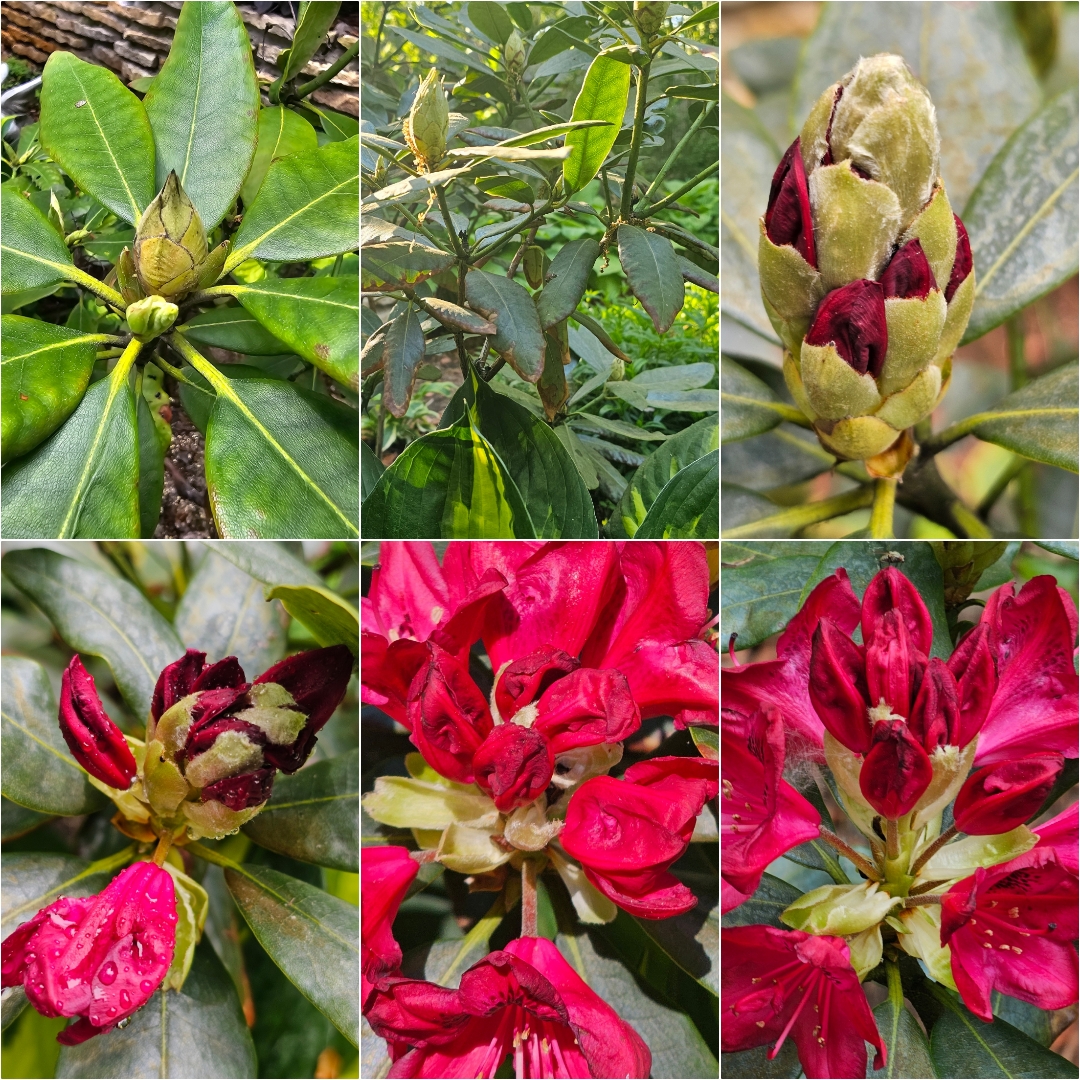
2. Nova Zembla Rhododendron (Rhododendron x ‘Nova Zembla’ [H-1])
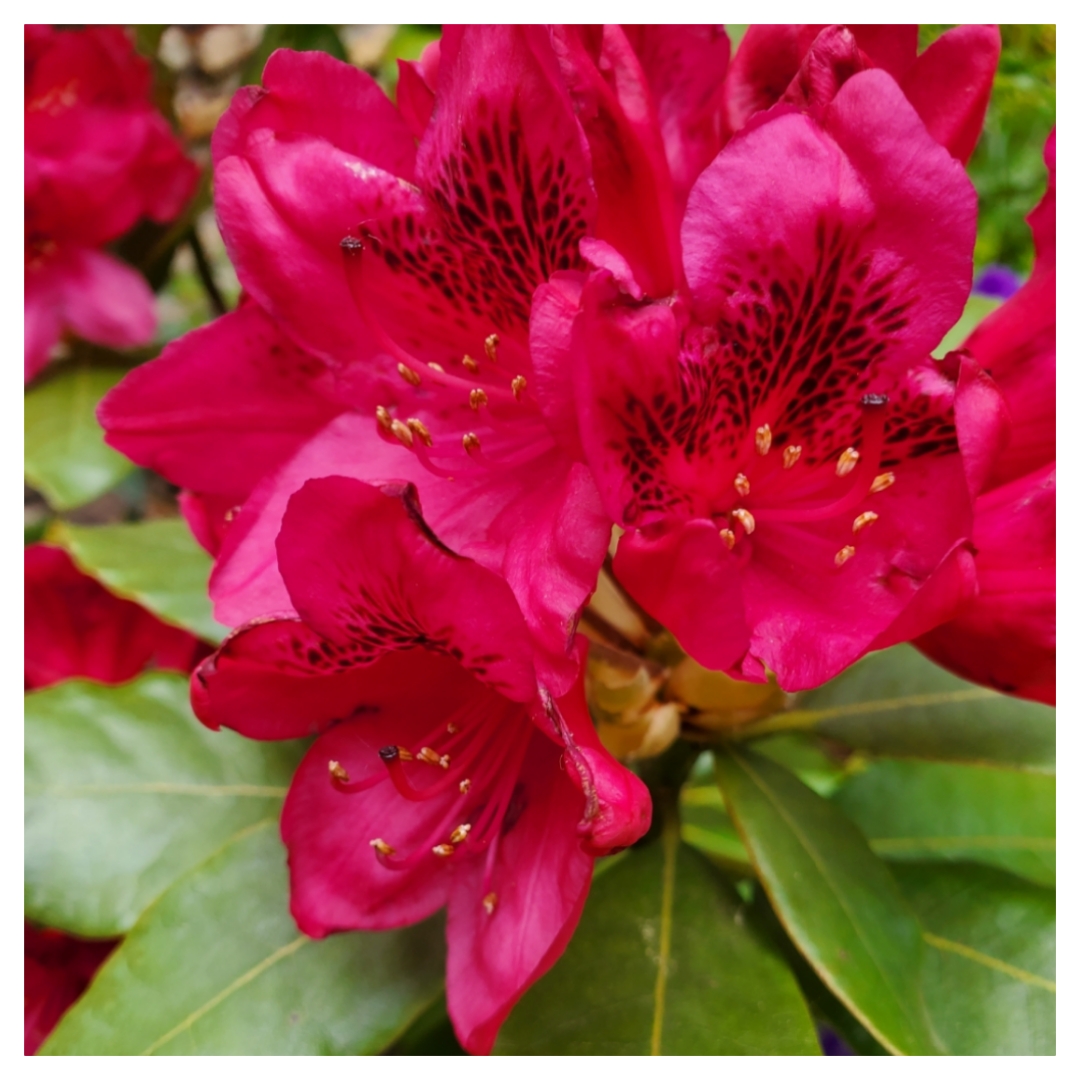
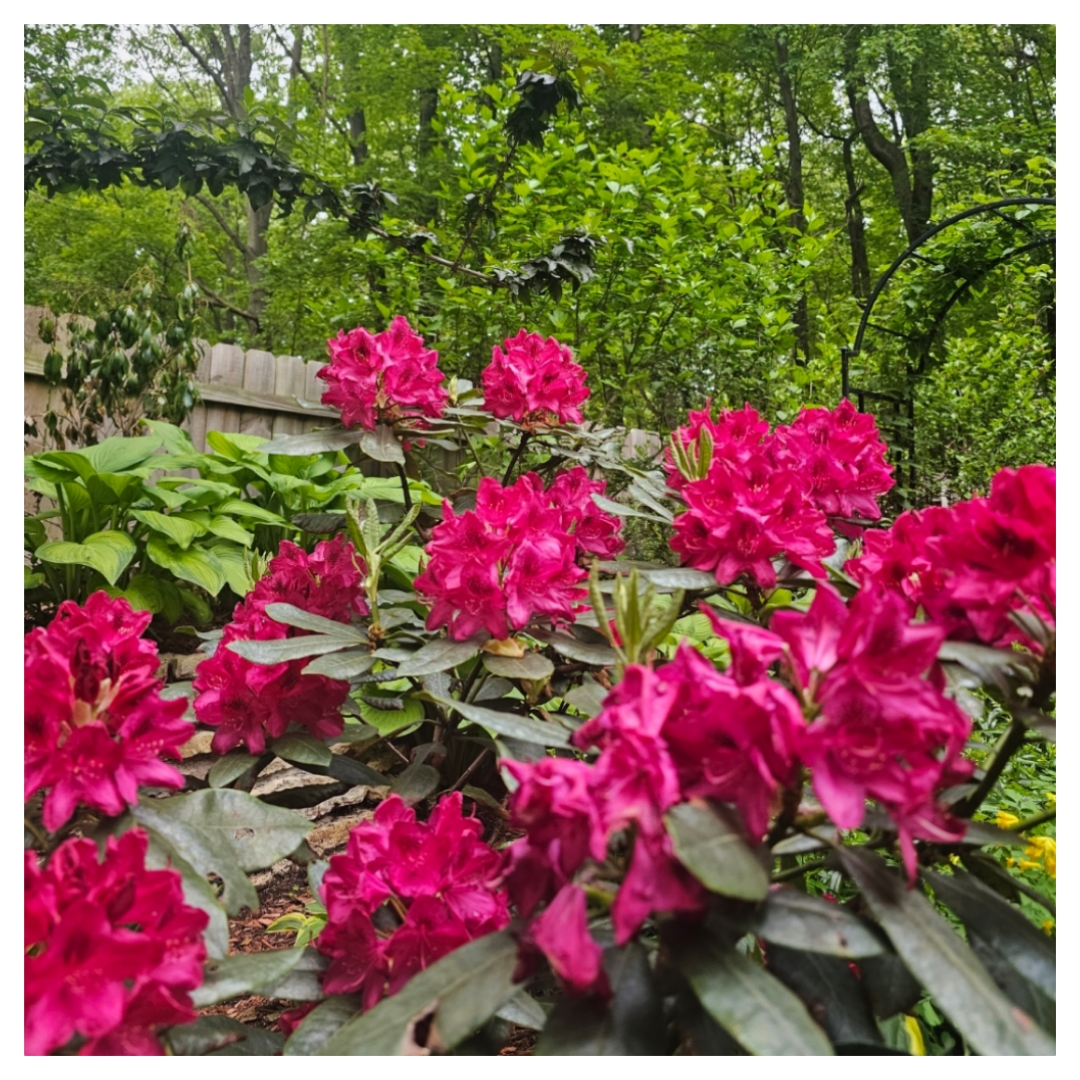
If you’re seriously considering growing bodacious bushes and trees in Hardiness Zone 4A, you’ll want to include the awesome evergreen Nova Zembla Rhododendron (Rhododdendron x ‘Nova Zembla’ [H-1]) in your starting lineup. I planted ours in late summer in 2020 as a small (6″ container) potted specimen. It has grown from its original height (about 15″) to its current height and spread of about 3.5′ (rhodies grow slowly – about 6″ per year), and, of course it’s still growing. Starting in 2021, it has flowered every year, and it generates more buds and blooms as the years go by. And those flowers? They’re crimson and they’re breathtakingly beautiful, and they’re on the bush from late May through mid June.
Size. Most growers and nurseries will tell you that a Nova Zembla will grow to a height and spread of about 5′. I can tell you, however, that a local gardener I know grows one in her garden that is easily 7′ tall and wide.
Light requirements. Ours grows beautifully in direct early morning sun that transitions after a few hours to dappled sunlight then to partial shade in the afternoon. This is one Rhodie that can handle a decent amount of sun.
Roots. Fibrous, comparatively shallow, but robust, extremely wide-ranging, and questing. Be careful where you plant them. They can choke out adjacent smaller plants with similar, but less robust, root systems.
Hardiness Zones. Can it grow in Zone 4A? I wouldn’t be telling you about it if it couldn’t. It’s good to go in Zones 4A-8B.
Soil. This is a HUGE one, sports fans. Rhodies need acidic soil. plain and simple. Usually between 5.5 and 6.0 on the pH scale is good. I’ve written extensively here in The RGG about the genus Rhododendron’s need for acidic soil conditions. I’m including links to several articles I’ve written that explain the effects on rhodies of inadequate acidity levels in their soil (they end up becoming acutely iron deficient and chlorotic, and can even perish). There are a number of excellent products I use to ensure that all of my rhodies get the right soil acidity and the resulting correct nutrition. You can find those products by name, and order them directly from Amazon (and ultimately get the best growing and care guide) in the following articles: “How to Fix Yellow Rhododendrons (and Azaleas and Pieris, Too)”, “How to Lower Soil pH for Acid-loving Plants”, and “Acidifying Soil in Winter in the Midwest”.
3. Yeti™ Japanese Spirea (Spiraea japonica ‘Conspiyet’ PPAF)
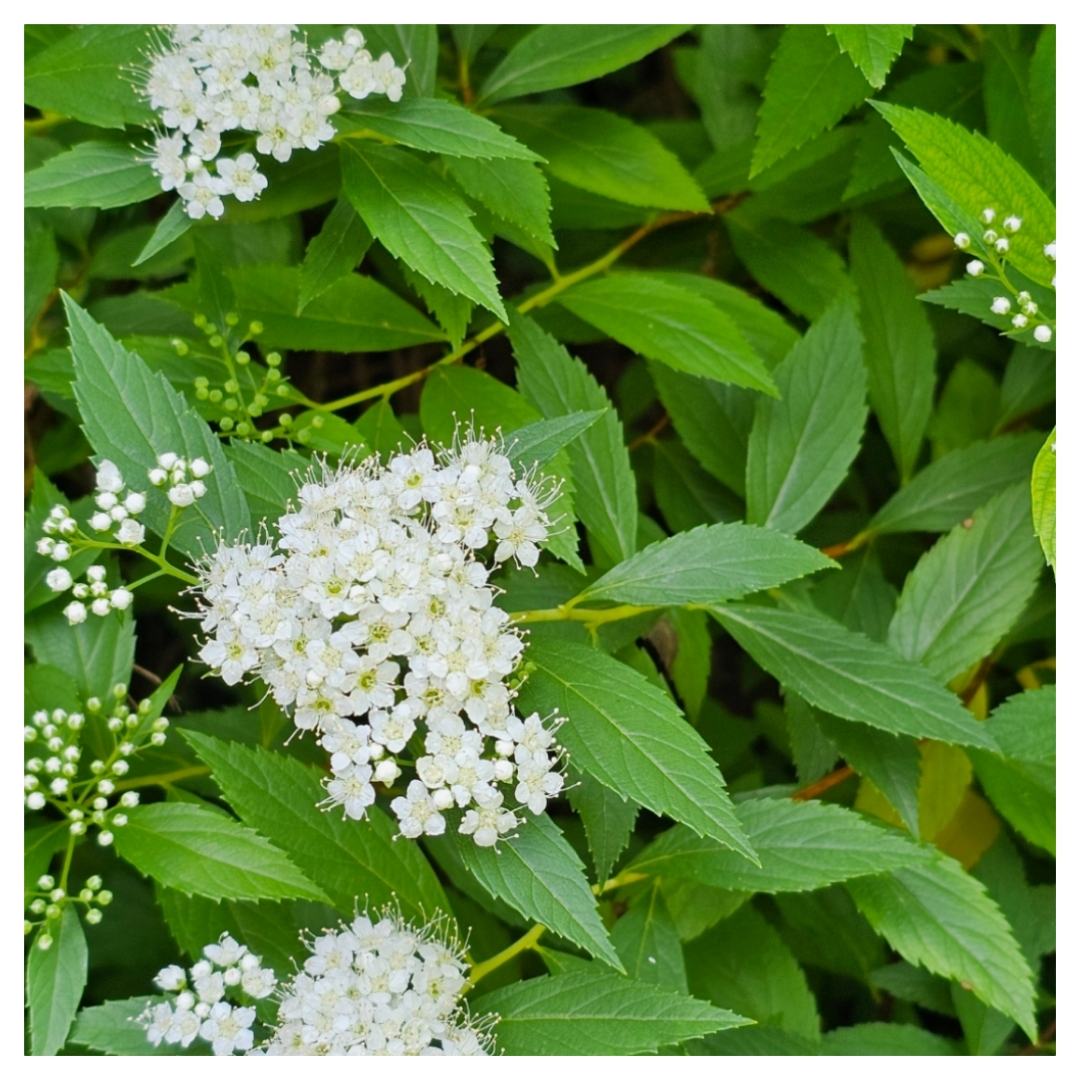
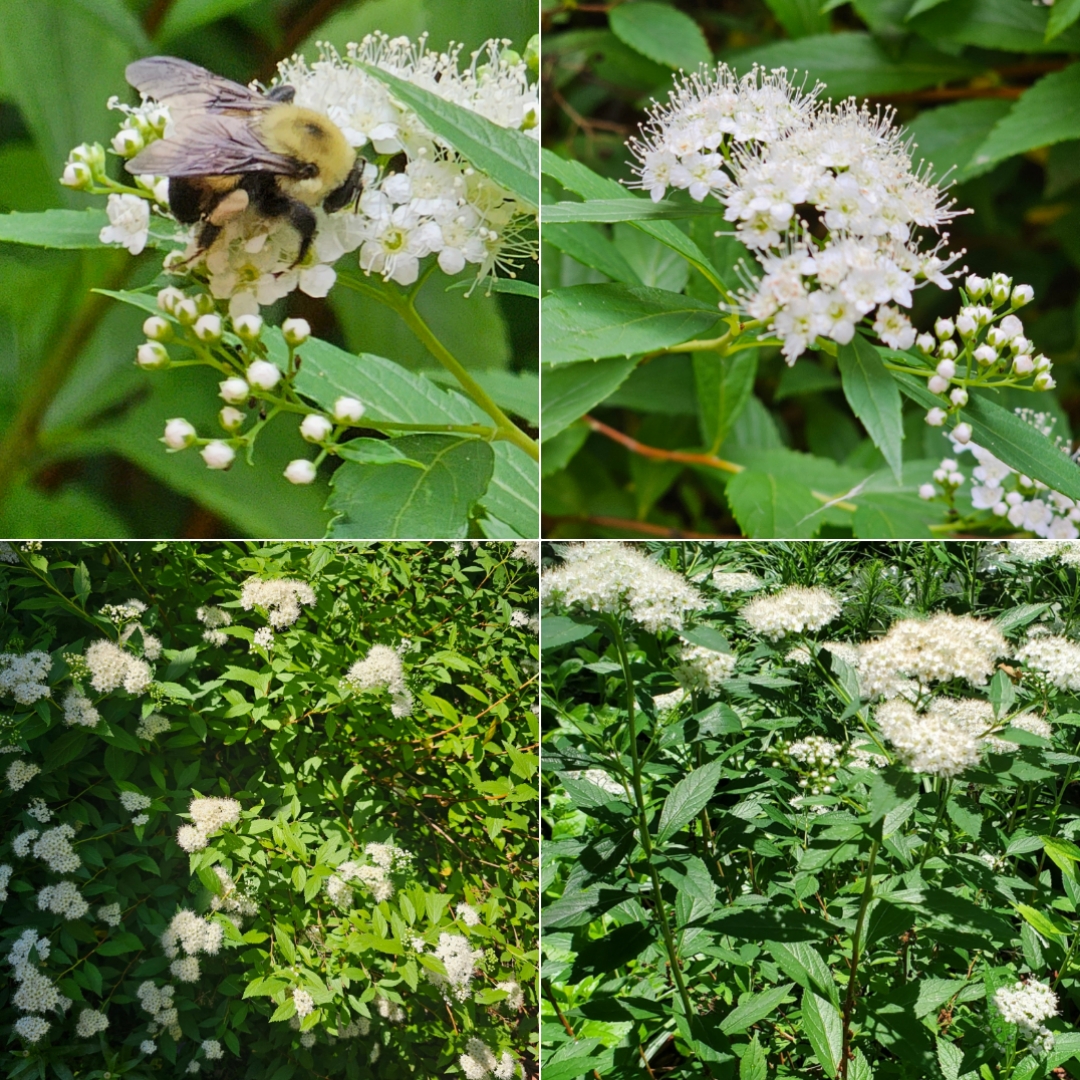
Our Michiana Shores garden’s Yeti™ Japanese Spirea (Spiraea japonica ‘Conspiyet’ PPAF) is one of the easiest to grow, least fussy, and most adapatable and beautiful of all the bushes and trees we currently grow. It easily makes our top 6 list of Bodacious Bushes and Trees in Hardiness Zone 4A candidates, and it’s one we’ll be growing in British Columbia. Yeti™ is a comparatively compact version of the immensely popular Japanese Spirea, which, in our garden, has grown to nearly 4′ in height and is about 5′ wide. I purchased this bush as a small potted specimen in the early spring of 2021, which was one year after its introduction to the retail trade. It has grown in a partially shady location since then, and has grown and flowered vigorously. It is literally a no-brainer growing this lovely, no-fuss deciduous bush.
Roots. Fibrous, with a root ball that appears to extend at least out to the bush’s drip line.
Soil. It’s not fussy about pH. Ours has grown successfully in soil the fluctuates between slightly alkaline and slightly acidic. The changes in pH have no discernable effect on the bush’s growth, flowering, or overall health.
Bloom time. Gorgeous, fluffy, bright white corymbs cover this bush in Jun through July. It’s even rebloomed lightly in the fall.
Pruning. It’s only necessary if you want to keep the bush tidy. It’s self-cleaning, and cutting it back isn’t necessary to get it to flower.
Hardiness Zones. The Yeti is hardy in Zones 4A through 8B. Ours currently grows beautifully in 5B/6A, and will also soon be growing beautifully in Western Canada’s 4A. I highly recommend this beautiful little bush.
4. Black Tower Elderberry (Sambucus nigra ‘Eiffel 1’)
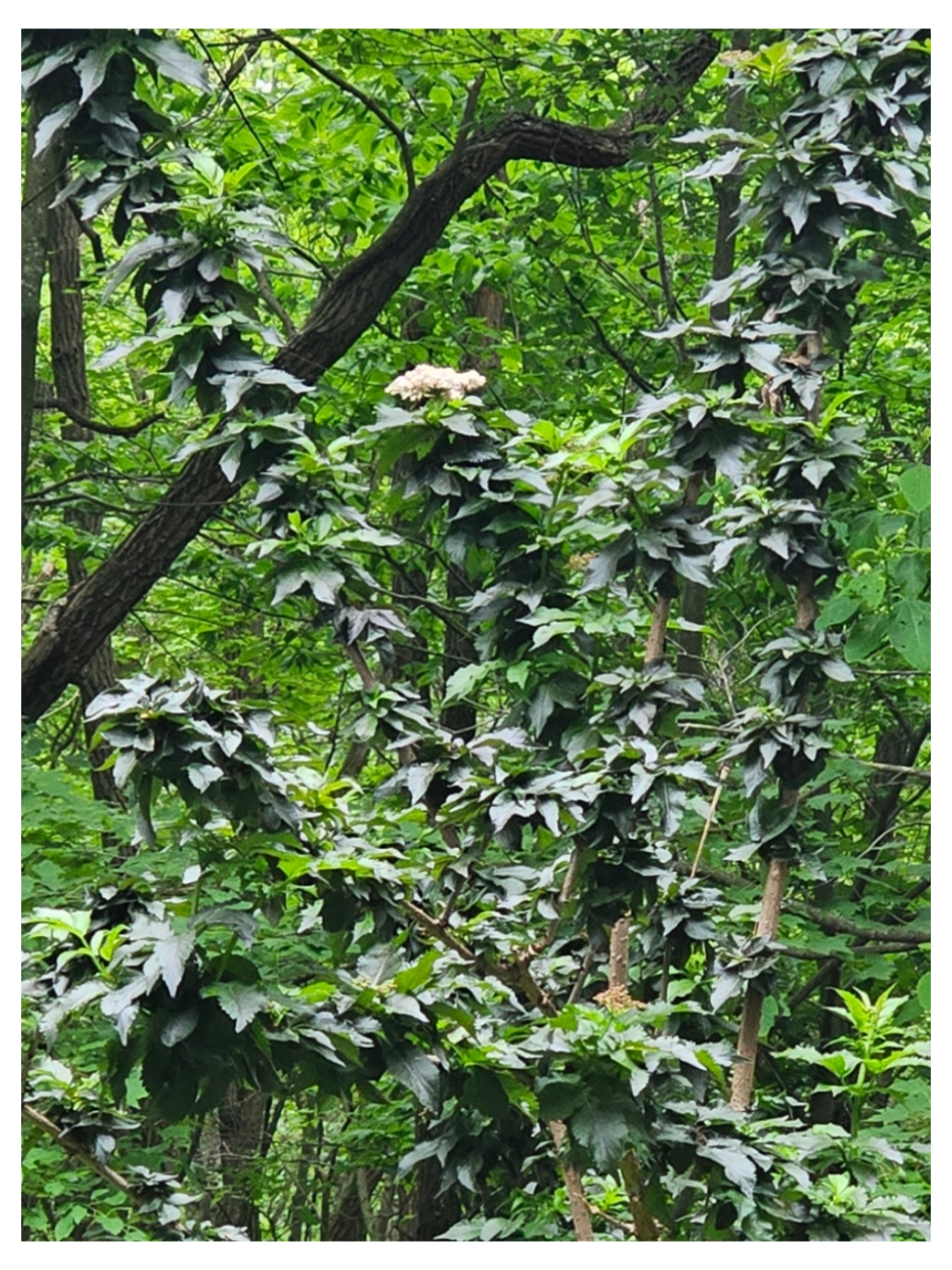
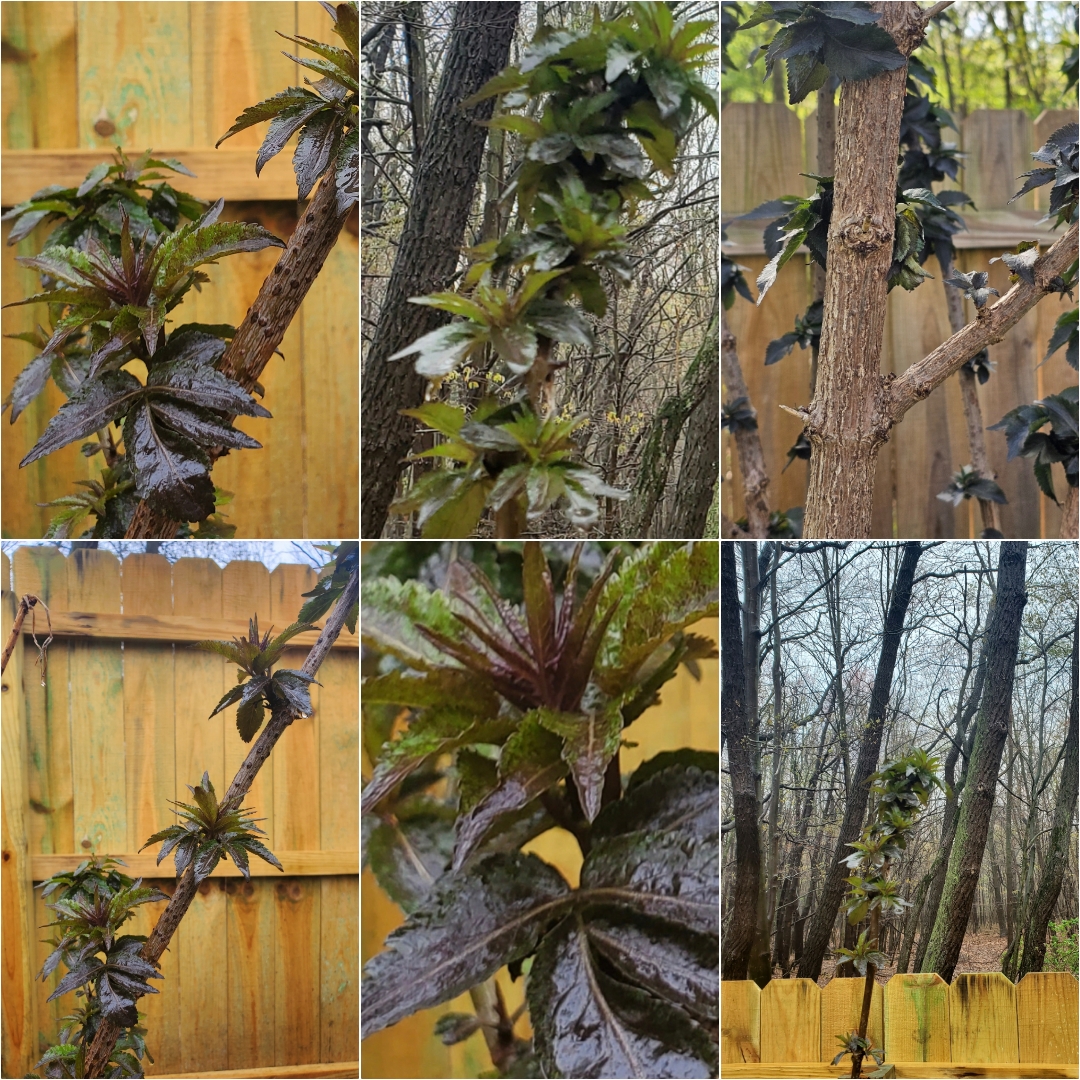
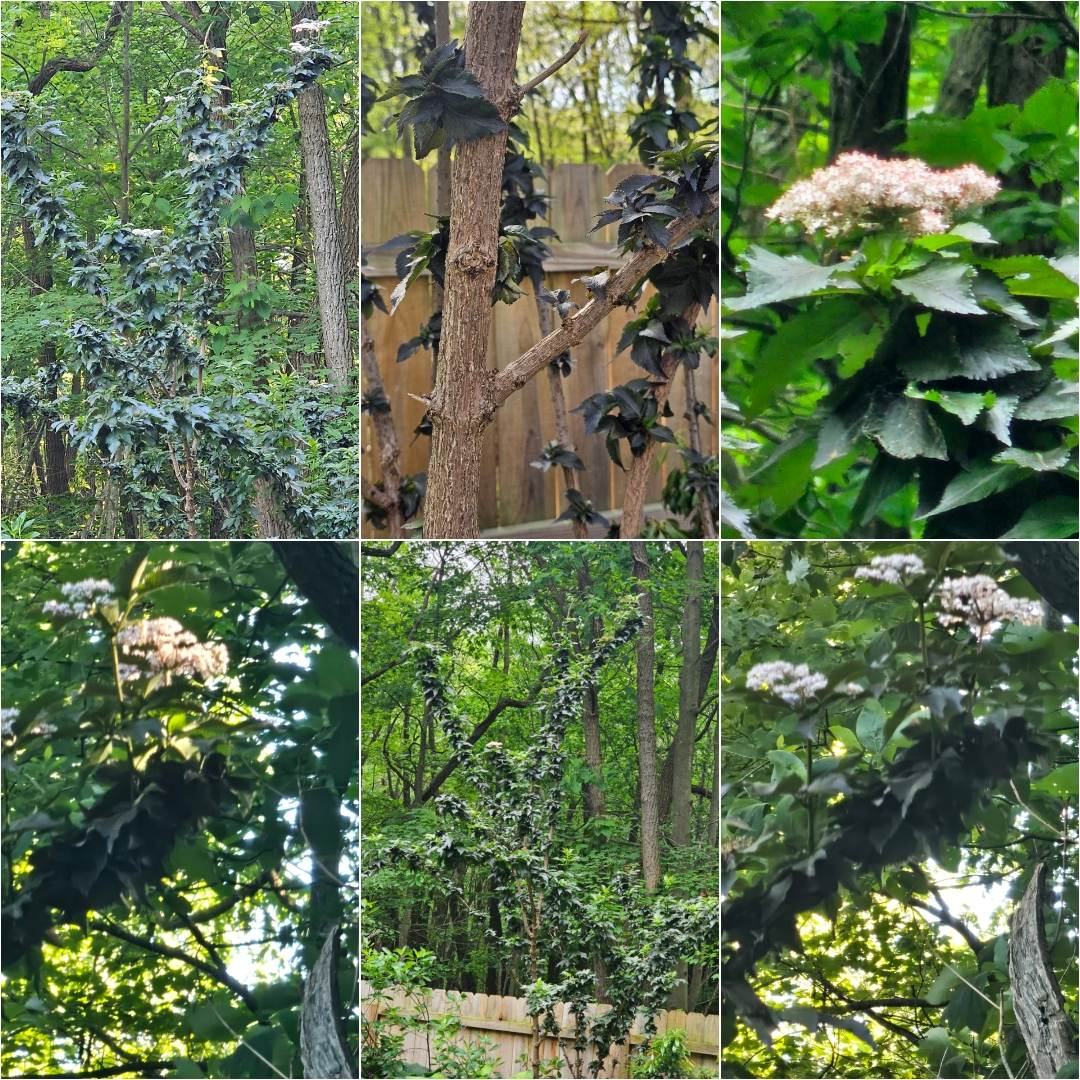
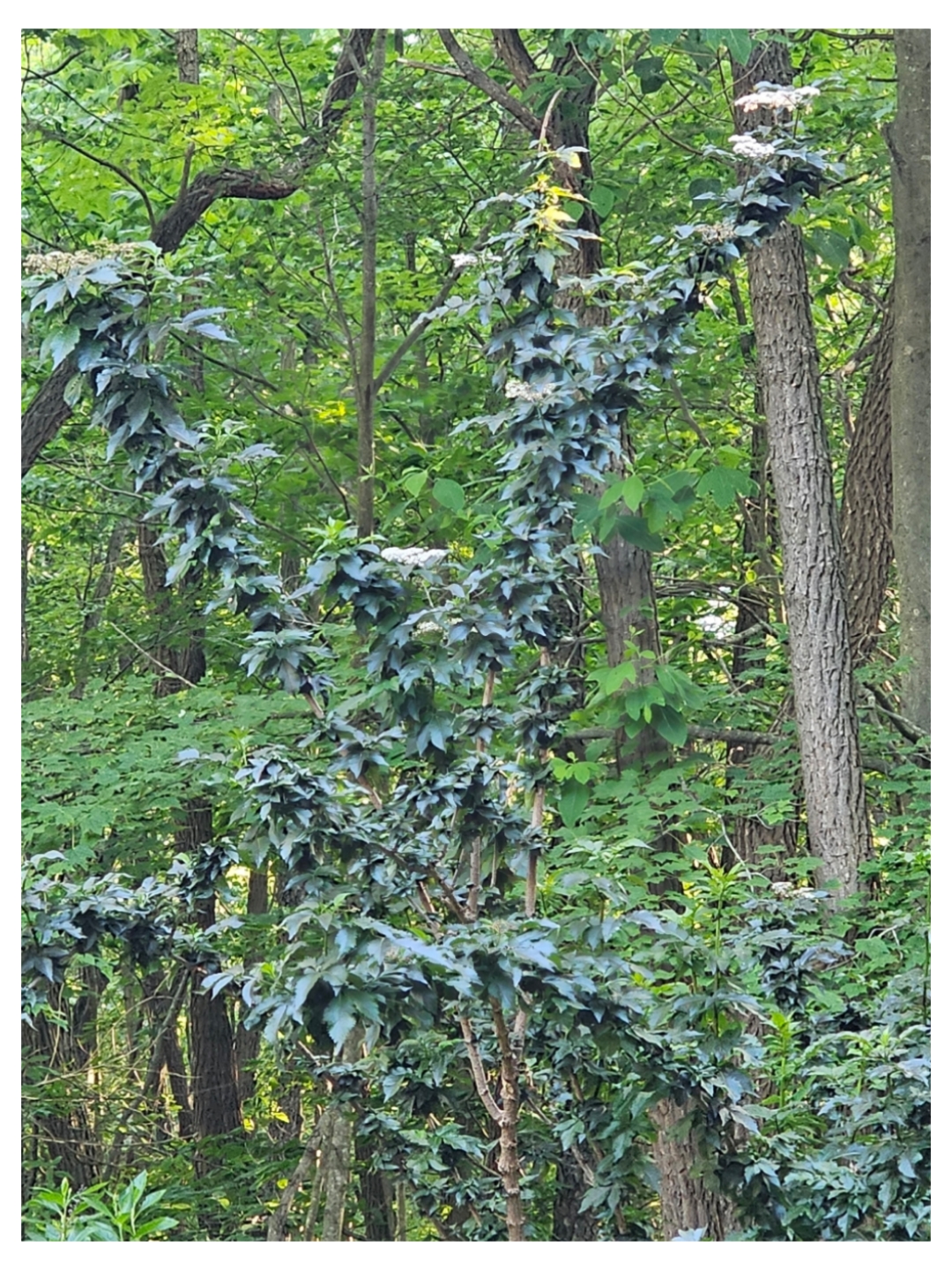
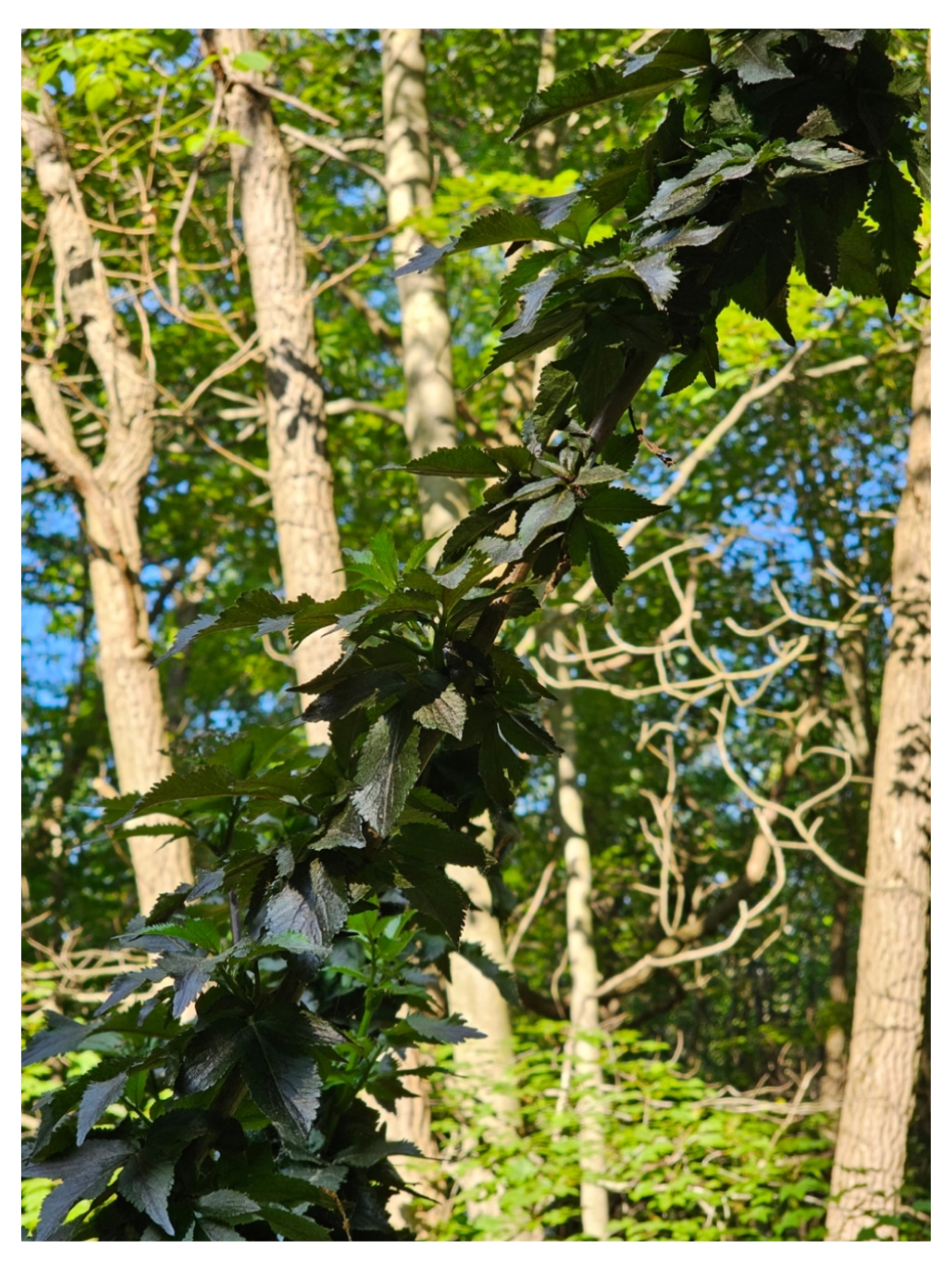
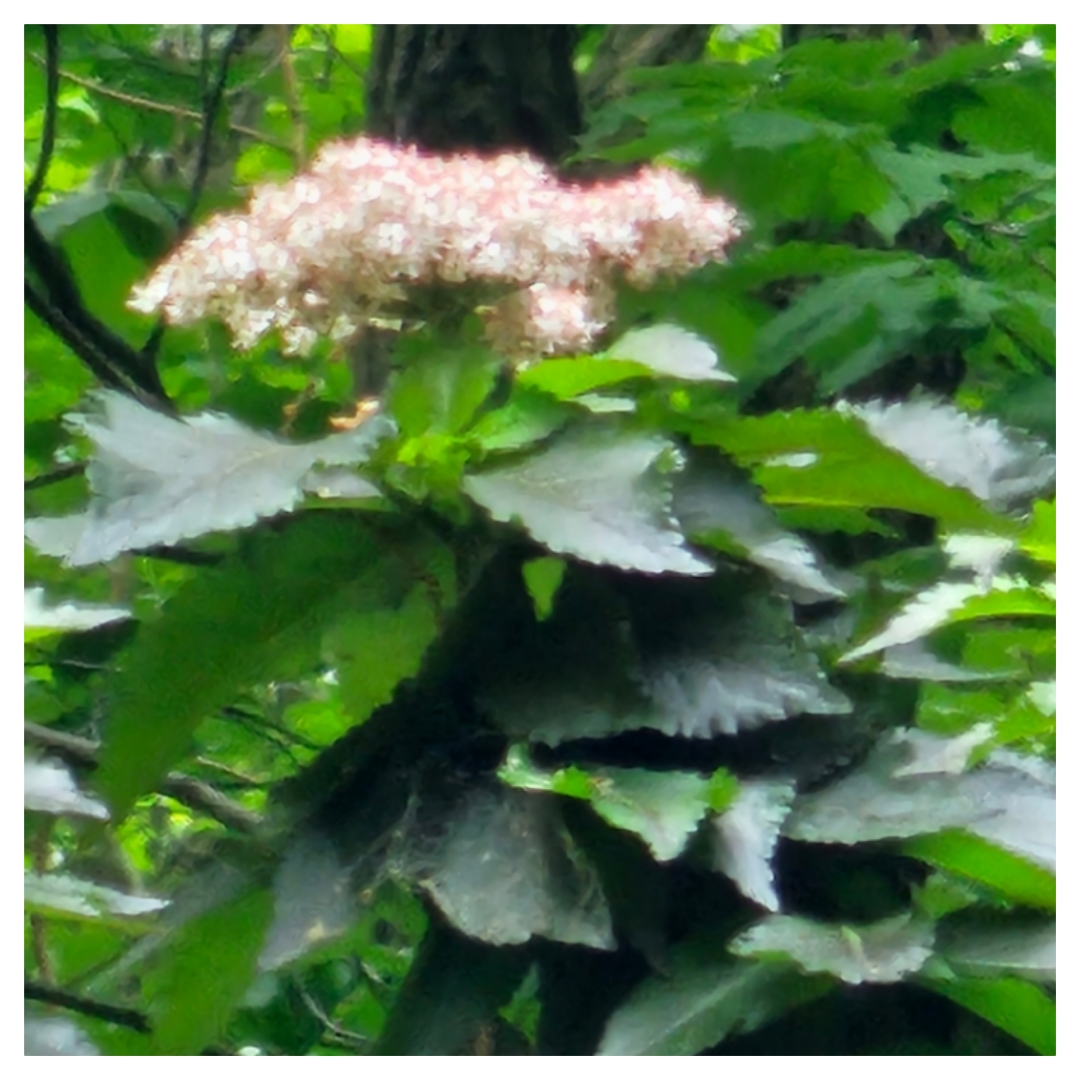
The Black Tower Elderberry (Sambucus nigra ‘Eiffel 1′) is a deciduous upright shrub or small tree that visually dominates a partially sunny to partially shady section of our Zone 5B/6A Michiana Shores garden. Although its shape tends to be somewhat upright and columnar, it demonstrates a “grasping” ranginess that allows our specimen reach a height and overall spread of approximately 12’x10’. In April, when it begins to leaf out in our garden, its foliage is a purplish green in color, but grows increasingly darker over the spring and summer. The Black Tower is an awesome presence, with its dark, imposing, upright-yet-riotous form. After the first week in June, beautiful pinkish-white flowers (cymes) form, and by fall, small, dark reddish-purple, edible berries are evident. It’s a fast-growing shrub with a spreading, suckering, woody root system. Although its roots are robust and extensive, our specimen has not caused problems for its nearby neighbors. Although by most accounts it can be expected to live twenty years, I personally know of other Sambucus individuals within the nigra species that are approximately thirty years old. This remarkable shrub’s unusual, striking form, its size, its gorgeous dark foliage, and its floating “strata” of fruiting white-pink flowers make this a natural choice for a British Columbian Hardiness Zone 4A garden. Here’s a little more info, and some pretty good pics:
Sunlight. Give it anywhere from full sun to partial shade and it’ll be happy.
Soil. It’s not at all choosy about soil pH. The dirt ours grows in has ranged from slightly acidic to slightly alkaline over the years and there’s been no detectable effect on its growth, appearance, or overall health.
Pruning. We like the rangy, grasping, upright sprawl of our big old Black Tower, so we don’t ever prune it except to remove a dead branch or trunk. If you do decide to prune yours for shape, do it immediately after flowering: they bloom on the previous year’s wood.
Hardiness Zone. 4A through 8B. So it’s just as good to go in British Columbia as it is in Michiana Shores. Like I said, it’s a natural choice for our forthcoming 4A garden.
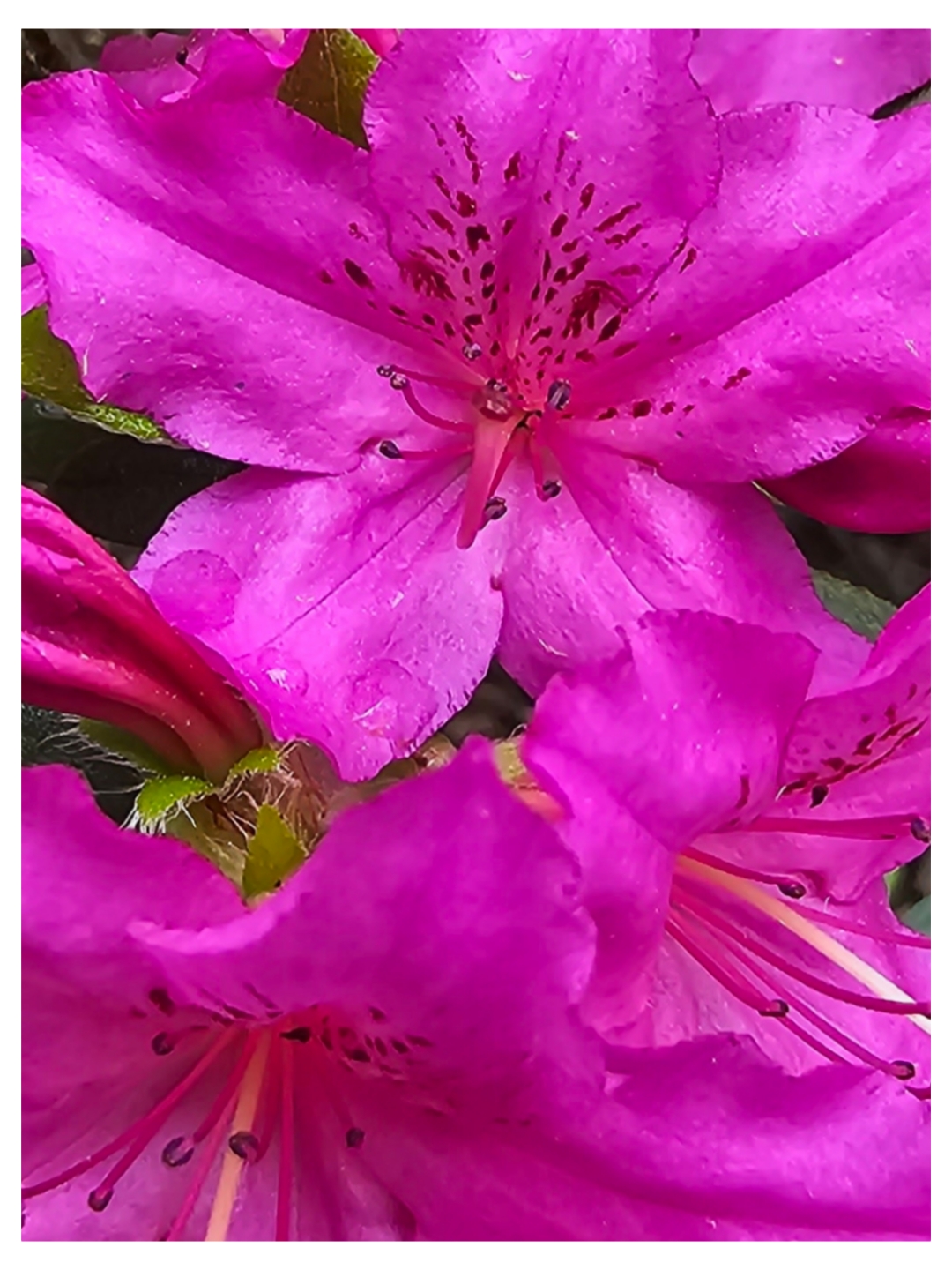
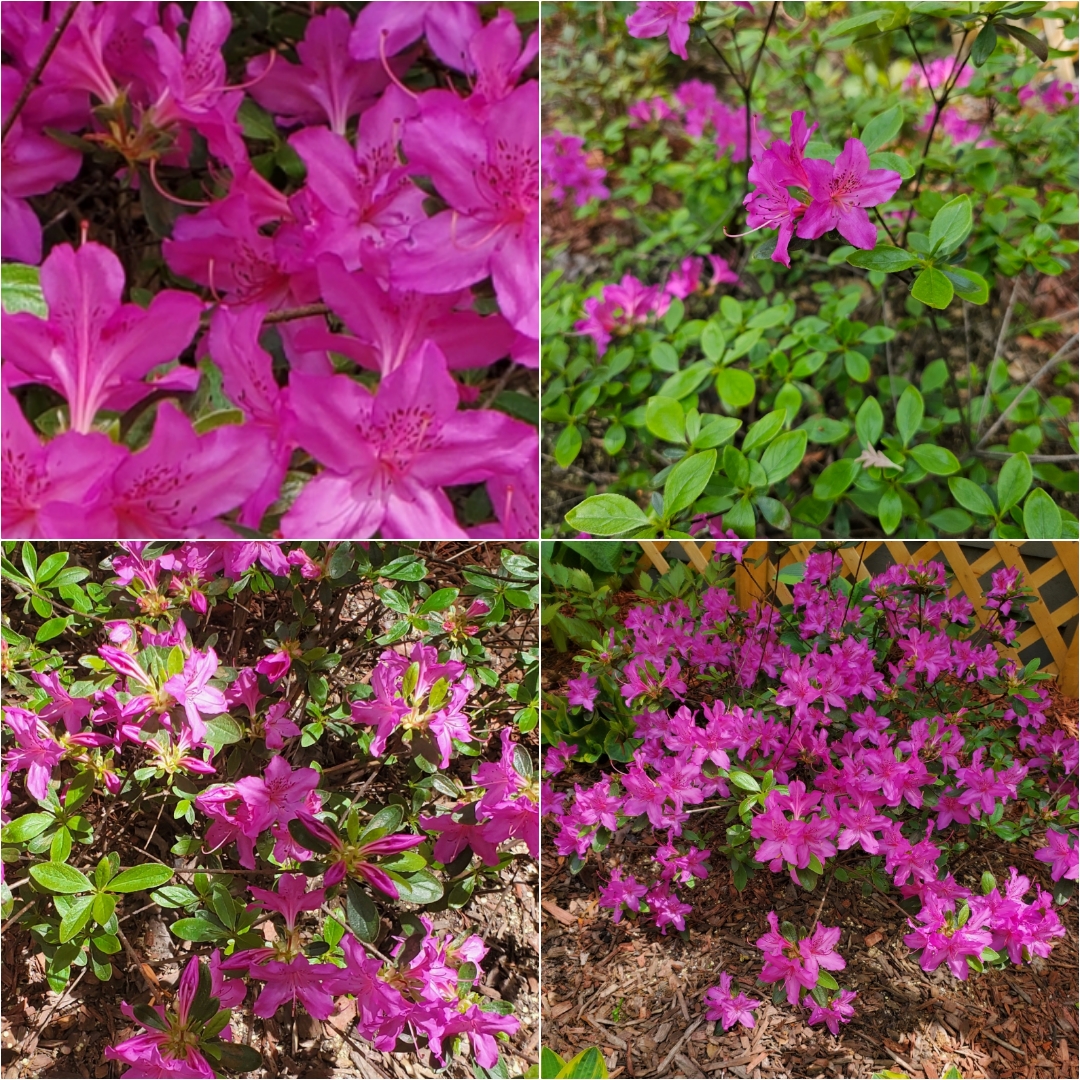
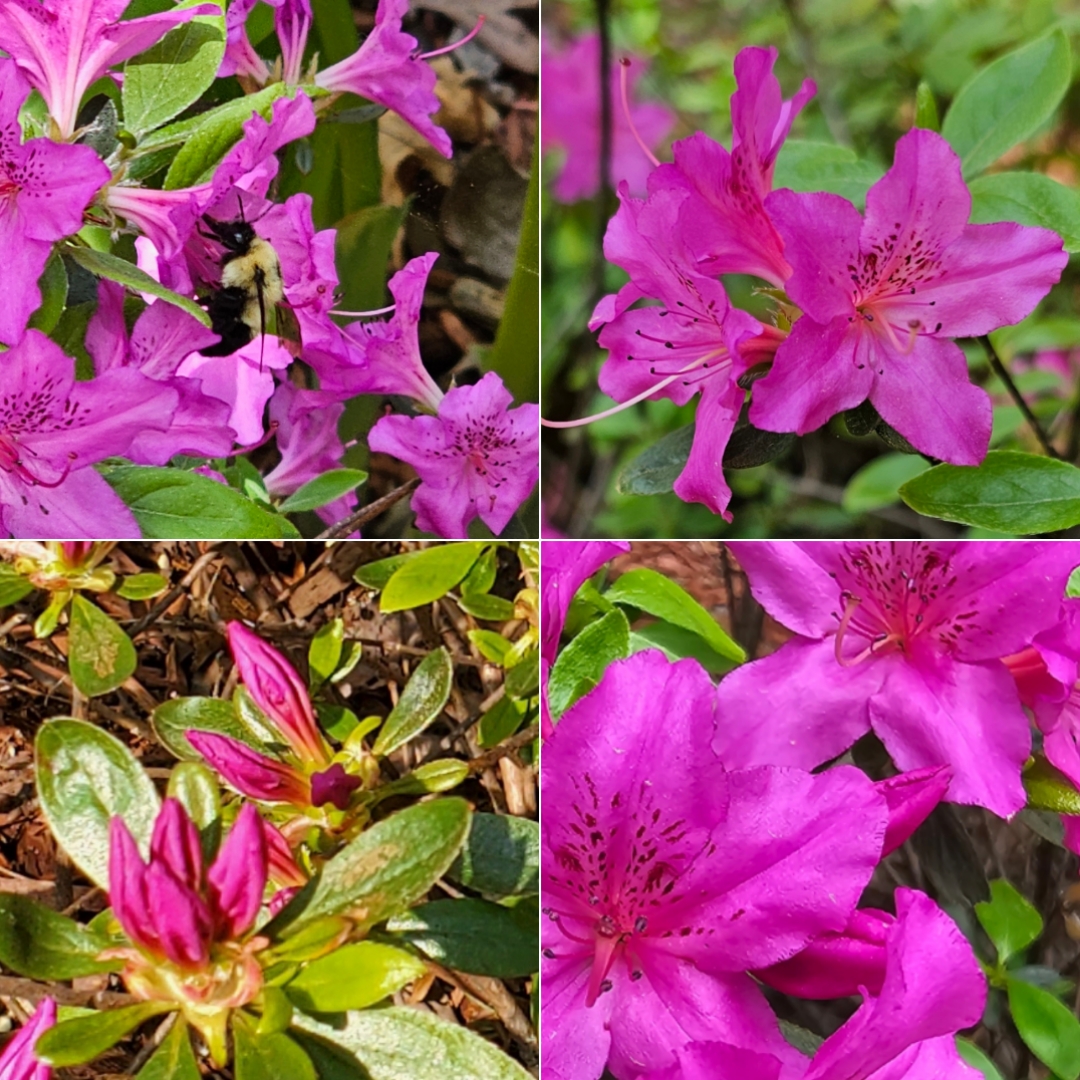
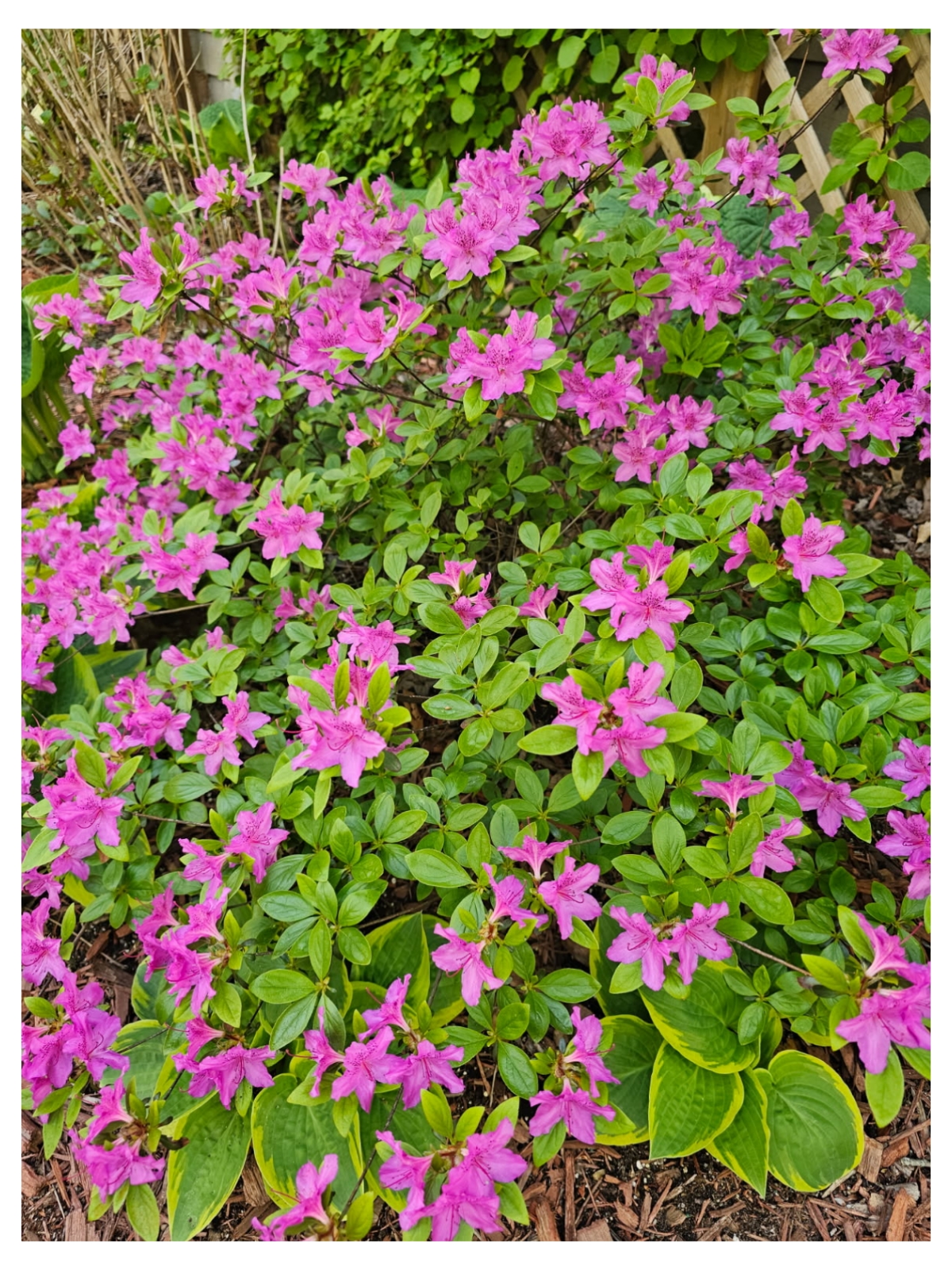
5. Karen Azalea (Rhododendron x ‘Karen’)
In a fairly shady section of our Michiana Shores garden, beneath a massive wooden arbor, there grows a beautiful low-ish, wide-ish (about 2′ tall by 4′ wide) bush with rich, green, foliage (evergreen in zones 6B and above, but somewhat deciduous in 6A and colder), and essentially Day-Glo pinkish-purple flowers. Its form, its lovely foliage, and its glowing flowers make this bush practically “hum” in the shade. It can live a very long time – many decades – and it is quietly vibrant and visually resonant. It is the Karen Azalea (Rhododendron x ‘Karen’). And it will be joining us in our Hardiness Zone 4A British Columbia garden.
So, you saw that “Rhododendron” part of its botanical name, right? What does that mean? The bush is an Azalea. Well, it’s like this: Azaleas were once actually part of one of two former subgenera of the enormous genus Rhododendron – namely Tsutsusi (evergreen Azaleas like our Karen) and Pentanthera (deciduous, or North American Azaleas). But now, the former subgenus Tsutsusi (to which our Karen belongs) was reduced to a section* and was encompassed by another subgenus of Rhododendron called Azaleastrum, and the former subgenus Pentanthera (the deciduous North American Azaleas) has now become a direct section of the gigantic genus Rhododendron. So, the simplest way to look at the Rhododendron/Azalea taxonomy scenario is like this: All Azaleas are Rhododendrons, but not all Rhododendrons are Azaleas. Whew!
(*Click here for an explanation of taxonomic sections.)
So, you want bodacious bushes and trees in Hardiness Zone 4A? For your own garden? Then you’ve got to get yourself a low maintenance Karen Azalea. Here’s some important info about it, and after you get the info, you’ll see some pics. Here you go:
Sunlight. Partial, dappled sun though partial shade.
Bloom time. Early through mid May.
Foliage. Glossy, deep green, and evergreen. The Karen, however, can and does behave like a deciduous bush and drops its leaves in colder Hardiness Zones.
Roots. Like all Rhododendrons, the Karen Azalea has comparatively shallow, widespread fibrous roots.
Soil. As in the case of all Rhododendrons, the Karen Azalea absolutely needs to grow in acidic soil. Again, soil in the 5.5 to 6.0 range of the pH scale will allow the bush to absorb the necessary nutrients, like iron, to remain healthy. Once more, please refer to my article, “How to Fix Yellow Rhododendrons (and Azaleas and Pieris, Too)” for a great fertilizing and soil amending methodology (and excellent corresponding products) that you can implement to keep your Karen Azalea happy, healthy, and beautiful.
6. Vanilla Spice® Summersweet (Clethra alnifolia ‘Caleb’ VANILLA SPICE®)
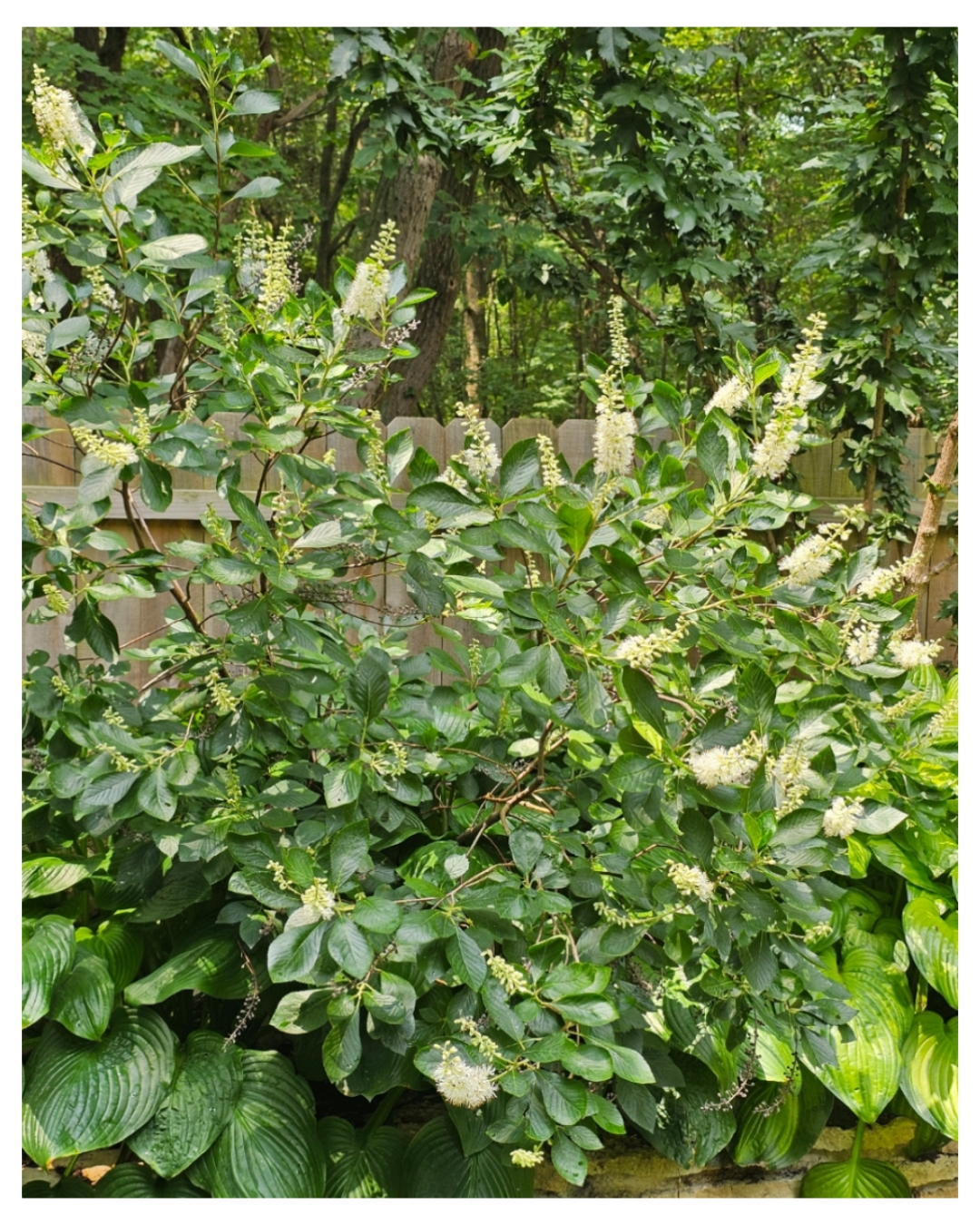
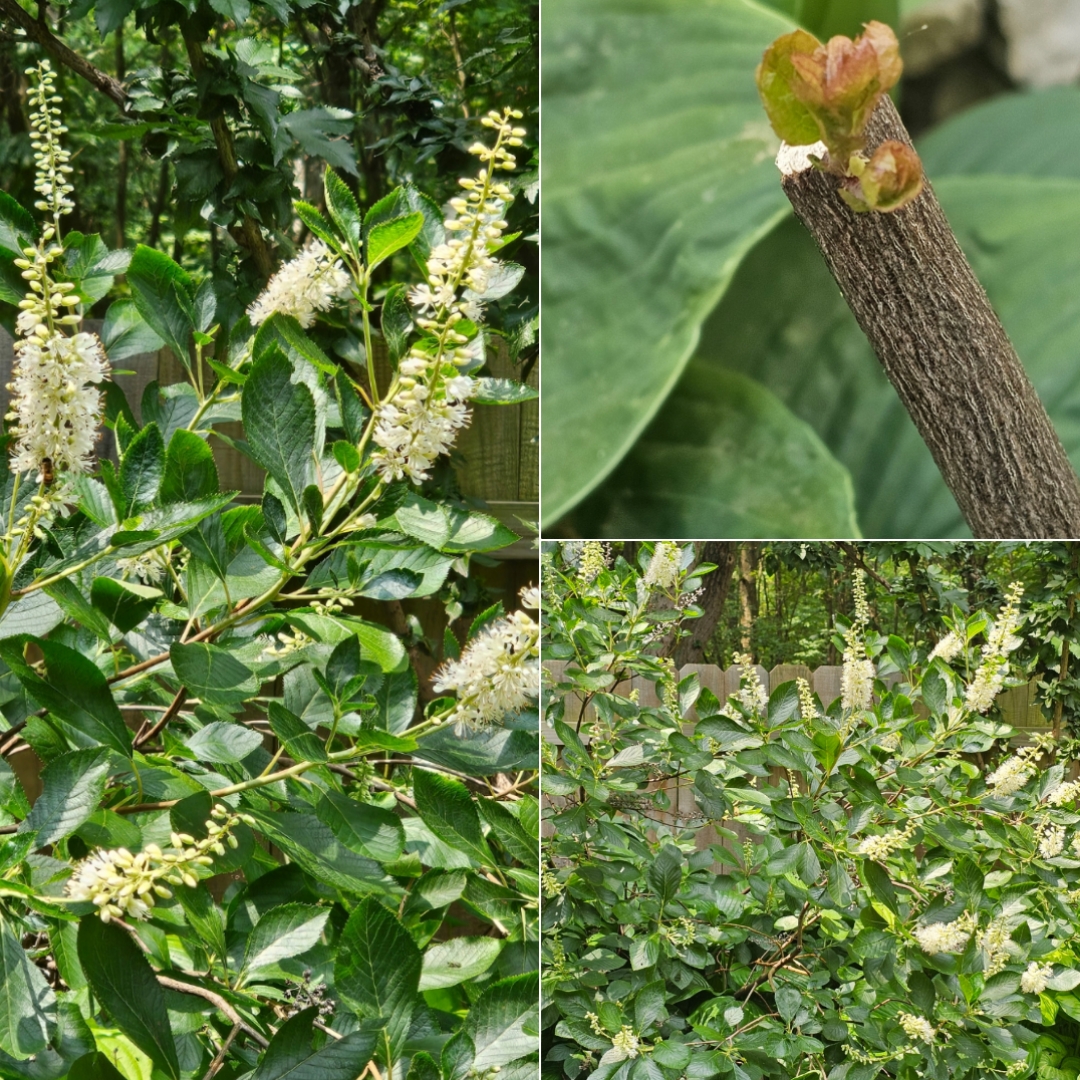
The Vanilla Spice® Summersweet bush (Clethra alnifolia ‘Caleb’ VANILLA SPICE®), also known as the Vanilla Spice® Sweet Pepperbush, is an incredibly beautiful, hardy, no-fuss deciduous shrub. Its white, upward-pointing panicled flowers are lovely and remarkably fragrant. Its foliage is lush, and its form and shape are relatively compact and rounded, and very pleasing. This bush grows beautifully in our Zone 5B/6A garden, and, since it’s hardy in Zones 4A-8B, it can be grown in a fairly wide range of physical locations, including, of course, British Columbia’s Zone 4A. It’s also long-lived, growing sometimes for 40 years or more. The hardy, simple to grow, no-maintenance Vanilla Spice® Summersweet is gorgeous and sweet smelling, and it’s one Ann and I will definitely be growing in our new Zone 4A garden. And if you want to be a grower yourself of a few bodacious bushes and trees in Hardiness Zone 4A, too, look no further than this hardy, zero maintenance beauty.
Here’s a little more info:
Sunlight. Full sun to mostly shade. Ours grows and flowers vigorously in a dappled sunlight location that becomes mostly shady in the later afternoon.
Roots. Woody and suckering. The Vanilla Spice will creep and spread, but will do so slowly. It’s a simple matter to manage this by snipping the suckering roots as they appear.
Soil. Slightly acidic, moist, or even wet soil, Although the Vanilla Spice does prefer its dirt fairly moist, ours has been very drought-tolerant once it became established.
Size. Ours is approximately 6’x6′ in height and spread, but by keeping suckering roots snipped and aerial branches pruned, it can easily be maintained at a much smaller size.
Bloom time. Our Vanilla Spice blooms July through much of August. As noted, its upright, white panicled flowers are incredibly fragrant, and they attract a large number of pollinators, including bees and butterflies.
Pruning. This bush blooms on current year growth, so the best time to prune it is in late fall though winter before it begins to leaf out and buds start to form. This past year, in late February or early March, I cut the woody stems of our Vanilla Spice back to within approximately 15″ of the ground. Once it began leafing out, it did so aggressively and was soon branching, regaining its height, and setting flower buds. By July, it was flowering beautifully and had regained virtually all of its pre-pruning size.
Bodacious Bushes and Trees in Hardiness Zone 4A: Now You Know Our Top Six Picks
Annabelle Smooth Hydrangea, Nova Zembla Rhododendron, Yeti™ Japanese Spirea, Black Tower Elderberry, Karen Azalea, and Vanilla Spice® Summersweet. That’s them. They’re the ones we’re going with in our British Columbia 4A garden. They’ve grown beautifully and flowered prodigiously year after year in our Michiana Shores garden. The sincerest form of gratitude I can extend to them, and the greatest compliment I can pay them, is to invite them to spend the rest of our lives – my wife’s and mine – with us in another part of the world. I’ve loved them for the past six years, and I know I always will.
(“Early Bloomers in Hardiness Zone 4A” is Part 4 of this 8-part series, and it’s coming soon. Stay tuned.)
Cheers, and Happy Gardening!
John Stamos is a writer and is co-publisher of The Renaissance Garden Guy. His work has appeared in a number of publications including, most recently, A Man for Some Seasons, Splice Today, and, of course, The Renaissance Garden Guy. He is married to his multitalented sweetheart, the mycologist and writer Ann Simpson-Stamos.
The Renaissance Garden Guy is a participant in the Amazon Associates Program. As an Amazon Associate, The Renaissance Garden Guy earns from qualifying purchases.
Additionally, The Renaissance Garden Guy is a participant in the Bluehost, SeedsNow, and hosting.com (formerly A2 Hosting) affiliate programs. The Renaissance Garden Guy earns a fee/commission each time a visitor clicks on an ad or banner in this site from one of these companies and makes a subsequent qualifying purchase.
Please click here to view The Renaissance Garden Guy Disclosure page.


So many gorgeous plants to admire! The azaleas really caught my eye in this piece, John. Always a treasure trove of information!
Thank you for reading the piece, Lisa. I really appreciate that. And I really appreciate your kind words. The number of the flowering bushes and trees I’ve come to love over the years here in the Midwest that thrive in the comparative cold is actually substantial. I was more than a little surprised when I started really looking into it. And Ann was pleasantly surprised, too. We’re really looking forward to growing these beauties in BC’s Zone 4. Thanks once again, Lisa. (Btw, I do agree with you. Azaleas and rhodies are wonderful shrubs!)