
Early Bloomers in Hardiness Zone 4A
Which perennial plants wake up and flower just as early in the year in the colder regions of Western Canada as they do in the comparatively warmer environs of Midwestern Michiana Shores here in the good old USA? Read about some of The RGG USDA Hardiness Zone 5B/6A garden’s precocious flowering plants that will also star as early bloomers in Hardiness Zone 4A in the new RGG British Columbian garden.
By John G. Stamos

Redundancy alert! Since this article is Part 4 of an 8-part series on plants that can be grown in our forthcoming Hardiness Zone 4A garden, and since I’m lazy, I’ve chosen to include the next four paragraphs – exactly as they appear here – as an introduction to all 8 parts of the series. So, if you’ve read the series’ first part (“Climbing Vines in Hardiness Zone 4A”) from its very beginning, you may remember what these next four paragraphs include. So, feel free to blow them off and get right into the article that follows them. Trust me. You won’t hurt my feelings.
J.G.S.
Regular RGG readers and subscribers may know that I’m planning for a move to British Columbia, Canada, where my wife Ann, my pup Holly, and I will make our home. The move itself, and all of its implications, present a number of challenges on a number of different fronts. One of those challenges will be attempting to replicate – or at least approximate – the garden I designed, developed, and currently tend here in Michiana Shores, Indiana, in USDA Hardiness Zone 5B/6A. For the past six years, that garden has dutifully served as a contextual backdrop and unifying theme for this publication. In terms of its make-up, it’s a densely planted amalgam of ornamental perennial trees, bushes, and plants. Some of these trees, bushes, and plants are cultivated, and some are native and wild. Some are deciduous, some are herbaceous, and some are evergreen. All grow beautifully and happily in Zone 5B/6A. Since Ann, Holly, and I love that garden and all the things that grow there, we’d love to try to grow as many of those same things in British Columbia as we possibly can. But the part of British Columbia where we’ll be living is located in USDA Hardiness Zone 4A (where temperatures can plummet to -30° Fahrenheit and lower), so, since a number of the Michiana Shores garden’s denizens are not hardy in zones lower than 5, we’ll need to be selective.
Fortunately, we won’t need to be too selective. And that’s where this feature, which is essentially a pictorial spread peppered with a dash of helpful info, comes in. This article, along with seven others, serves as an 8-part, full-color manual outlining some favorites from our current 5B/6A Michiana Shores garden that will thrive just as beautifully in British Columbia’s more frigid Zone 4A.
In this series of features, you’ll learn which of one particular Midwest Zone 5B/6A garden’s vines and climbers, foliage-intensive perennials, bodacious bushes and trees, early bloomers, power flowerers, lilies and daylilies, spreading and naturalizing groundcovers, and wildflowers and native perennials can make the successful leap to the higher latitudes and lower temperatures of British Columbia’s chilly Zone 4A. For a closer visual inspection of the plants discussed in this article, please be sure to click on their photos below. When you do, you’ll be able to enlarge, minimize, or zoom in or out on them. Pretty handy, no?
Note to readers: Before you set your heart on a particular Zone 4A-capable plant for your own British Columbian garden, I highly recommend a visit to The Invasive Species Council of British Columbia’s excellent website: Click here to plan ahead.
Canada-bound: Early Bloomers in Hardiness Zone 4A
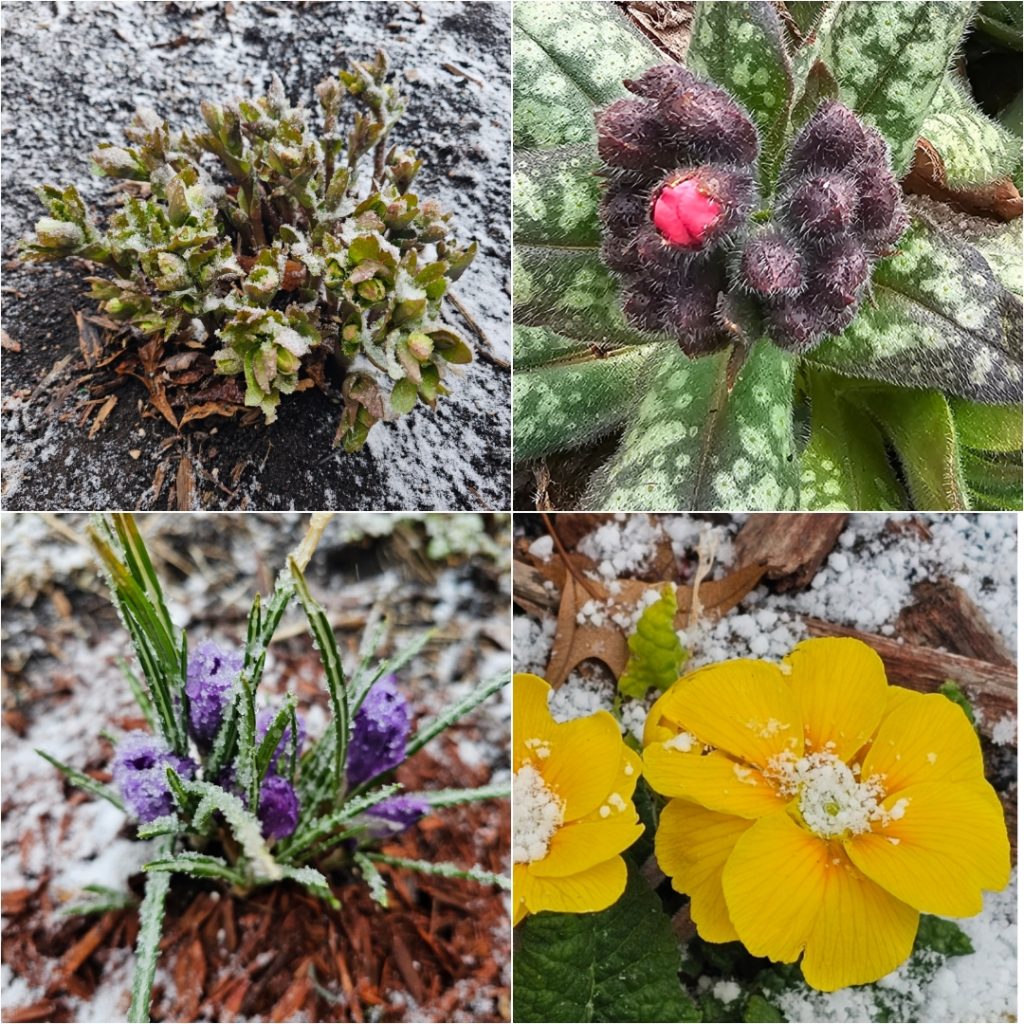
I’ve got four good ones for you right here. They all flower early, they can all handle the cold, and they’re all going to be growing in the new RGG garden in British Columbia. What you’ll find out about them here is primarily photographic in nature, but there’s a little bit of written horse sense for you, too. Check it out: We grow Crocus, Hellebore, Pulmonaria, and Primrose here in 5B/6A, and they’re going to be four of our early bloomers in Hardiness Zone 4A.

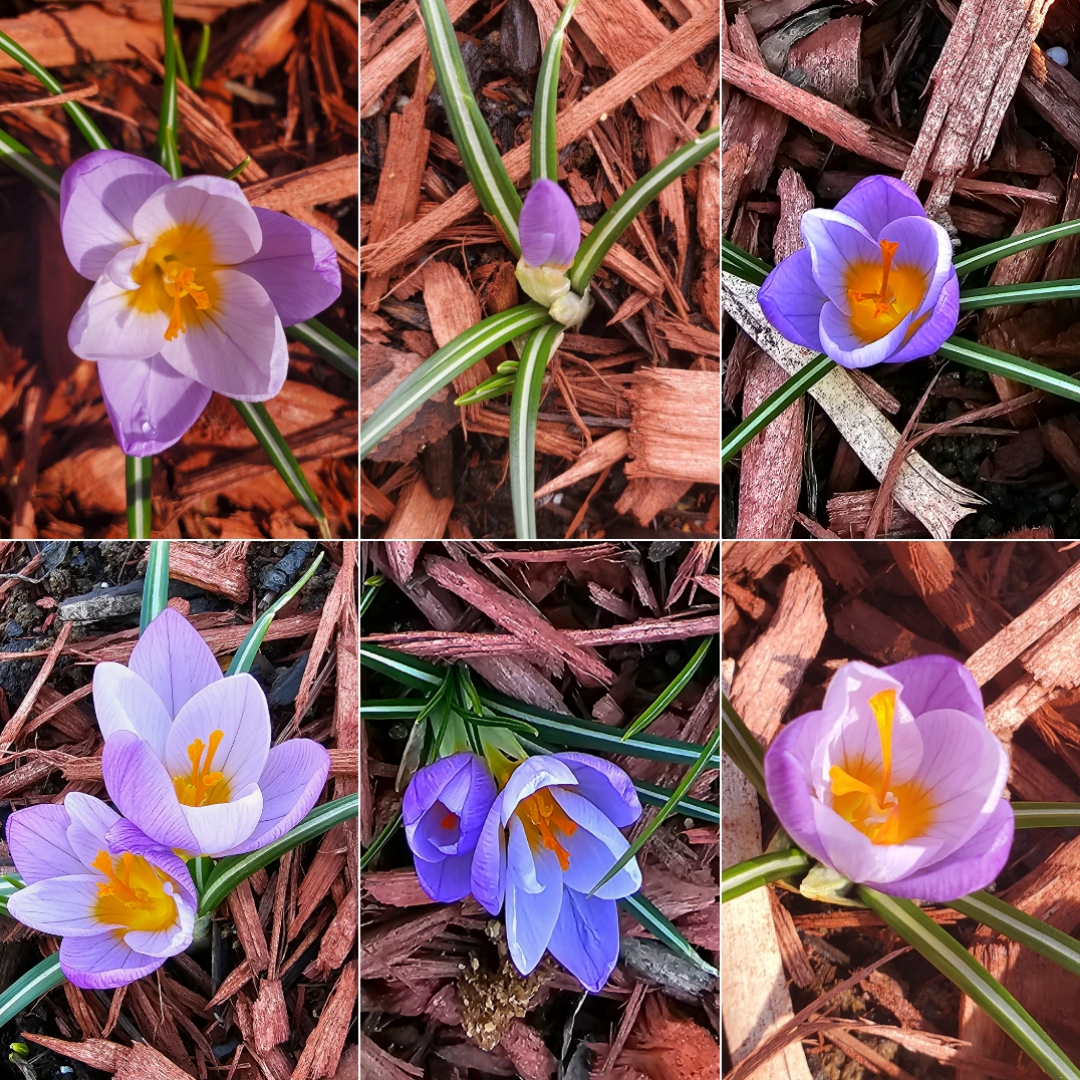
1. Snow Crocus (Crocus chrysanthus): Early to Bed, Early to Rise
Snow Crocus (Crocus chrysanthus) is one of the prettiest early bloomers in Hardiness Zone 4A (or in 5B/6A, for that matter) that you’ll find. And “early” is the operative word. In The RGG’s 5B/6A garden, these little beauties are up and out of the ground as early as mid February, and are flowering by late the same month. For early season color and drama, they’re nearly impossible to beat. But enjoy them while you can. They’re ephemeral, and they disappear in mid to late spring/early summer when temperatures and sunlight levels rise, and you won’t see them again until the following winter. Colonies of Snow Crocus can survive and slowly spread their beauty in a garden for decades.
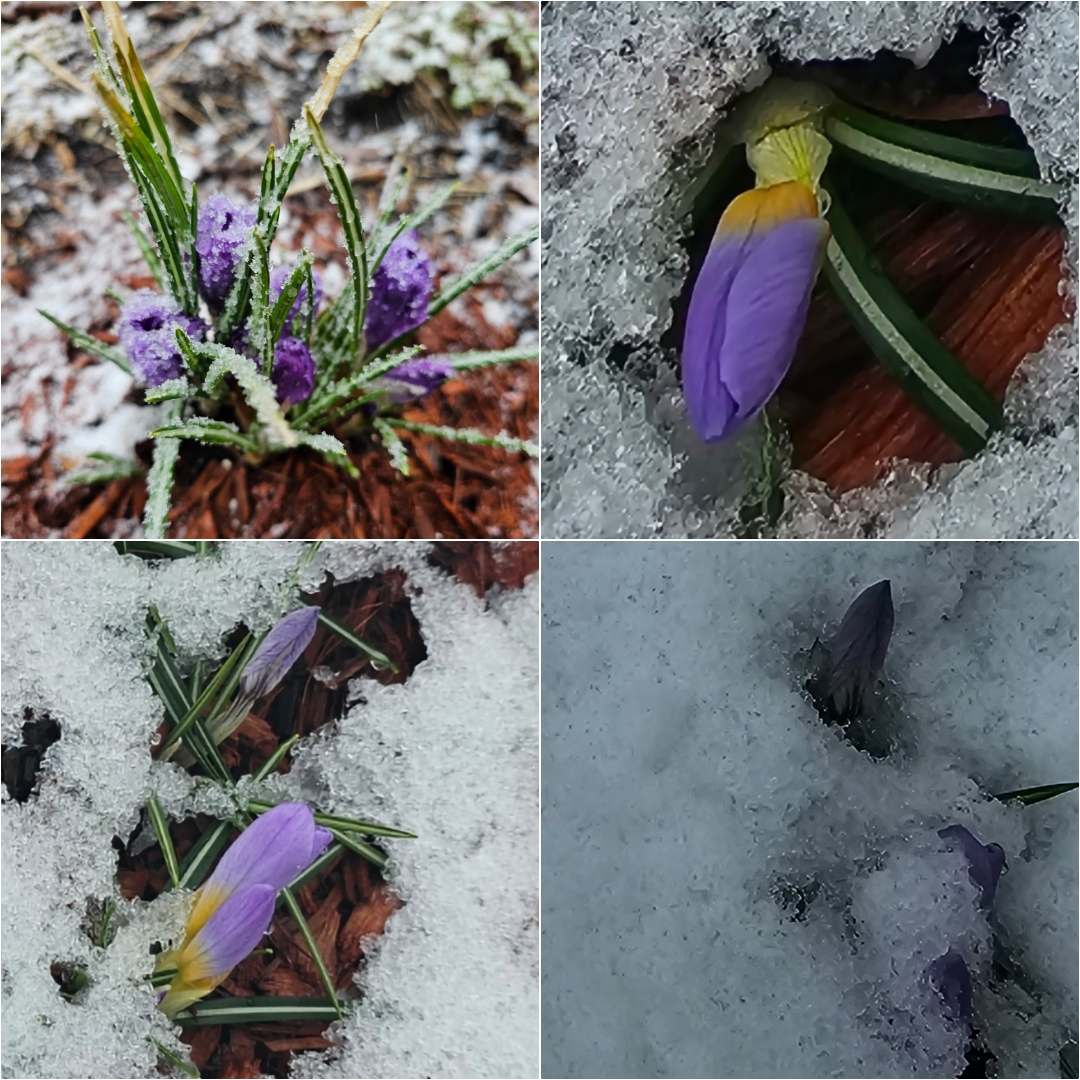
Snow Crocus cold hardiness. Zones 3A-8B, so they’re good to go in our part of British Columbia (4A).
Snow Crocus light requirements. Partial sun is fine, but since they do their thing in late winter when shade from surrounding plants and trees is scarce, full sun is usually what they get. And they’re fine with that, too. When it’s still cold, the sun doesn’t burn them at all. In fact, it does them good, as they’re able to store up energy in their corms* for the following growing season.
Snow Crocus soil requirements. Ours aren’t the least bit choosy: some parts of our 5B/6A Crocus colonies grow in slightly alkaline soil, and other parts grow equally well in slightly acidic soil.
Snow Crocus bloom time. Snow Crocus, in Zone 5B/6A, emerge in mid February and can start blooming by the end of the month.
Snow Crocus root system and spreading habits. *Corms. That’s their deal. Like bulbs, corms are compressed underground stems that store energy from sunlight for use in a particular plant’s growing season the following year. Unlike bulbs, which store that energy in their thick, tightly-wrapped, fleshy underground leaves, corms store energy in their stem tissues themselves (click here for a great little article about corms vs bulbs). Roots generate from the bottom of each corm. Crocuses gradually spread by way of corm offsets (called cormels), which produce entirely new plants.
Snow Crocus size. They’re itty-bitty little things, growing to only 3 or 4 inches in height, and slightly wider in spread.
Snow Crocus planting time. Fall, baby, fall. Plant ’em then, and they’ll be legends of the late winter.
Snow Crocus toxicity. Consider all parts of the Snow Crocus toxic. Don’t let pets or people eat them.
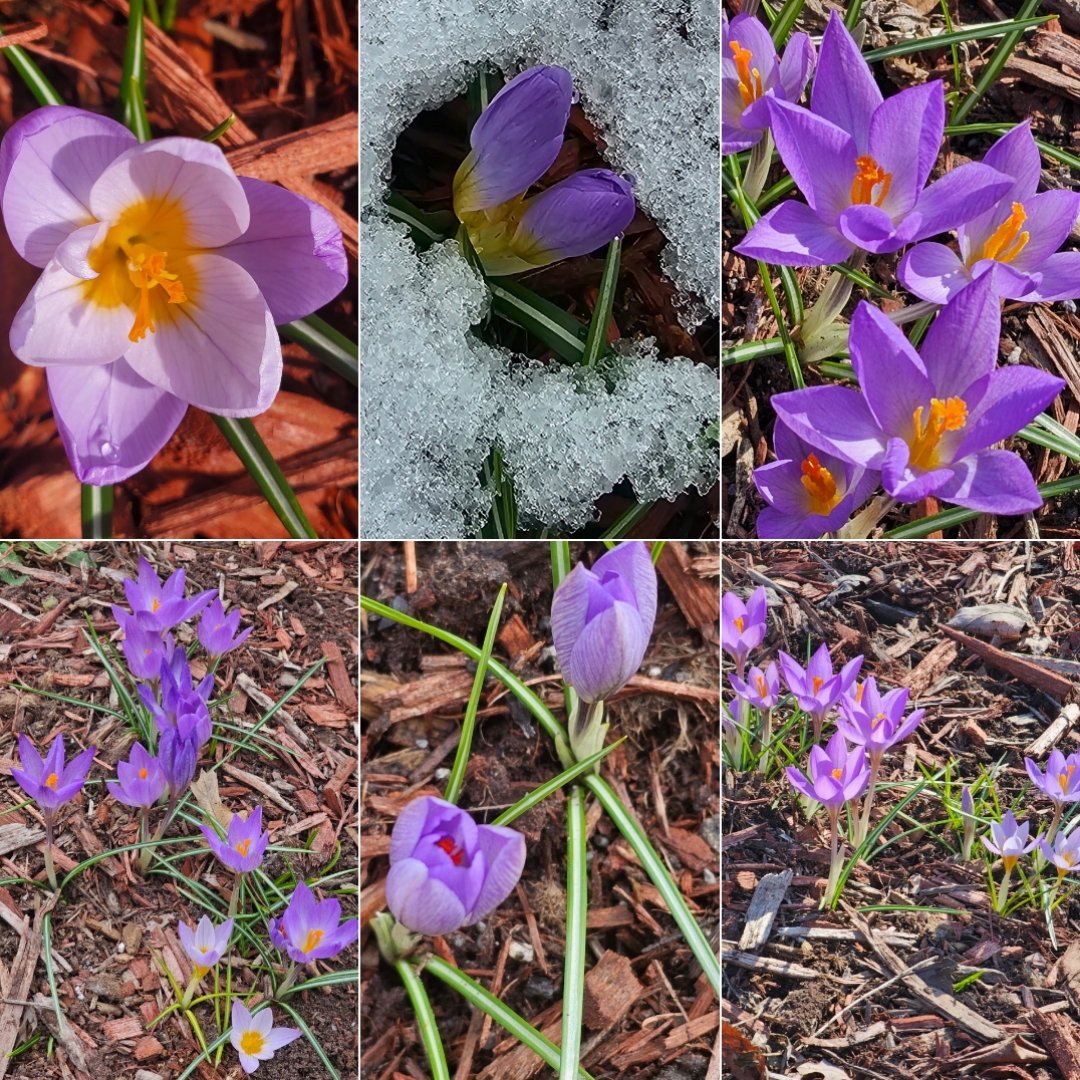
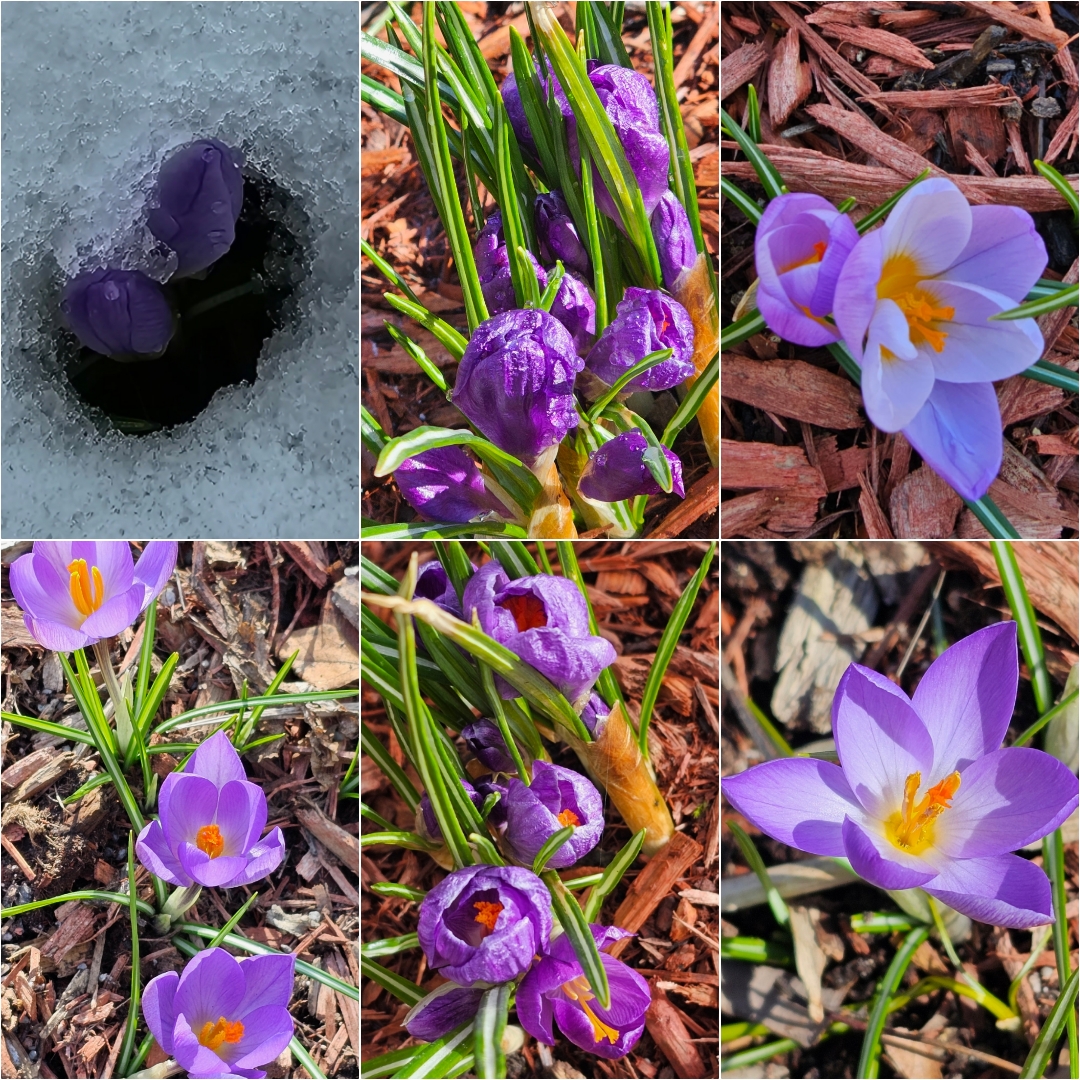
For Ann and me, Snow Crocuses will be a beautiful addition to our new British Columbian RGG garden, and their hardiness and cold-loving tendencies guarantee that they’ll be among our favorite early bloomers in Hardiness Zone 4A.
For more on Snow Crocuses, please see my article, “5 Great Bulbs for Fall Planting”, right here in The RGG.

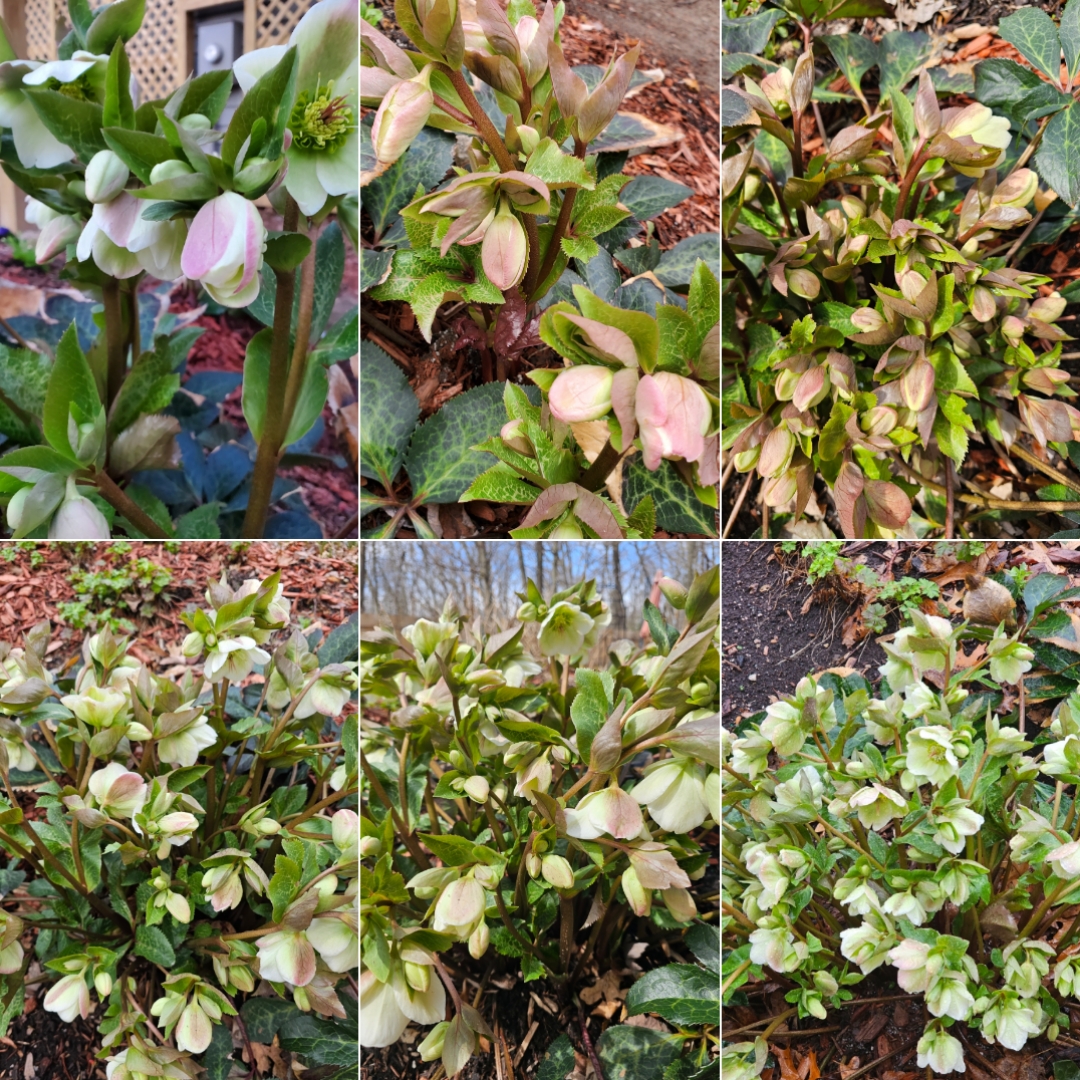
2. Hellebores, specifically, Lenten Roses (Helleborus orientalis or, even more specifically and more than likely, Helleborus x hybridus)
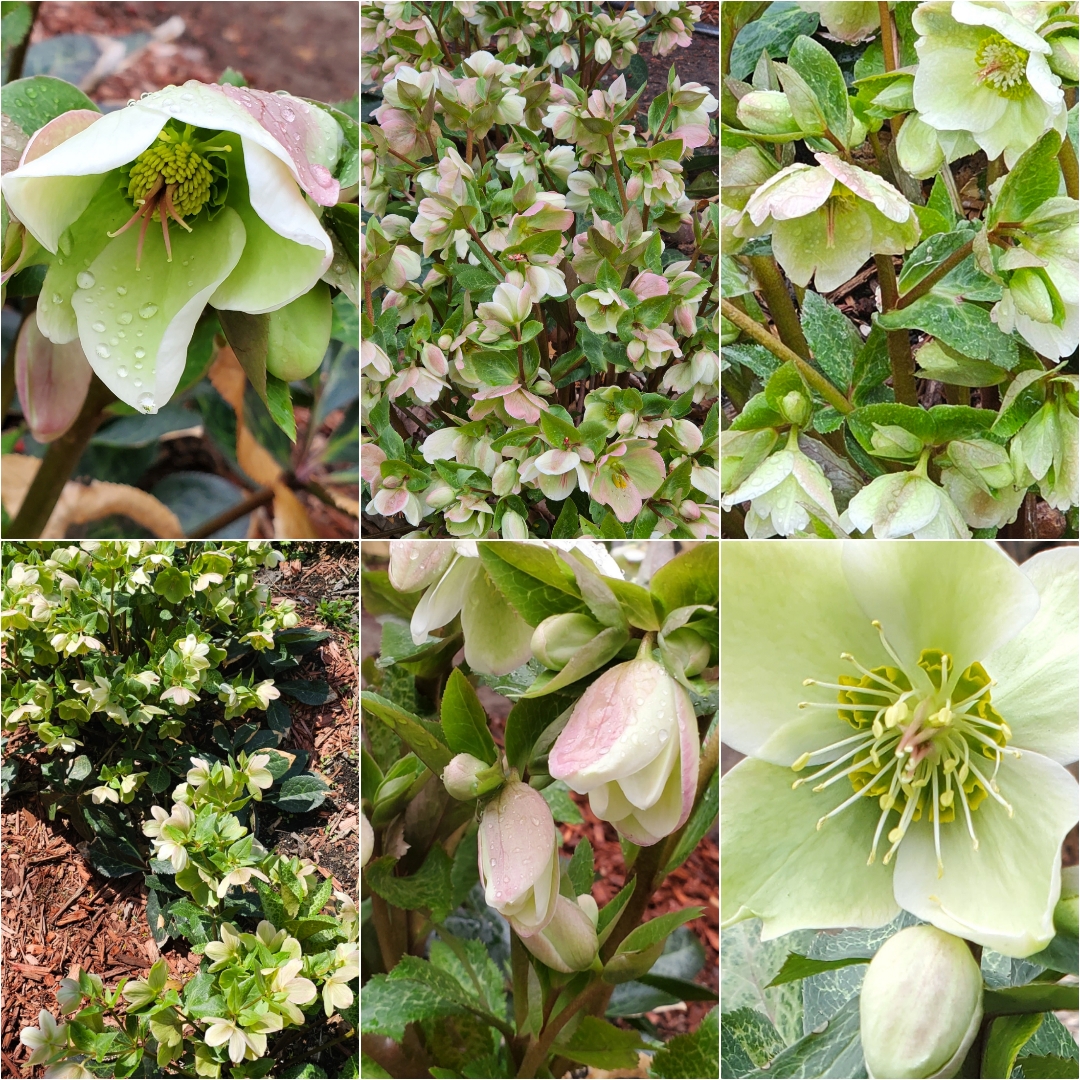
Cultivated Hellebores are either Lenten Roses (Helleborus orientalis or, more than likely, Helleborus x hybridus) or Christmas Roses (Helleborus niger). But don’t get hung up on the taxonomy and the nomenclature. (If you’d like, you can read all about that topic in my article, “Say Hello to Hellebores”, here in The RGG. It goes into great detail explaining it as well as providing a solid amount of other Hellebore stuff. Great article. Seriously.) Although there are Christmas Rose plants (Helleborus niger hybrids) growing in our 5B/6A garden, it’s Lenten Roses (of the Helleborus x hybridus group) that I’m reviewing with you in this article. They’re stunningly beautiful, they’re evergreen, they’re very long-lived, they’re incredibly cold hardy, they’re spectacular cold weather budders and bloomers, and… they’re acutely toxic. Of course, they’re going to be growing as one of our early bloomers in Hardiness Zone 4A. Keep going to see some pics and read a few words about them.
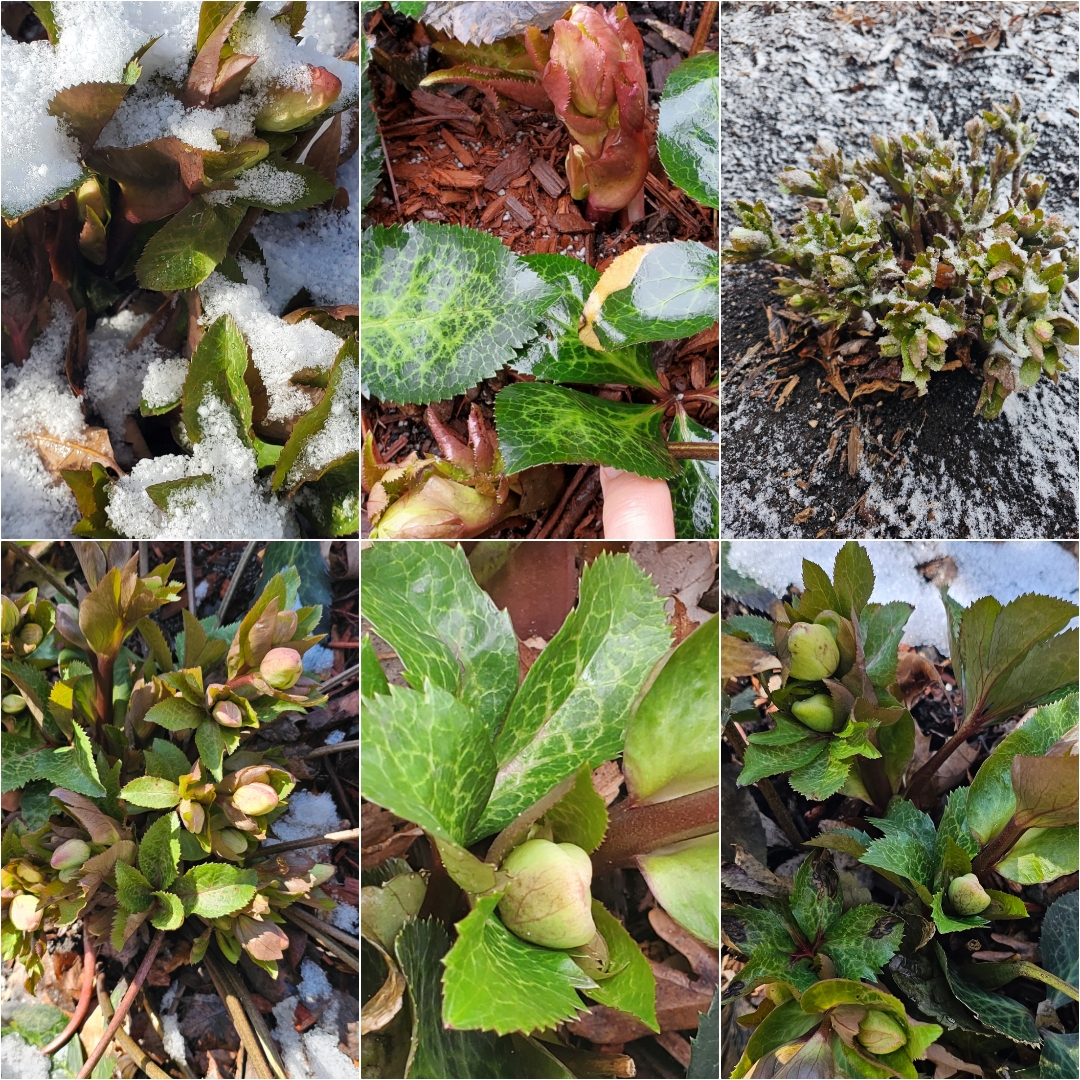
Hellebore cold hardiness. They’re hardy in Zones 4A-9B, so they’ll do fine in our new RGG spot in British Columbia.
Hellebore light requirements. Full shade to partial sun. Although they’re known primarily as shade-lovers, they can handle a bit more sun in winter and early spring. Excessive sun can scorch their foliage. Although they’re evergreen, the previous year’s foliage typically browns at the leaf margins over the course of winter. Feel free to prune off last year’s growth in the spring.
Hellebore soil requirements. Typically neutral to slightly alkaline is the best. Our Hellebores do great in soil with a pH between 7 and 7.5.
Hellebore bloom time. Mid/late winter to late spring.
Hellebore root system, growth rate, and spreading habits. Hellebores have a very deep and extensive tap root system. They’re very slow-growing. The individual plants are propogated via division and/or fairly aggressive self-sowing.
Hellebore size. 1′-2′ tall and 2′-3′ wide.
Hellebore planting time. I’ve had the best luck planting Hellebores as small potted specimens in late winter or early spring.
Hellebore toxicity. All parts of a Hellebore are exceptionally toxic and potentially deadly to humans and pets if ingested.
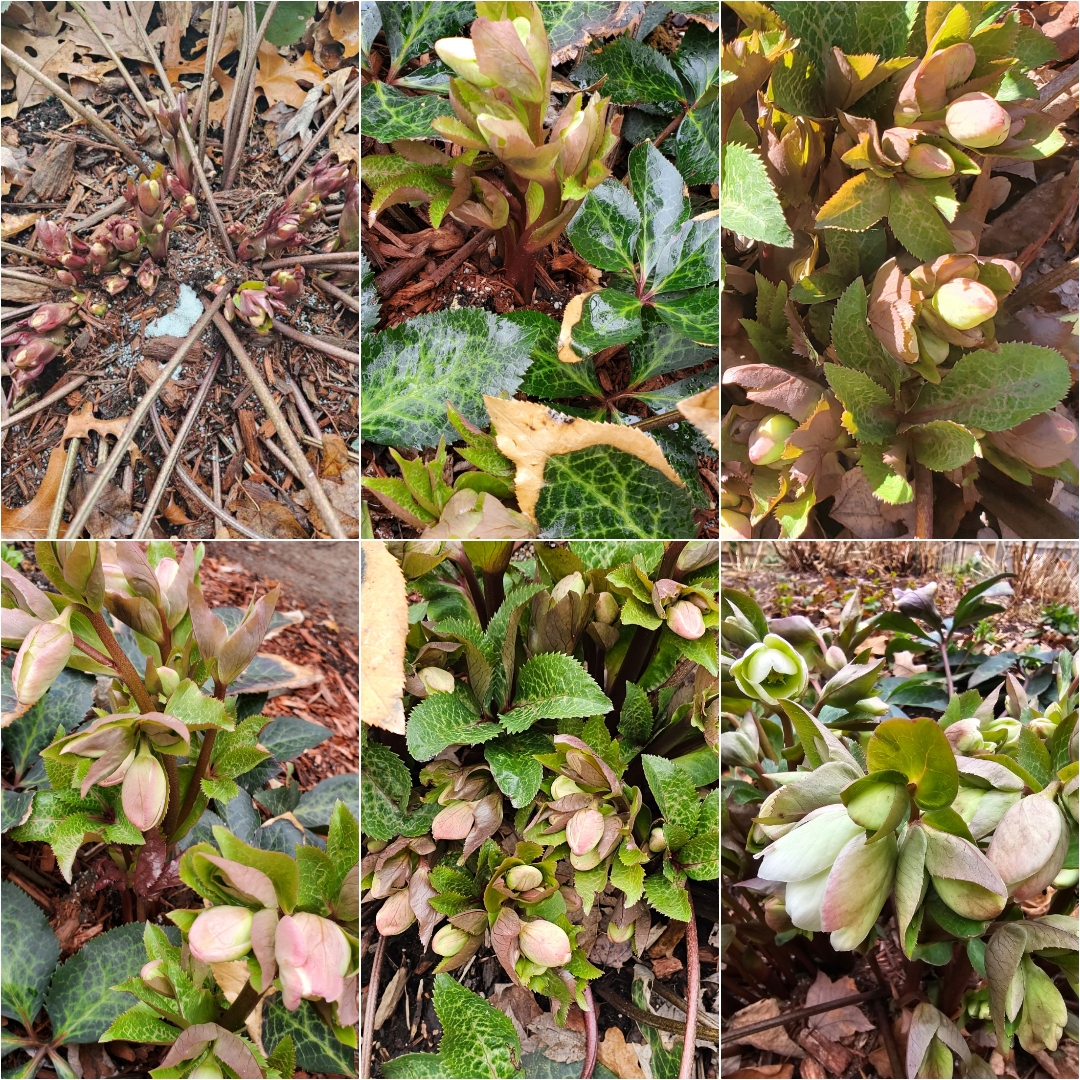
Evergreen, cold-tolerant, and winter flowering, Helleborus x hybridus, the Lenten Rose, will shine for Ann and me as a British Columbian early bloomer in Hardiness Zone 4A.

The Renaissance Garden Guy is a participant in the Bluehost affiliate program. The Renaissance Garden Guy earns a fee/commission each time a visitor clicks on a Bluehost ad or banner in this site and makes a subsequent qualifying purchase. For more details, and for a full list of this site’s affiliate partners, please visit The Renaissance Garden Guy Disclosure page.
3. Lungwort (Pulmonaria officinalis): Early Flowers, Stunning, Long-lasting Foliage, and a Very Cool Name
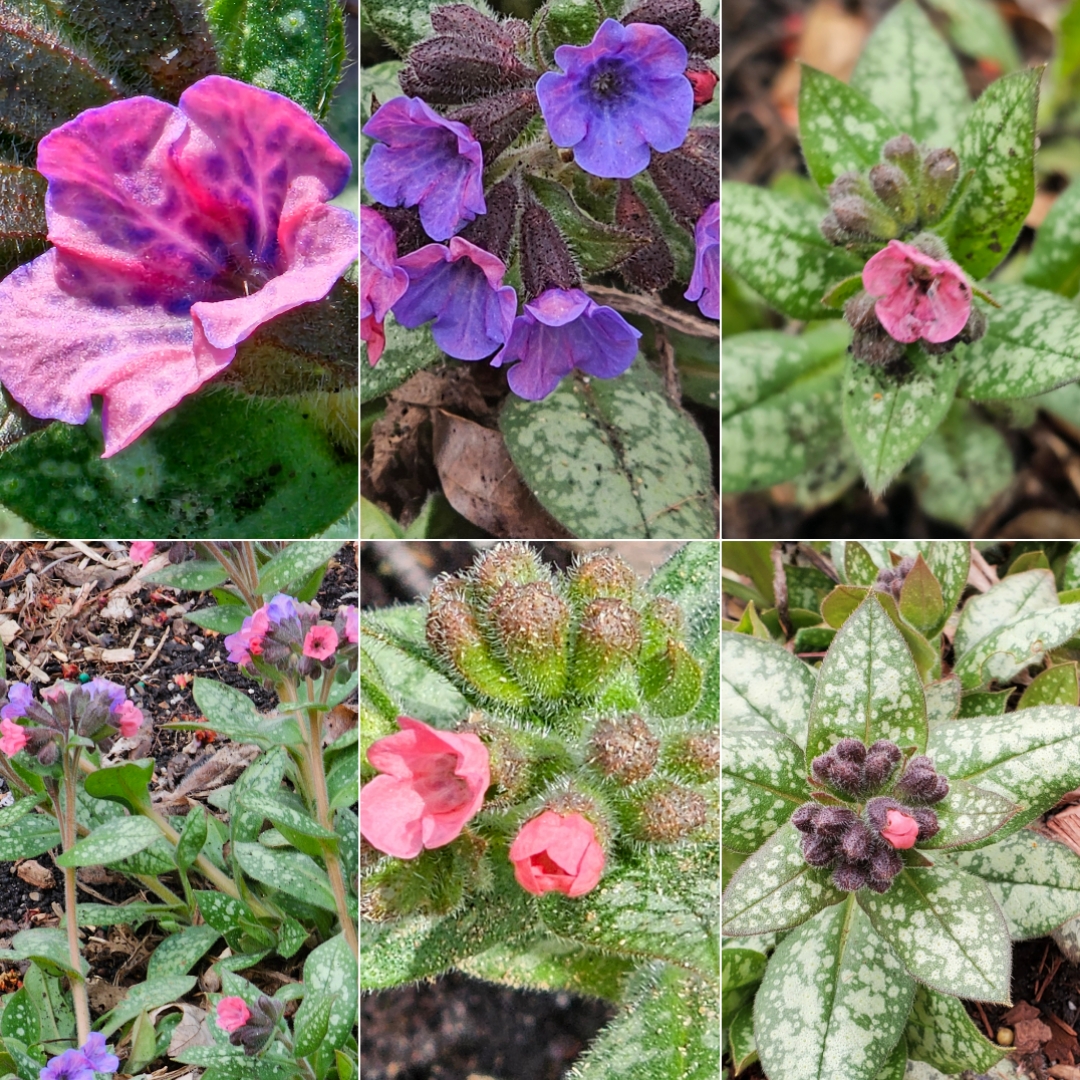
Lungwort (Pulmonaria officinalis) will undoubtedly be, for us, an early bloomer in Hardiness Zone 4A in our new RGG British Columbian garden. This gorgeous shade-loving perennial is ultra cold-hardy and, although it’s technically herbaceous, it can remain evergreen to semi-evergreen in mid-range through warmer zones. Needless to say, it flowers early in the growing season, and it flowers beautifully.
It’s also got a cool name, with a derivation of that name that’s even cooler. Its common name, Lungwort, is derived from its genus name Pulmonaria, the root of which is Latin for “lung.” The attractive, hairy leaves (ovate stem leaves and cordate basal leaves), which are covered in white spots, evidently looked like diseased lungs to one of the Botanical heavy hitters from the 1500s, Leonhart Fuchs, so , Pulmonaria it was for the genus. As for the species name, officinalis, well, you can thank 18th century biology and medicine superstar Carl Linnaeus for that. Linnaeus recognized that the plant had medicinal value in treating lung ailments (although today, there’s just not enough scientific proof to back this assertion up), and he apparently also knew enough Medieval Latin to recognize that an officina was a special storeroom in a monastery where medicines were kept. The upshot: 2 smart guys+2 cool botanical references+1 internal organ-ish-sounding common name=1 really beautiful, super-hardy, early bloomer in Hardiness Zone 4A that may or may not help cure human lung ailments. It’s definitely coming with Ann and me to British Columbia. We love our Lungwort! Here are some pics and info to help explain why:
Lungwort cold hardiness. Pulmonaria officinalis is hardy in Zones 3A-8B. They’re a natural pick as an early bloomer in Hardiness Zone 4A.
Lungwort light requirements. Partial shade to full shade. In late winter and early spring when temperatures remain lower and shade from trees is minimal, they can handle more sun. Although Lungwort is an herbaceous perennial, the plant can remain partially evergreen in Zone 5B/6A, as its basal foliage often persists throughout the winter. Stem foliage dies back over the fall and winter, and although it can be cut back in late fall or early spring, I’ve never once pruned any of our garden’s Lungwort plants.
Lungwort soil requirements. Typically neutral to slightly alkaline (a pH of 7.0-7.5 is perfect). They also like it moist but well-draining.
Lungwort bloom time. Mid March into May. The flowers emerge pink from tiny, dark purple buds. As they age, the petals turn first pink/red, then purple, and ultimately a vivid blue. Changing pH levels at the cellular level within the petals account for this color change – the younger, pink/red flowers have a higher acidic content (lower pH) than the more mature, more alkaline (higher pH) blue flowers.
There’s an interesting correlation between the Lungwort’s changing flower color dynamic and the activity of visiting insect pollinators. Both the red and blue flowers attract insect pollinators from a long distance, but from a short distance (where the pollinators are in immediate proximity to the plant), it’s the pink/red, pollen-heavy younger flowers that are visited directly by the insects. It’s important to note that the age of the individual flower is what impacts its color change from pink/red (acidic content) to blue (alkaline content), not the act of pollination by insects.
Lungwort root system, growth rate, and spreading habits. Lungworts have a rhizomatous root system. The plants spread very slowly, but steadily grow outward from an original (mother) plant. Individual plants themselves grow at a moderate rate, and can be up to a foot in height and nearly 2′ in spread. In addition to their rhizomatous spreading habits, the Lungwort plants in our garden self-sow fairly prolifically. They are not considered invasive. Although individual plants can live well over a decade (our oldest individuals are 6 years old and counting) their rhizomatous spreading habits and assertive self-sowing make it difficult to tell where one plant ends and another begins, and assure their continued presence in a given planting bed for ages to come.
Lungwort planting time. Our 5B/6A garden’s substantial Lungwort colony began as four small potted individuals bedded in the early spring.
Lungwort toxicity. Despite the fact that people in Carl Linnaeus’ day were eating this stuff to try to cure lung ailments, all parts of Pulmonaria officinalis are considered at least mildly toxic to humans and pets. Play it safe. Don’t let little Suzy or Timmy eat it. Don’t let Fido or Mittens eat it. And don’t eat it yourself. Pick yourself up a bottle of NyQuil instead.
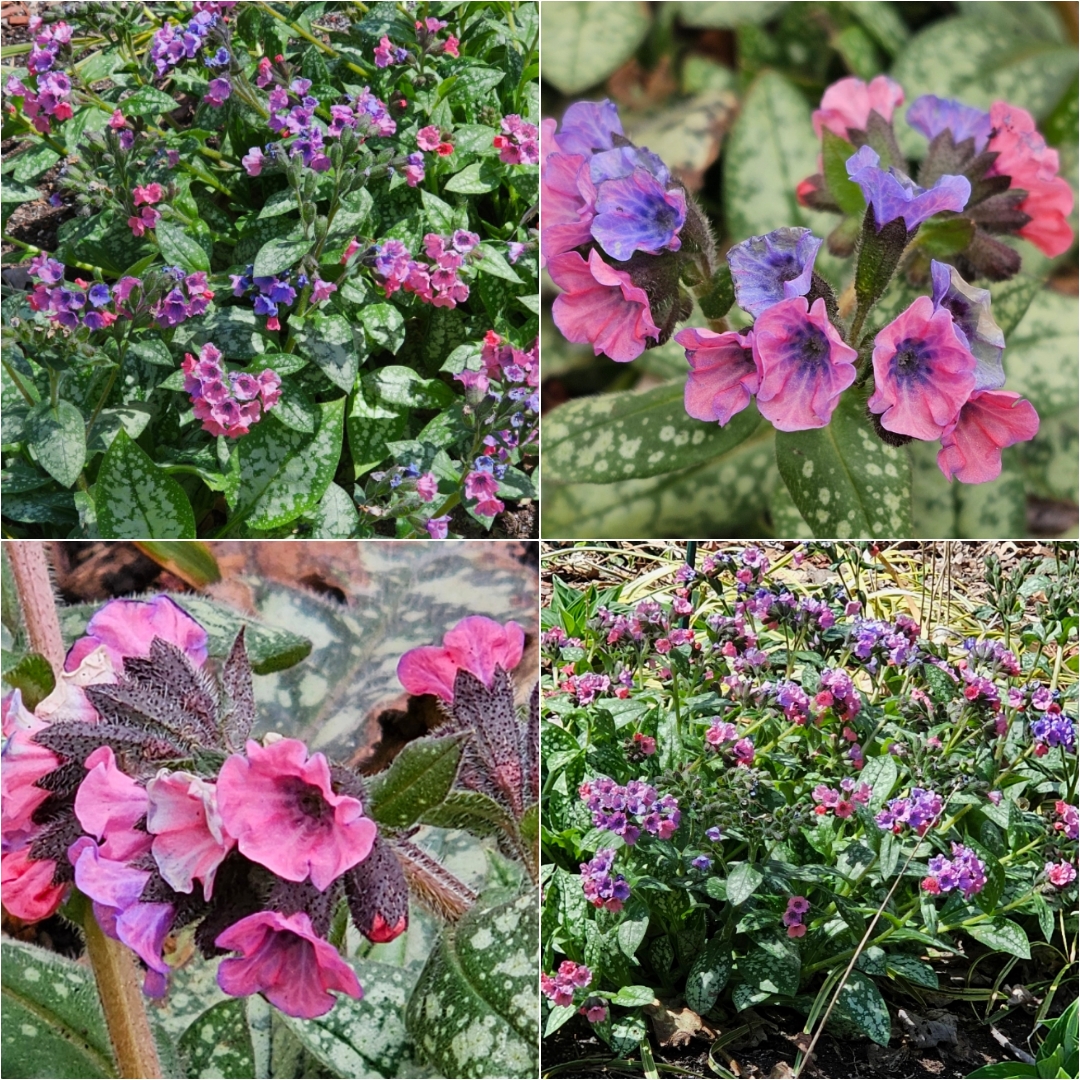
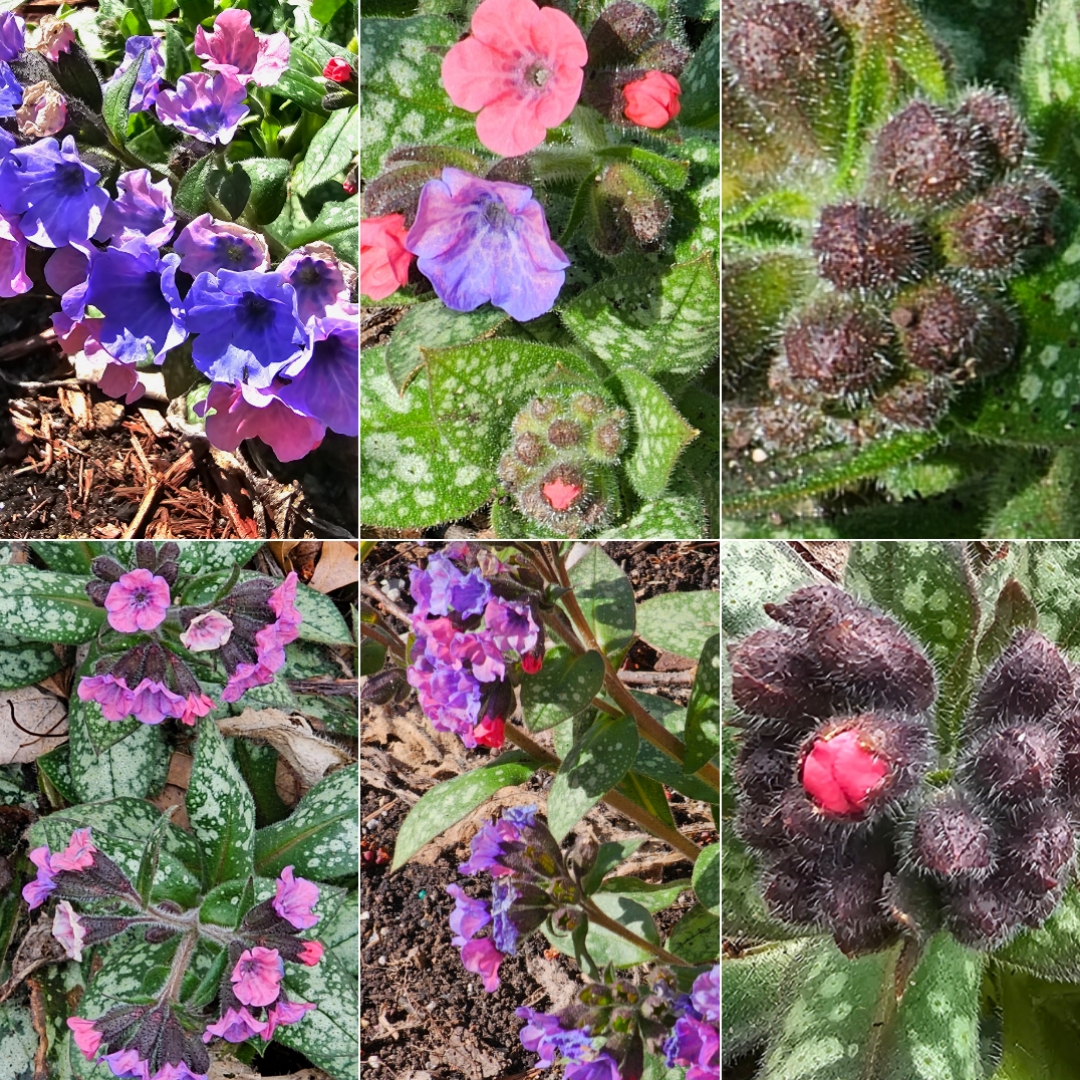
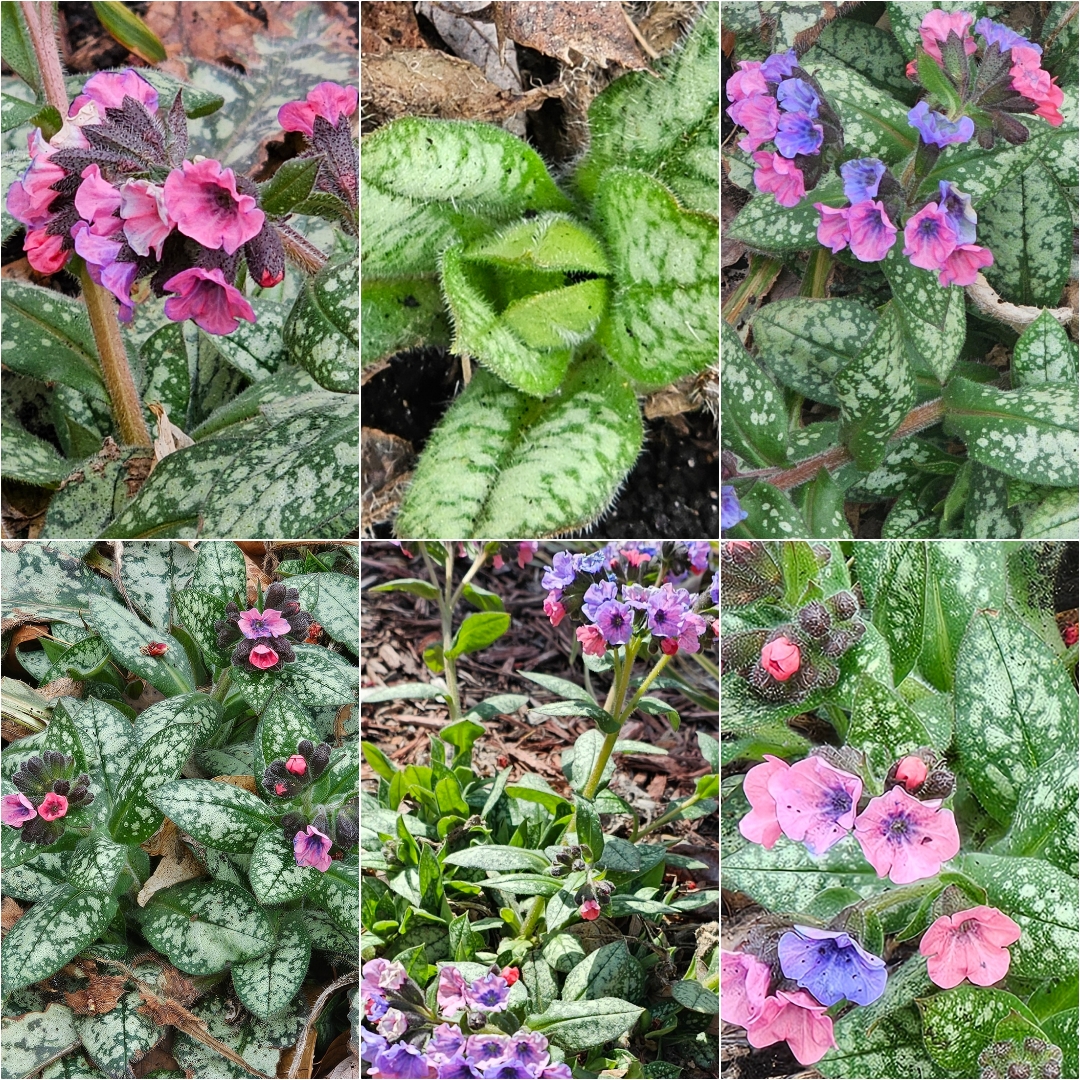
Its stunning flower color, cold weather blooming habits, maintenance-free hardiness, and gorgeous shade-loving foliage guarantees that Lungwort will be one of our new RGG garden’s early bloomers in Hardiness Zone 4A.

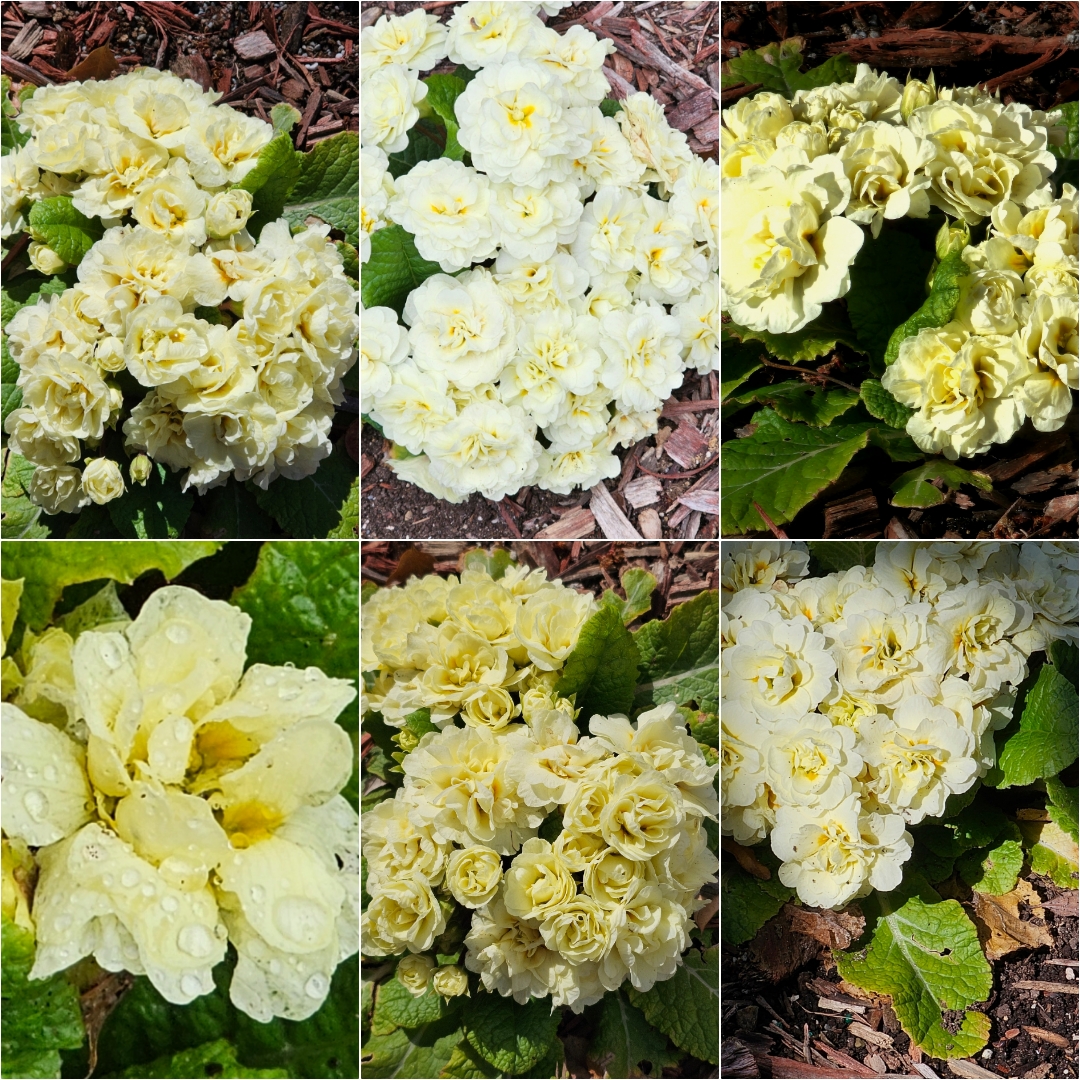
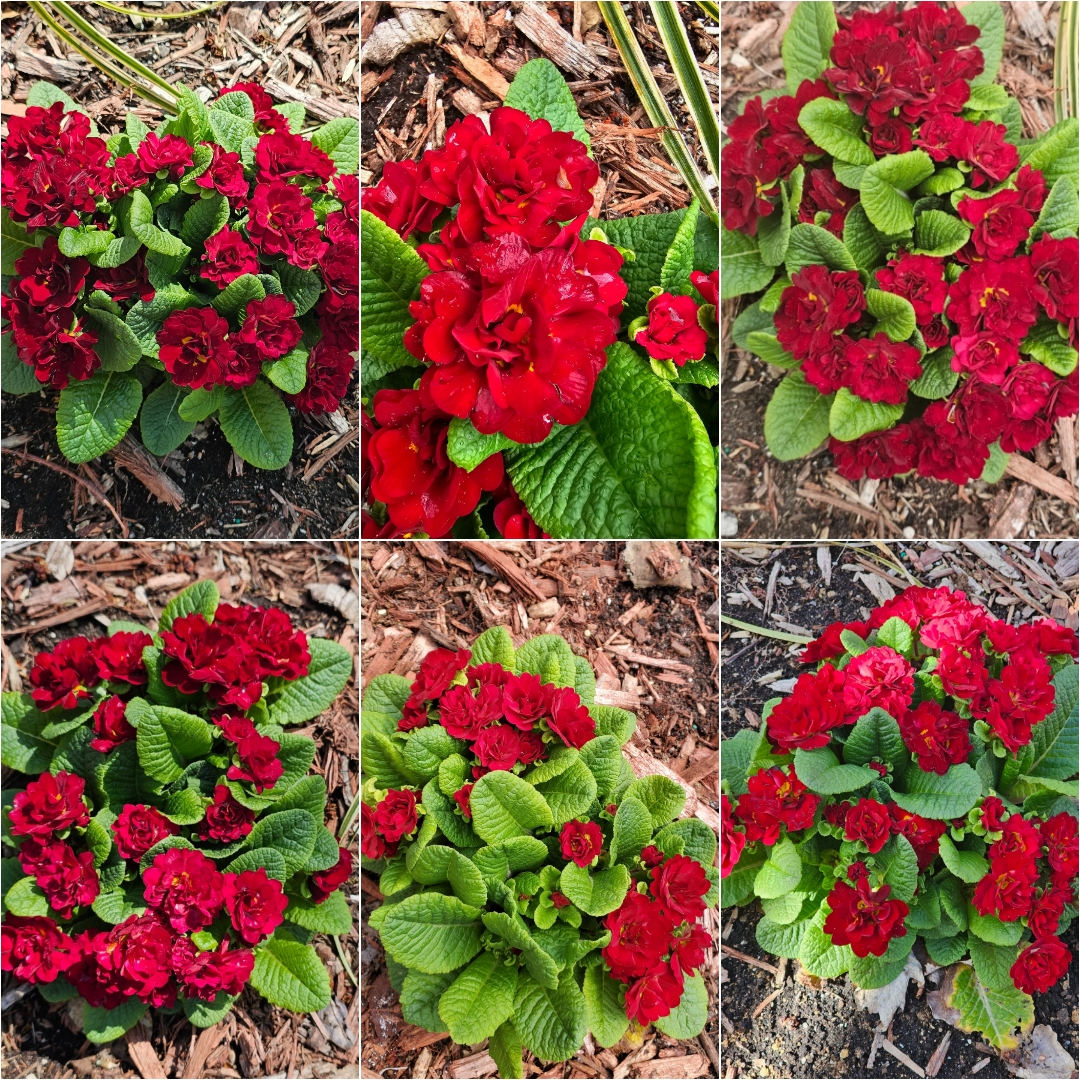
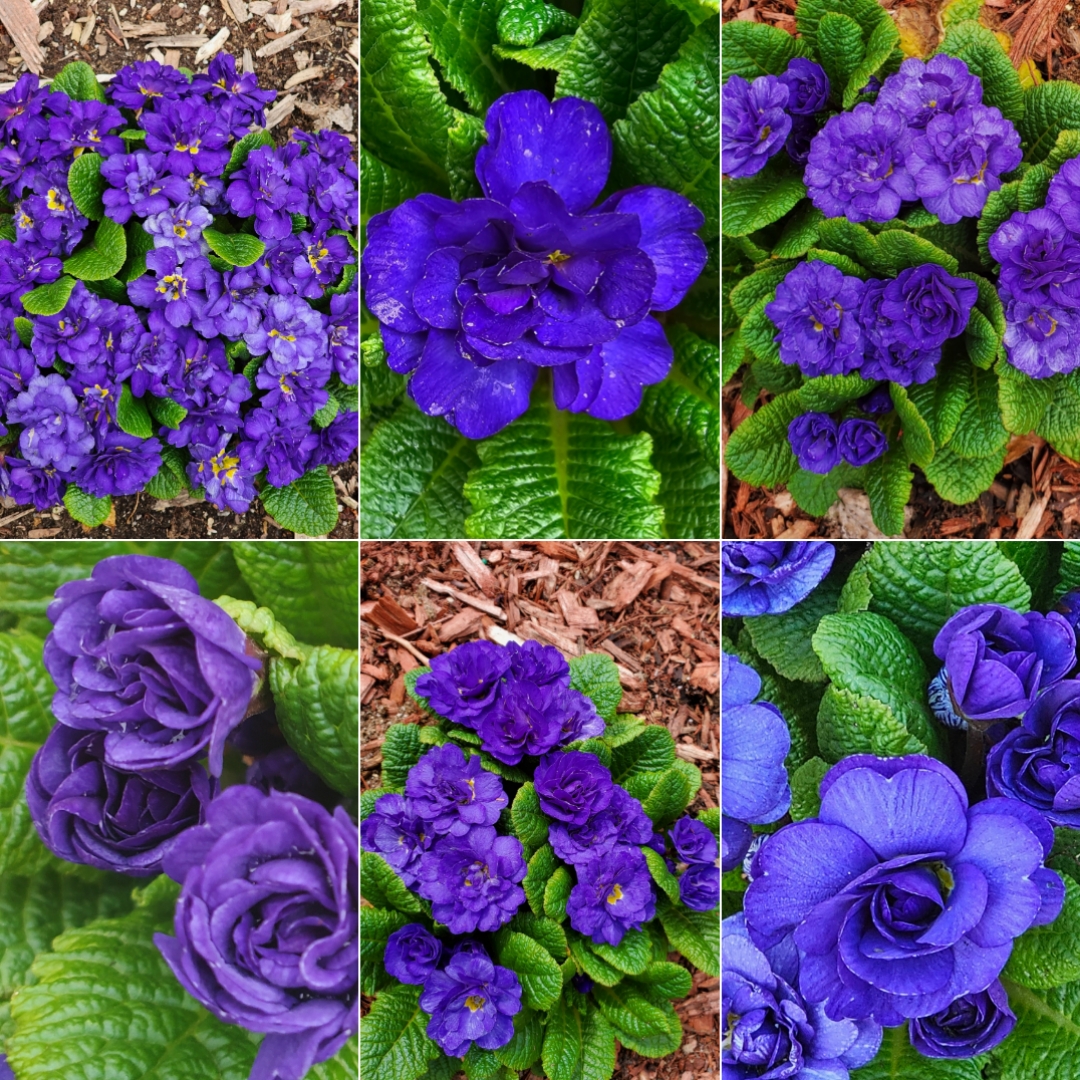
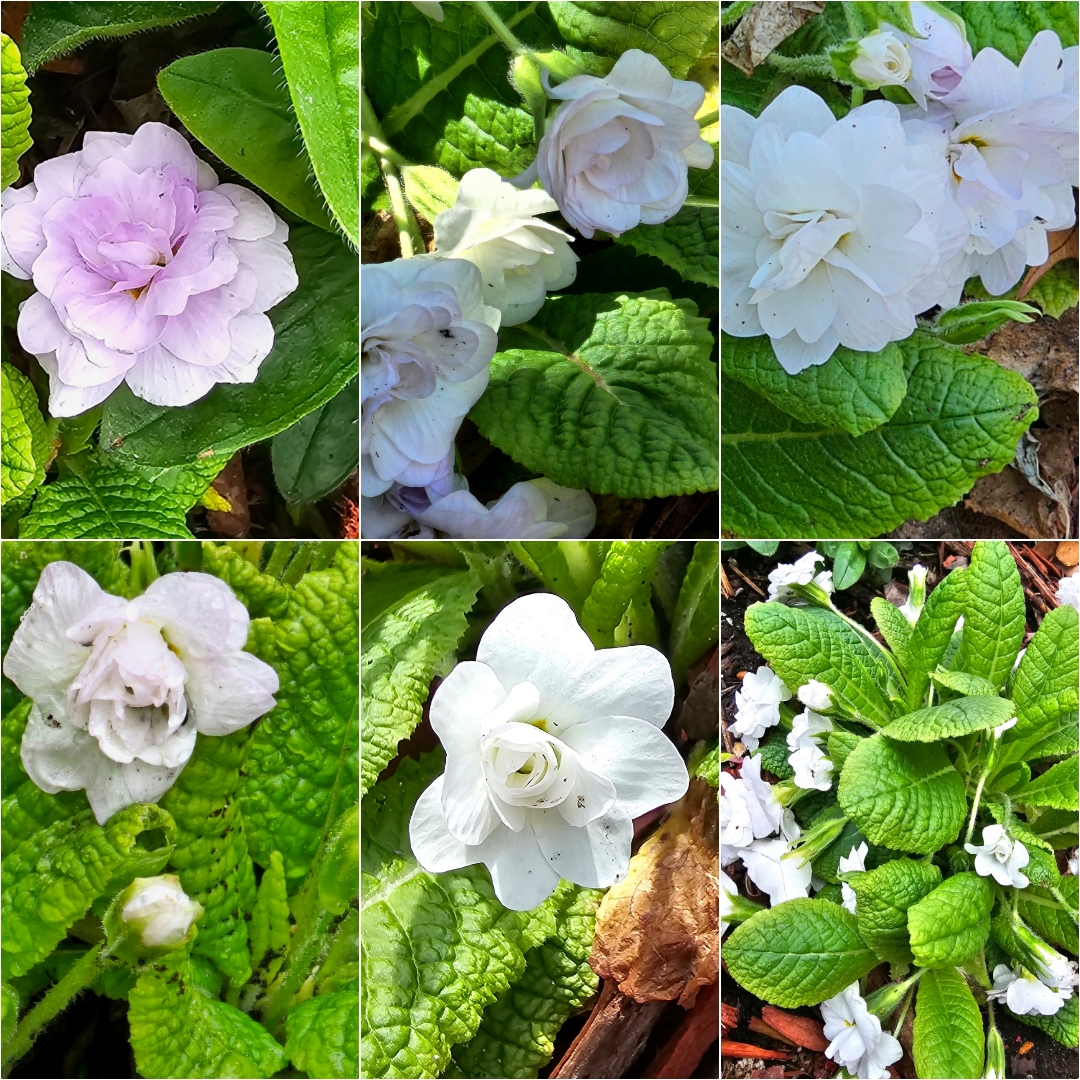
4. Hardy Primrose (Primula vulgaris aka Primula acaulis): Dazzling Colored Gems from Late Winter to Late Spring (Sometimes Again in the Fall, Too!)
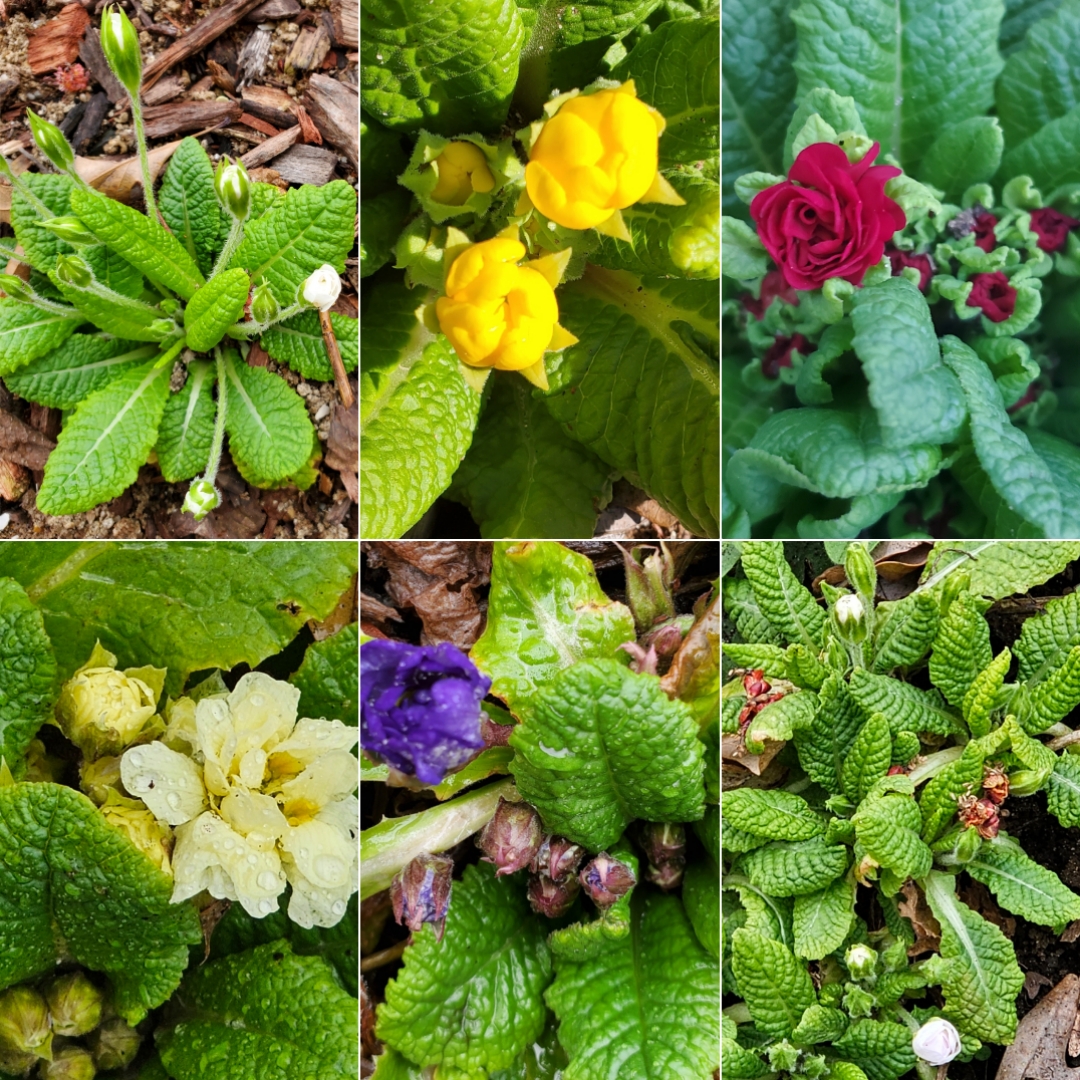
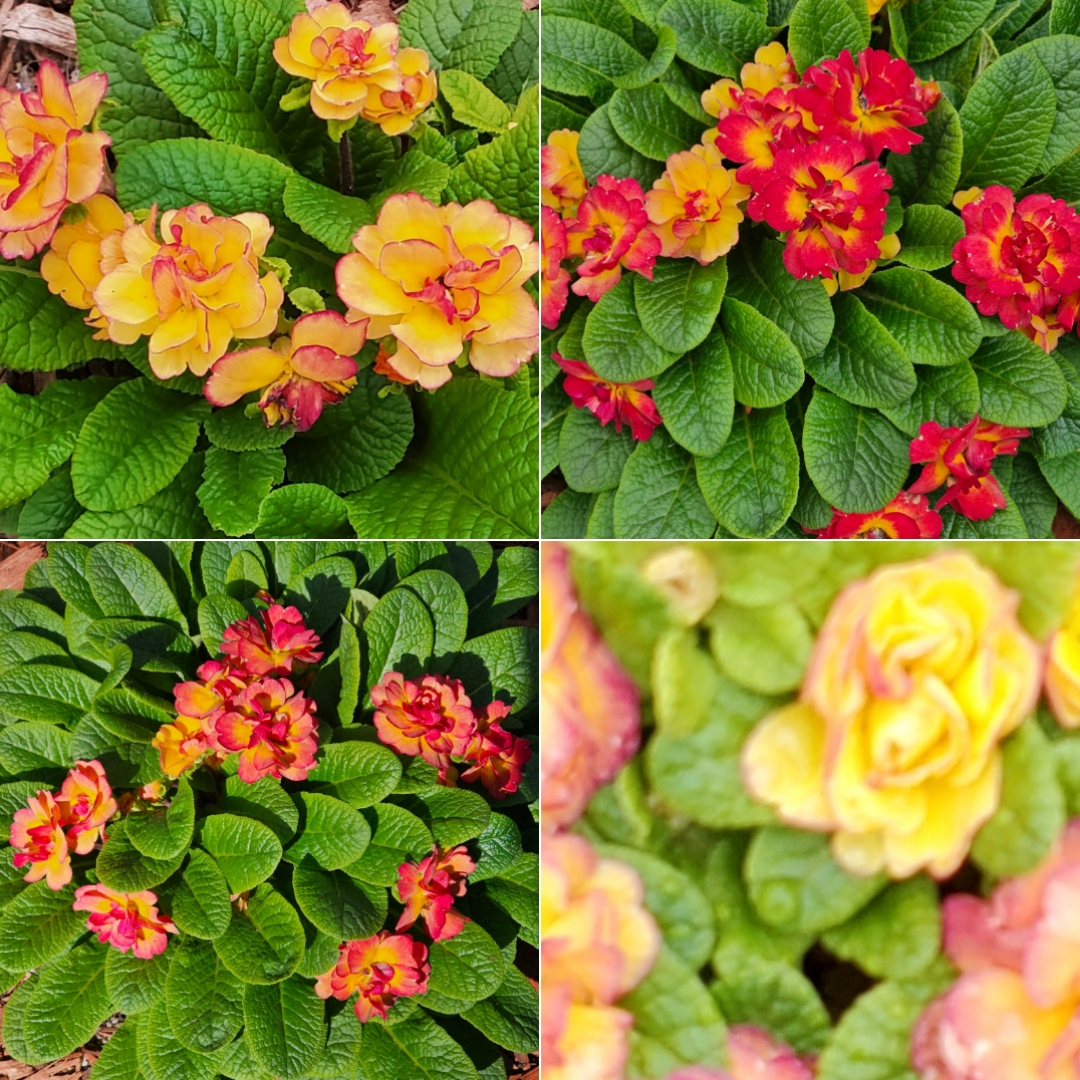
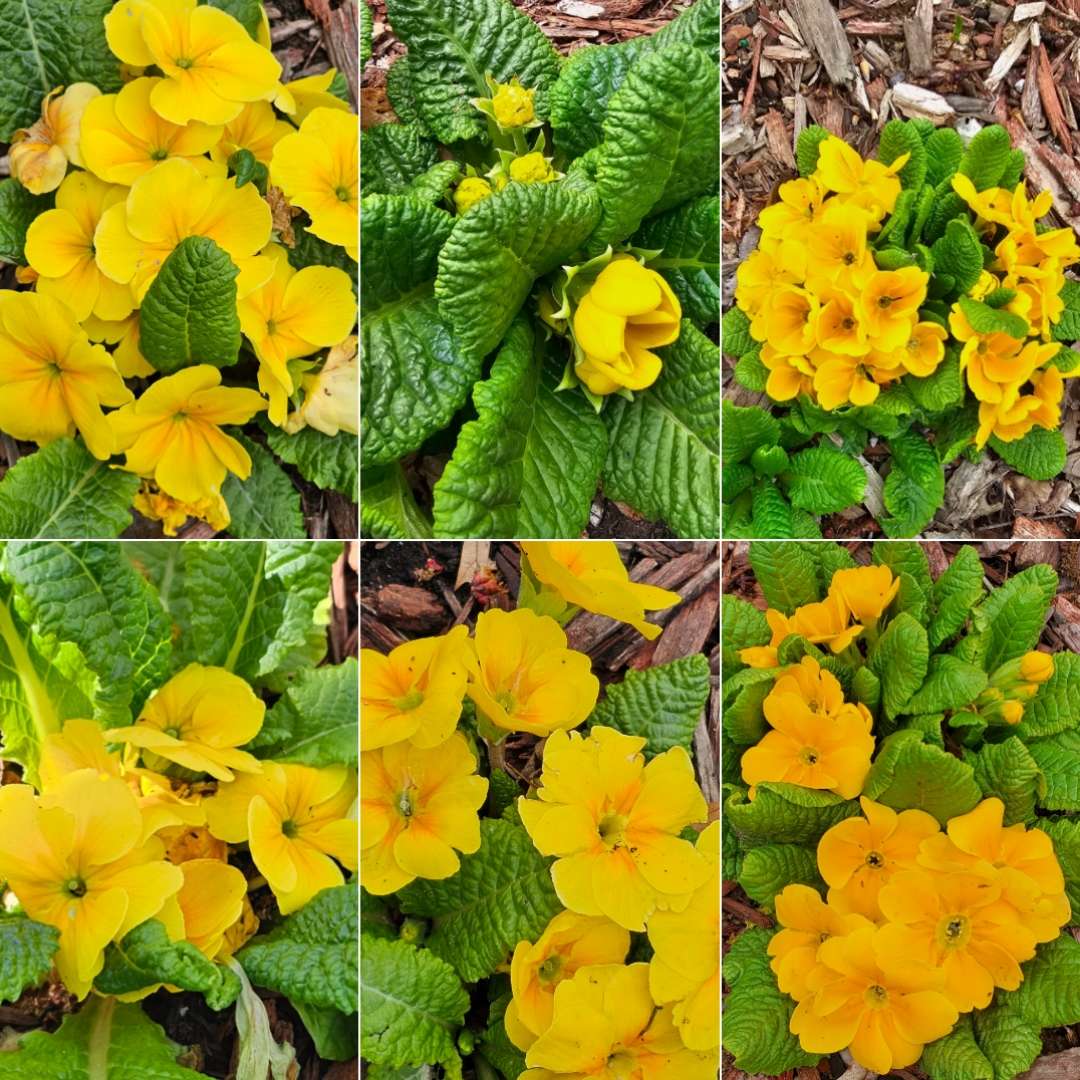
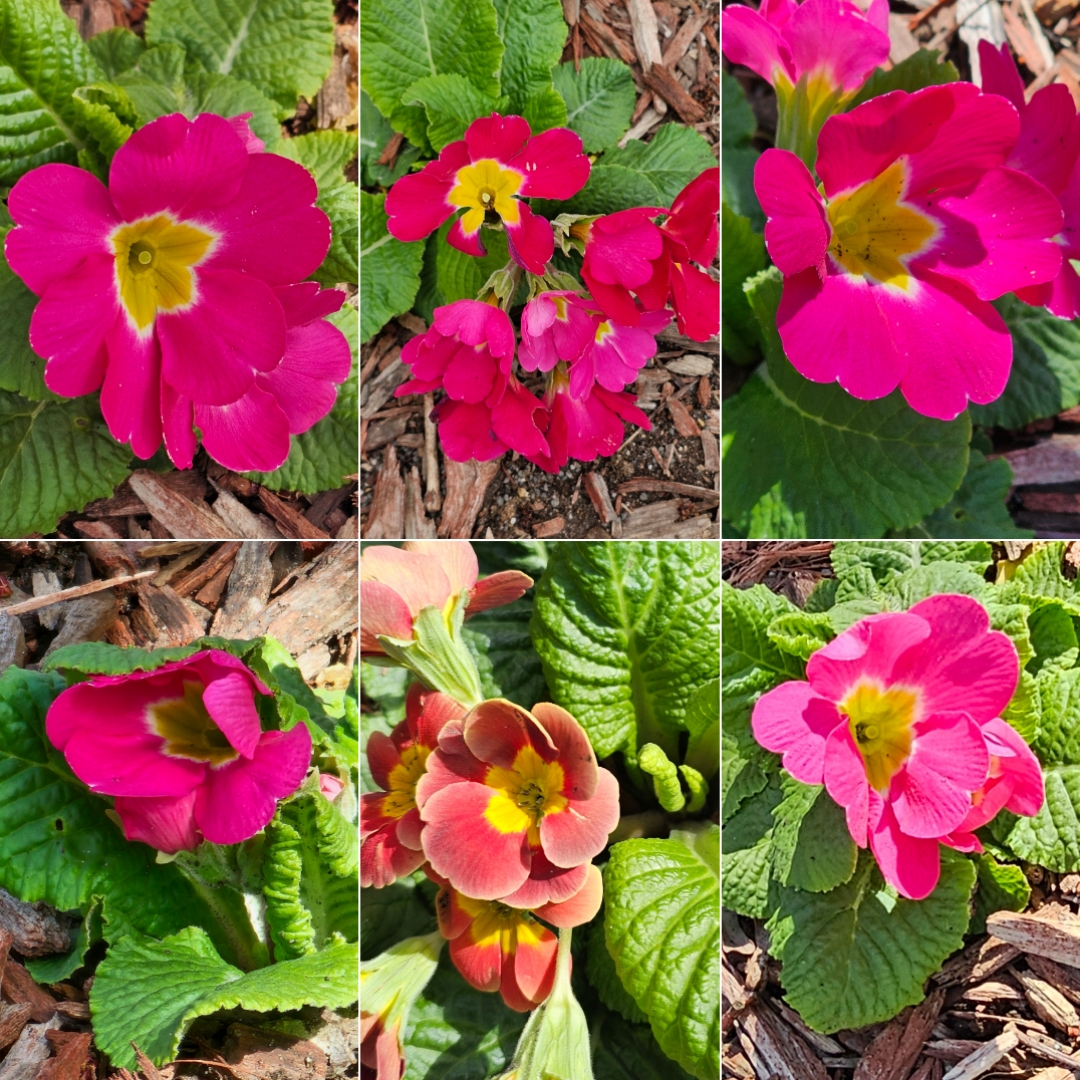
For powerful early season flowering with unadulterated color impact, the little Hardy Primrose is impossible to beat. These plants most often show up in cultivated perennial gardens in a huge number of subspecies, cultivars, varieties, and/or crossess/hybrids of one particular species: Primula vulgaris (also known as Primula acaulis). They’re little, but very mighty, and although individual plants aren’t terribly long-lived (five, maybe six years for an individual is probably the most you can hope for), certain varieties can self-sow prolifically. And while they’re around, they are incredibly rugged and durable. Their rich, rugose foliage is evergreen to semi-evergreen, and its deep, textured green contrasts strikingly with some of the most vivid bloom colors in the cultivated plant world. Ann and I love these little plants, and they’ll definitely be in our lineup of early bloomers in Hardiness Zone 4A. Keep it right here to see a mess of photos of their amazing flowering prowess and learn a bit about them. For even more info, find them in “5 Awesome Perennials You Can Plant Right Now” or in “Beautiful Blue Garden Blooms”.
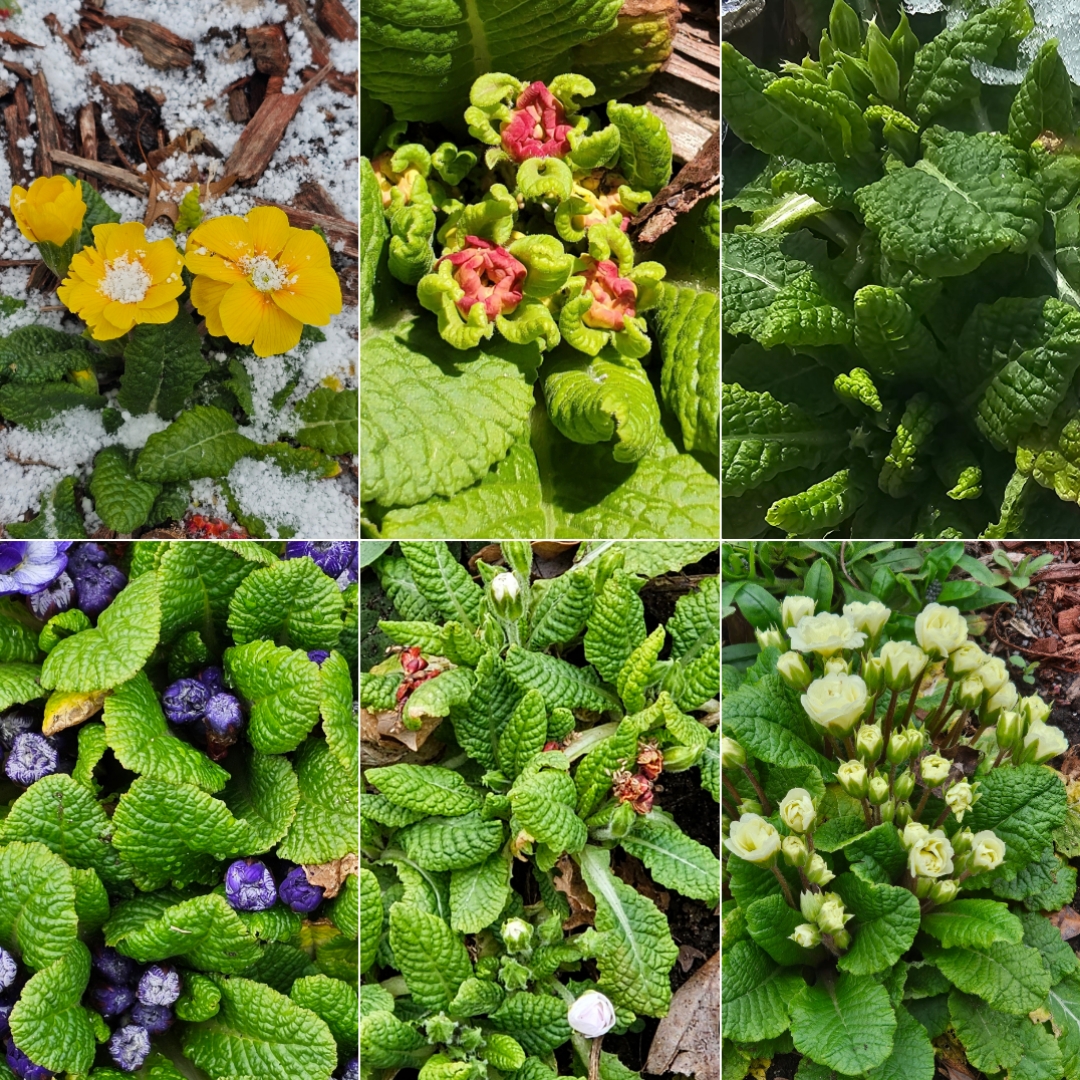
Hardy Primrose cold hardiness. Zone 4A-8B. Some are even good to go as far down as Zone 3.
Hardy Primrose light requirements. Full sun to shade.
Hardy Primrose soil requirements. Slightly acidic to neutral soil that’s moist but well-draining.
Hardy Primrose bloom time. Mid March into June is the time you can expect to enjoy some of the most stunning flowers in the world of cultivated gardening. There’s an almost limitless range of incredibly vivid color among the numerous cultivars, varieties, hybrids, crosses, etc. When these little plants are in full bloom, they look quite literally like tiny, winking gems. And, as a special bonus, some of our Hardy Primroses will occasionally re-bloom in the fall in October!
Hardy Primrose root system, growth rate, and spreading habits. Hardy Primroses have a somewhat dense, fibrous root system. They have a moderate growth rate, and it can take them a couple of years to reach their full size and maturity. Single-flowered varieties can self-sow fairly prolifically. Double-flowered varieties don’t generate seeds and therefore do not self-sow.
Hardy Primrose size. 6″-12” tall and 8″-12″ wide.
Hardy Primrose planting time. I’ve planted both potted and bare root specimens in late winter (mid March) and have had excellent luck with them. They’re extremely rugged little plants that have no trouble being bedded in cold soil.
Hardy Primrose toxicity. All parts of this plant can be mildly to moderately toxic to humans and pets.

The British Columbian Early Bloomers in Hardiness Zone 4A Lineup
We’re done with this one, sports fans. And now you know what we’re bringing from Hardiness Zone 5B/6A in Michiana Shores to Zone 4A in British Columbia: Snow Crocus, Hellebores, Lungwort, and Hardy Primroses. They all promise awesome flowers in freezing temperatures early in the year. During those blustery days, between fits of chattering teeth and the shivers, we’ll love the cheery greetings these beauties are sure to extend. What more could we ask of such intrepid, imperturbable little garden plants?
Stay tuned for Part 5 in this 8-part Michiana Shores-to-British Columbia garden plant haul: “Power Flowerers in Hardiness Zone 4A”. It’s coming soon.
Cheers, and Happy Gardening!
John Stamos is a writer and is co-publisher of The Renaissance Garden Guy. His work has appeared in a number of publications including, most recently, A Man for Some Seasons, Splice Today, and, of course, The Renaissance Garden Guy. He is married to his multitalented sweetheart, the mycologist and writer Ann Simpson-Stamos.


The Renaissance Garden Guy is a participant in the Amazon Associates Program. As an Amazon Associate, The Renaissance Garden Guy earns from qualifying purchases.
Additionally, The Renaissance Garden Guy is a participant in the Bluehost, SeedsNow, and Hosting.com (formerly A2 Hosting) affiliate programs. The Renaissance Garden Guy earns a fee/commission each time a visitor clicks on an ad or banner in this site from one of these companies and makes a subsequent qualifying purchase.
Please click here to view The Renaissance Garden Guy Disclosure page.




Enjoyed reading and most of all admiring all the beautiful images of flowers you have. Amazing! I can feel spring around the corner🌷🌷🌷
Thank you for reading the article, Roxxy. I’m so glad you enjoyed it, and I’m happy you liked the photos, too. Sorting through them while I was preparing the article for publishing really made me long for springtime’s sunny skies and warmer weather. Again, I’m really happy you liked the article, and I’m grateful for your kind thoughts and words, Roxxy.
I loved seeing all these early bloomers. The photos remind me that spring is just around the corner. I have to go outside now and take a look around and see what’s coming up. I bet I’ll see my daffodils!
Thanks for reading the article and for commenting, Kevin. I’m glad you liked the photos. I’ve got to admit that looking at all of them and putting them together for the article really got me excited for spring, too. And, since Daffodils really are early bloomers too, I was also seriously considering including my own Daffodils in this article. At the last minute, I decided to include them in Part 5 (the next one) of this series. I’m eager to hear about your beautiful daffs once they start flowering. Thanks again, Kevin!
Loved seeing how many plant choices you have in both locations. Seeing flowers push up through snow reminded me of my snowy Upstate New York childhood when we’d visit my grandmother and see the daffodils bursting up out of the snow!
Wow, Lisa, such wonderful memories! I was seriously considering including my Daffodil varieties in this particular article as they are also, as you point out by virtue of your lovely memories of your dear grandmother’s flowers, really early bloomers. But, they’re also prodigious bloomers, and they’ll occupy a slot in the forthcoming Part 5 of this series. Thank you so much for reading the article, Lisa, and for your lovely words and thoughts.
Great photos, John. As usual. Drawn recently to hellebores I am sad to learn of their high toxicity. I have too many animals (some are the young GKids) to plant them in the ground. I’m thinking next year I might try some in pots so I can monitor them and keep them out of reach of the animals. Lungwort. Poor Linnaeus. Alas, getting a bad rap. I also love Primula. Lived with a socialite in California, way back in the day, who was crazy for Primula. (long story)
I was the gardener for her property near Stanford U. She ordered 250 plants from the local nursery. She did not want any “garish loud colors”. Lol.
I snuck some bright pink ones into the back area where she wouldn’t see them.
And they are toxic too! Oh, well. The price of beauty.
Glad to see you are so far into your plans for your new garden with Ann and Holly.
Come on Spring!!!
Signed, 7a gardener
I loved hearing about your surreptitious use of garish loud color in the garden of high society! Great thinking, Lane! Hellebores are incredibly beautiful, and their cold weather sprouting and blooming habits border on the miraculous, but they are definitely substantially toxic. If you do decide to try them in pots, I recommend really large ones. Individual plant tap roots are deep, and the root system itself is substantial. It’s also fairly important to maintain the soil at slightly alkaline levels, and it’s critically important to ensure that there’s plenty of drainage – I recommend adding extra drain holes to the containers themselves and perlite to the potting mix. I killed one of my Christmas Rose plants (a Helleborus niger hybrid) by not allowing for enough drainage in its pot. As for Linnaeus’ 18th Century medical advice, I don’t even like to think about all the poor suckers who were probably puking their guts out and crapping their pants because he told them to eat Lungwort for their coughs. Thank you for reading the article, Lane, and for sharing your excellent thoughts and cool socialite story. And Ann and I thank you so much for your kind wishes, Lane. We’re truly grateful.
I adore primroses. Now I’m inspired to go find some and plant them this year.
Blessings to both of you.
Primroses really are amazing little gems – I hope you do get some! Thank you so much for reading the article, Annie, and for your kind words.
Highly informative article and beautiful pictures as well. I am glad many of your accustomed flowers in Indiana Shores will be old friends in Canada.
Thank you, Rick. It’s definitely comforting knowing that so many of these familiar faces will be part of our lives in Canada. Thanks once again for the kind words, Rick, and for reading the article.